
Ferdinand IV of Naples
Son of Charles III, he received the separate crowns of Naples and Sicily as a child in 1759. Revolutionary crises interrupted his control of the mainland; the two kingdoms were formally united in 1816.
This complete profile is available in English. Bibliographic titles retain their original language. Links marked ES open the Spanish edition.
Key details
Birth: 12 January 1751 Documented
Death: 4 January 1825 Documented
Role: King
Other recorded names: Fernando III de Sicilia · Fernando I de las Dos Sicilias
Dynasty: Bourbon · ES
Territories: Naples (ES) · Trinacria (ES)
Recorded relationships
Their titles over time
Follow the changing territories and offices of Ferdinand IV of Naples. Each title retains its own status.
Governments in 1759
- Monarchy of Naples and Sicily2 titles and offices
View titles and jurisdictions
- Naples · ESKing · Effective rule1759–1805 · Kingdom separate from Sicily; the short-lived republic of 1799 remains unresolved at annual scale.
- Trinacria · ESKing · Effective rule1759–1816 · Kingdom legally distinct from Naples until the creation of the Two Sicilies in 1816.
Crowns united under Charles of Bourbon and his son Ferdinand. The two kingdoms retained their identities; the Kingdom of the Two Sicilies, created in 1816, is not projected backwards. The Neapolitan Republic of 1799 retains its own territorial attribution. Source for this grouping
Annual dates: overlap within one year does not prove that two offices were held on the same day. Regencies and co-rulerships retain their labels.
How these titles came together
- 1759 · Naples · TrinacriaInheritance
Charles of Bourbon ceded the kingdom to his son Ferdinand when he succeeded Ferdinand VI in Spain; Ferdinand was a minor and a regency council initially governed.
Selected explained accessions. Other titles remain in the profile’s list of recorded governments.
Sources for this profile
- Treccani · Carlos de Borbón, rey de Nápoles y Sicilia
- Treccani · Fernando IV de Nápoles / III de Sicilia
- Treccani · Nápoles y las sucesiones de 1707, 1734 y 1759
- Deutsche Nationalbibliothek · GND authority record · Ferdinand IV., Neapel, König
- Real Academia de la Historia · Diccionario Biográfico español
- Treccani · Dizionario Biografico degli Italiani
- Encyclopaedia Britannica
Biographical and contextual references in their original language. Sources and methodology.
Evidence for this profile
10 recorded claims · 2 without a claim-specific source. Context references do not by themselves verify every fact.
Dates (2/2 with a precise source)
- BirthDocumented
12 January 1751
- DeathDocumented
4 January 1825
Family and relationships (2/2 with a precise source)
- FatherDocumented
Charles III of Spain
- MotherDocumented
Maria Amalia of Saxony
Governments (2/4 with a precise source)
- GovernmentApproximate
King · Naples · 1759–1805
The republic of 1799 interrupted effective control for several months; the annual map cannot show this episode. - GovernmentPending review
King · Naples · 1806–1815
A precise source has not yet been added. - GovernmentPending review
King · Naples · 1815–1816
A precise source has not yet been added. - GovernmentDocumented
King · Trinacria · 1759–1816
Sicily retained its own government until the formal union of the Two Sicilies in 1816.
Successions (2/2 with a precise source)
- SuccessionDocumented
Naples · Unrecorded successor · 1759
Charles of Bourbon ceded the kingdom to his son Ferdinand when he succeeded Ferdinand VI in Spain; Ferdinand was a minor and a regency council initially governed. - SuccessionDocumented
Trinacria · Unrecorded successor · 1759
Charles of Bourbon ceded the kingdom to his son Ferdinand when he succeeded Ferdinand VI in Spain; Ferdinand was a minor and a regency council initially governed.
Biographical and contextual references (7)
- Treccani · Carlos de Borbón, rey de Nápoles y Sicilia
- Treccani · Fernando IV de Nápoles / III de Sicilia
- Treccani · Nápoles y las sucesiones de 1707, 1734 y 1759
- Deutsche Nationalbibliothek · GND authority record · Ferdinand IV., Neapel, König
- Real Academia de la Historia · Diccionario Biográfico español
- Treccani · Dizionario Biografico degli Italiani
- Encyclopaedia Britannica
Editorial history
- 2026-10-12 · Claim registry added; existing historical data kept. Specific sourcing remains to be reviewed.
- 2026-10-08 · Claim registry added; existing historical data kept. Specific sourcing remains to be reviewed.
- 2026-10-04 · Claim registry added; existing historical data kept. Specific sourcing remains to be reviewed.
- 2026-10-04 · Claim registry added; existing historical data kept. Specific sourcing remains to be reviewed.
- 2026-10-03 · Claim registry added; existing historical data kept. Specific sourcing remains to be reviewed.
- 2026-09-30 · The duchy is limited to Dijon and Autun; each other fief now enters the map only under its dated ruler. John III of Namur and the Nevers/Rethel branch were added. The previous shape combined later counties and unrelated lands as if all belonged to the duchy from 1363.
- 2026-09-28 · Claim registry added; existing historical data kept. Specific sourcing remains to be reviewed.
More paths from Ferdinand IV of Naples
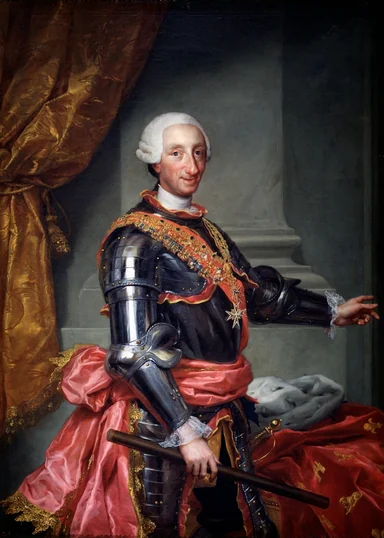
Same dynasty
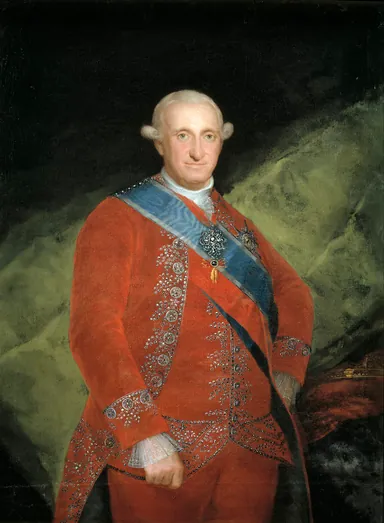 Charles IV of SpainKing of Spain1748 – 1819Clotilde of France · ESConsort1759 – 1802
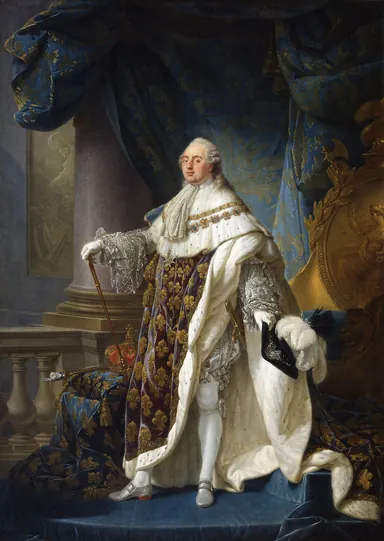 Louis XVI of FranceKing of France · Titular king of Navarre1754 – 1793Carlota Joaquina of Spain · ESConsort1775 – 1830Maria Luisa of Spain · ESConsort1745 – 1792Maria Antonia Ferdinanda of Spain · ESConsort1729 – 1785
In their lifetime
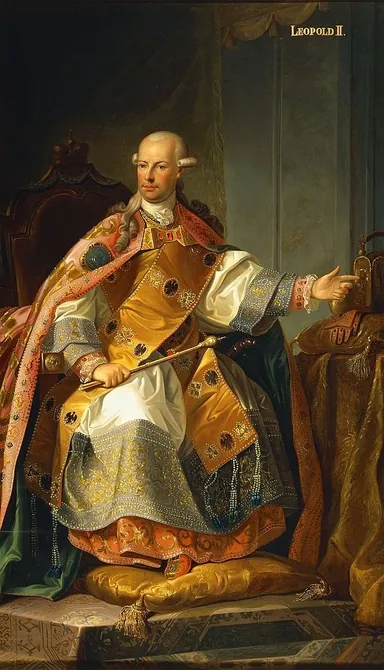 Leopold II of the Holy Roman EmpireEmperor1747 – 1792
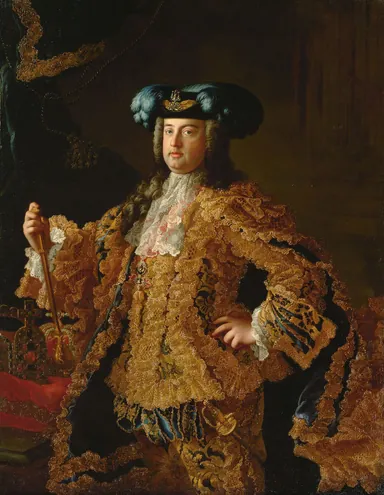 Francis I of the Holy Roman EmpireEmperor1708 – 1765
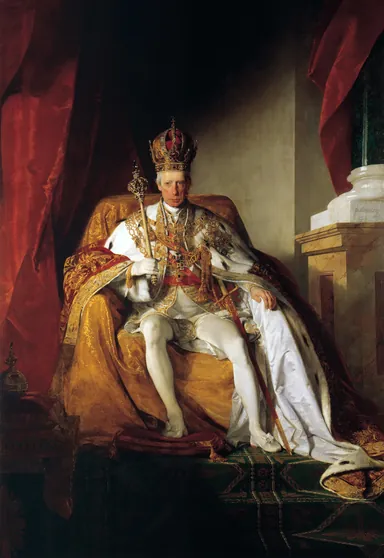 Francis II of the Holy Roman EmpireEmperor1768 – 1835
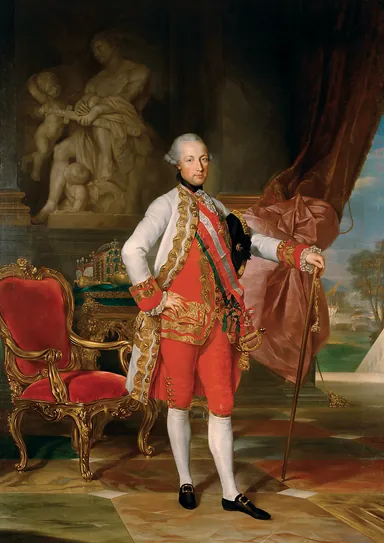 Joseph II of the Holy Roman EmpireEmperor1741 – 1790
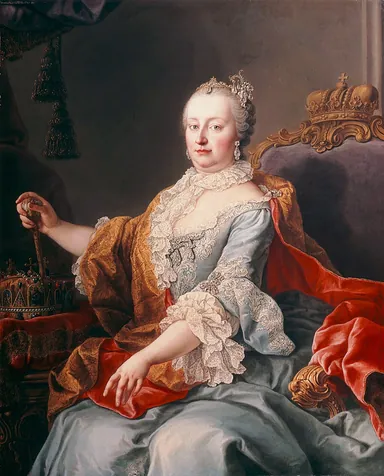 Maria Theresa of AustriaQueen / Archduchess1717 – 1780Charles IV of SpainKing of Spain1748 – 1819