
Leopold II of the Holy Roman Empire
A Habsburg emperor whose brief reign followed his government of Tuscany. He moderated several of Joseph II’s reforms and confronted the spread of the French Revolution in Europe.
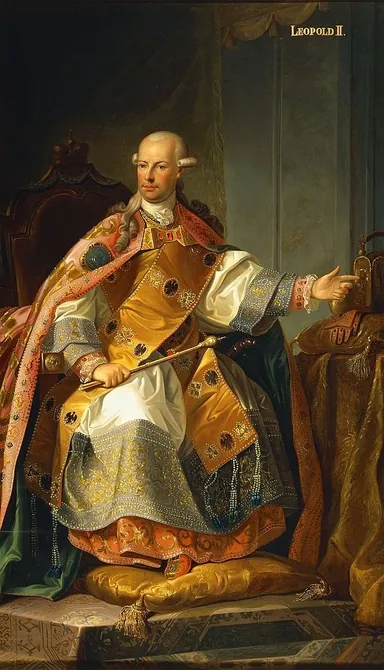
This complete profile is available in English. Bibliographic titles retain their original language. Links marked ES open the Spanish edition.
Key details
Birth: 5 May 1747 Documented
Death: 1 March 1792 Documented
Role: Emperor
Dynasty: Habsburg-Lorraine · ES
Territories: Holy Roman Empire (ES) · Germany (ES) · Austria (ES) · Bohemia (ES) · Hungary (ES) · Tuscany (ES) · Croatia (ES) · Moravia (ES) · Silesia (ES) · Inner Austria (ES) · Tyrol (ES) · Habsburg Transylvania (ES) · Kingdom of Galicia and Lodomeria (ES) · Brabant (ES) · Limburg (ES) · Luxembourg (ES) · Flanders (ES) · Hainaut (ES) · Namur (ES) · Lordship of Mechelen (ES) · Tournai (ES) · Guelders (ES)
Recorded relationships
Their titles over time
Follow the changing territories and offices of Leopold II of the Holy Roman Empire. Each title retains its own status.
Governments in 1790
- TuscanyGrand duke
View titles and jurisdictions
- Tuscany · ESGrand duke · Effective rule1765–1790
- Holy Roman Empire (Germany)2 titles and offices
View titles and jurisdictions
- Germany · ESKing of the Romans · Effective rule1790–1792
- Holy Roman Empire · ESEmperor · Effective rule1790–1792
- Austrian Habsburg Monarchy10 titles and offices
View titles and jurisdictions
- Austria · ESArchduke · Effective rule1790–1792
- Bohemia · ESKing · Effective rule1790–1792
- Hungary · ESKing · Effective rule1790–1792
- Croatia · ESKing · Effective rule1790–1792
- Moravia · ESMargrave · Effective rule · Royal centres of Brno and Olomouc; regional authority over the margraviate, distinct from the full geography of the Bohemian title1790–1792 · Brno and Olomouc are regional urban centres; they are not equated with the monarch’s exclusive ownership of Moravia and do not erase seigneurial or episcopal jurisdictions. Olomouc begins with the privilege of 1378 and is excluded during the documented Swedish and Prussian occupations.
- Silesia · ESSovereign · Effective rule · Remainder of the Silesian duchies retained by the Habsburg monarchy from 1742; not all Silesia1790–1792 · Teschen/Bielsko and the southern parts of Opava, Krnov and Nysa/Jeseník. Vassal dukes retain their jurisdictions. Border cells approximate the Austrian sectors rather than an exact river boundary.
- Inner Austria · ESSovereign · Effective rule1790–1792 · Inner hereditary provinces reunited with the Austrian line from 1619; provincial administrations and autonomies are retained. The connection does not arise from the imperial title.
- Tyrol · ESCount · Effective rule1790–1792 · Territorial succession to Tyrol after reunification in 1665; excludes the bishoprics of Trent and Brixen.
- Habsburg Transylvania · ESSovereign · Effective rule1790–1792 · Personal tenure inferred from the Austrian hereditary succession and the treaty’s territorial boundary; an administratively separate province.
- Kingdom of Galicia and Lodomeria · ESKing · Effective rule1790–1792 · Territorial title retained under the Habsburg monarchy; independent of the imperial office. The acquisition of 1772 is not projected back into earlier reigns.
Joint direction of the domains effectively governed by this ruler. Excludes the imperial framework, Ottoman Hungary and independent or tributary Transylvanian principalities. Austrian branches under another ruler retain their own grouping. Source for this grouping
- BrabantDuke
View titles and jurisdictions
- Brabant · ESDuke · Effective rule1790–1792 · Austrian territorial sovereignty over the province, distinct from the imperial office. Its extent follows local losses, occupations and restorations; excludes the Republic’s provinces and Barrier garrisons.
- LimburgDuke
View titles and jurisdictions
- Limburg · ESDuke · Effective rule1790–1792 · Austrian territorial sovereignty over the province, distinct from the imperial office. Its extent follows local losses, occupations and restorations; excludes the Republic’s provinces and Barrier garrisons.
- LuxembourgDuke
View titles and jurisdictions
- Luxembourg · ESDuke · Effective rule1790–1792 · Austrian territorial sovereignty over the province, distinct from the imperial office. Its extent follows local losses, occupations and restorations; excludes the Republic’s provinces and Barrier garrisons.
- FlandersCount
View titles and jurisdictions
- Flanders · ESCount · Effective rule1790–1792 · Austrian territorial sovereignty over the province, distinct from the imperial office. Its extent follows local losses, occupations and restorations; excludes the Republic’s provinces and Barrier garrisons.
- HainautCount
View titles and jurisdictions
- Hainaut · ESCount · Effective rule1790–1792 · Austrian territorial sovereignty over the province, distinct from the imperial office. Its extent follows local losses, occupations and restorations; excludes the Republic’s provinces and Barrier garrisons.
- NamurCount
View titles and jurisdictions
- Namur · ESCount · Effective rule1790–1792 · Austrian territorial sovereignty over the province, distinct from the imperial office. Its extent follows local losses, occupations and restorations; excludes the Republic’s provinces and Barrier garrisons.
- Lordship of MechelenLord
View titles and jurisdictions
- Lordship of Mechelen · ESLord · Effective rule1790–1792 · Austrian territorial sovereignty over the province, distinct from the imperial office. Its extent follows local losses, occupations and restorations; excludes the Republic’s provinces and Barrier garrisons.
- TournaiLord
View titles and jurisdictions
- Tournai · ESLord · Effective rule1790–1792 · Austrian territorial sovereignty over the province, distinct from the imperial office. Its extent follows local losses, occupations and restorations; excludes the Republic’s provinces and Barrier garrisons.
- GueldersDuke
View titles and jurisdictions
- Guelders · ESDuke · Effective rule1790–1792 · Austrian territorial sovereignty over the province, distinct from the imperial office. Its extent follows local losses, occupations and restorations; excludes the Republic’s provinces and Barrier garrisons.
Annual dates: overlap within one year does not prove that two offices were held on the same day. Regencies and co-rulerships retain their labels.
Sources for this profile
- Schönbrunn · Francisco Esteban y la casa Habsburgo-Lorena
- Deutsche Nationalbibliothek · GND authority record · Leopold II., Heiliges Römisches Reich, Kaiser
- Real Academia de la Historia · Diccionario Biográfico español
- Encyclopaedia Britannica
Biographical and contextual references in their original language. Sources and methodology.
Evidence for this profile
27 recorded claims · 3 without a claim-specific source. Context references do not by themselves verify every fact.
Dates (2/2 with a precise source)
- BirthDocumented
5 May 1747
The authority record gives the birth as 1747-05-05. - DeathDocumented
1 March 1792
The authority record gives the death as 1792-03-01.
Family and relationships (1/3 with a precise source)
- FatherPending review
Francis I of the Holy Roman Empire
A precise source has not yet been added. - MotherPending review
Maria Theresa of Austria
A precise source has not yet been added. - Marriage or partnershipDocumented
Maria Luisa of Spain
The authority record identifies Maria Luisa of Spain (GND 104201649) as spouse.
Governments (21/22 with a precise source)
- GovernmentDocumented
Grand duke · Tuscany · 1765–1790
The authority record dates this office to 1765–1790. - GovernmentDocumented
King of the Romans · Germany · 1790–1792
The authority record dates this office to 1790–1792. - GovernmentDocumented
Emperor · Holy Roman Empire · 1790–1792
The authority record dates this office to 1790–1792. - GovernmentPending review
Archduke · Austria · 1790–1792
A precise source has not yet been added. - GovernmentDocumented
King · Bohemia · 1790–1792
The authority record dates this office to 1790–1792. - GovernmentDocumented
King · Hungary · 1790–1792
The authority record dates this office to 1790–1792. - GovernmentDocumented
King · Croatia · 1790–1792
The authority record dates this office to 1790–1792. - GovernmentInferred
Margrave · Moravia · 1790–1792
Brno and Olomouc are regional urban centres; they are not equated with the monarch’s exclusive ownership of Moravia and do not erase seigneurial or episcopal jurisdictions. Olomouc begins with the privilege of 1378 and is excluded during the documented Swedish and Prussian occupations.Instituto de Historia de la Academia Checa · Jaroslav Pánek · Biografický slovník českých zemí 16 (2013), pp. 119–122: separate hereditary acceptance by Moravia and Silesia in 1526; these do not simply follow from the Bohemian title.City of Olomouc · history of the city · Jobst’s privilege in 1378; loyalty to Sigismund; election of Corvinus in 1469 and agreement of 1479; Frederick of the Palatinate in 1620; Swedish occupation, 1642–1650, and Prussian occupation, 1741–1742; royal confirmation by Maria Theresa in 1762.Olomouc Municipal Archives · original charter of Jobst · Olomouc District Archive, City Archive collection, Charters, inventory 37: Margrave Jobst’s permission of 1378 to build a town hall and merchants’ hall. - GovernmentInferred
Sovereign · Silesia · 1790–1792
Teschen/Bielsko and the southern parts of Opava, Krnov and Nysa/Jeseník. Vassal dukes retain their jurisdictions. Border cells approximate the Austrian sectors rather than an exact river boundary.Archivo/municipio de Cieszyn · investigación de los duques de Teschen · A fief of the Bohemian Crown from 1327; Habsburg sovereignty from 1526; Piast rulers until 1653. Habsburg duchy 1653–1722; Lorraine 1722–1765; Joseph II 1765–1766; Maria Christina and Albert of Saxony from 1766. Remained on the Austrian side after 1742.City of Opava · history of the city · Treaty of Breslau (Wrocław), 11 June 1742: division of Silesia between Prussia and Austria. The River Opava separates the jurisdictions; whole cells of Opava, Hlučín or Krnov are not assigned to the Austrian remnant.City of Opava · history of the city · Partition of 1742: Opava, capital of Austrian Silesia. The outlines of Opava, Krnov and Jeseník/Fryvaldov approximate the southern parts that Austria retained, not the exact river frontier.German Historical Institute · Administrative Divisions, 1780 · Areas of the hereditary provinces, Hungary and the Austrian remnant of Silesia. - GovernmentDocumented
Sovereign · Inner Austria · 1790–1792
Inner hereditary provinces reunited with the Austrian line from 1619; provincial administrations and autonomies are retained. The connection does not arise from the imperial title.Schönbrunn / Die Welt der Habsburger: Tripartite division of the Austrian inheritance · The Inner Austrian line reunites Austria from 1619; Tyrol is reunited in 1665. Tenures are added as hereditary jurisdictions, independently of the imperial office.Cancillería Federal de Austria: 1713 · Indivisibility and succession of the Austrian hereditary lands; not all states of the Holy Roman Empire. - GovernmentDocumented
Count · Tyrol · 1790–1792
Territorial succession to Tyrol after reunification in 1665; excludes the bishoprics of Trent and Brixen.Schönbrunn / Die Welt der Habsburger: Tripartite division of the Austrian inheritance · The Inner Austrian line reunites Austria from 1619; Tyrol is reunited in 1665. Tenures are added as hereditary jurisdictions, independently of the imperial office.Cancillería Federal de Austria: 1713 · Indivisibility and succession of the Austrian hereditary lands; not all states of the Holy Roman Empire. - GovernmentInferred
Sovereign · Habsburg Transylvania · 1790–1792
Personal tenure inferred from the Austrian hereditary succession and the treaty’s territorial boundary; an administratively separate province. - GovernmentDocumented
King · Kingdom of Galicia and Lodomeria · 1790–1792
Territorial title retained under the Habsburg monarchy; independent of the imperial office. The acquisition of 1772 is not projected back into earlier reigns.Canadian Institute of Ukrainian Studies · Galicia · Austrian annexation in 1772; a kingdom under the Habsburg monarchy. Tenure linked to the royal succession, independently of the imperial dignity.Larry Wolff · The Idea of Galicia, Stanford University Press2010 · Introduction: the kingdom’s legal name and the medieval title invoked by Maria Theresa in 1772. The claim preceding the partition is not treated as effective possession. - GovernmentDocumented
Duke · Brabant · 1790–1792
Austrian territorial sovereignty over the province, distinct from the imperial office. Its extent follows local losses, occupations and restorations; excludes the Republic’s provinces and Barrier garrisons.Archives de l’État · Marie-Thérèse et les Pays-Bas · Maria Theresa’s sovereignty in 1740–1780 from Vienna; represented by Charles of Lorraine as governor-general. Her consort Francis is not made owner of her provinces.Archives de l’État en Belgique · Archives générales du Royaume · Institutional holdings: Burgundian, Spanish and Austrian periods until 1795, followed by French administration; no medieval sovereign state is called Belgium. - GovernmentDocumented
Duke · Limburg · 1790–1792
Austrian territorial sovereignty over the province, distinct from the imperial office. Its extent follows local losses, occupations and restorations; excludes the Republic’s provinces and Barrier garrisons.Archives de l’État · Marie-Thérèse et les Pays-Bas · Maria Theresa’s sovereignty in 1740–1780 from Vienna; represented by Charles of Lorraine as governor-general. Her consort Francis is not made owner of her provinces.Archives de l’État en Belgique · Archives générales du Royaume · Institutional holdings: Burgundian, Spanish and Austrian periods until 1795, followed by French administration; no medieval sovereign state is called Belgium. - GovernmentDocumented
Duke · Luxembourg · 1790–1792
Austrian territorial sovereignty over the province, distinct from the imperial office. Its extent follows local losses, occupations and restorations; excludes the Republic’s provinces and Barrier garrisons.Archives de l’État · Marie-Thérèse et les Pays-Bas · Maria Theresa’s sovereignty in 1740–1780 from Vienna; represented by Charles of Lorraine as governor-general. Her consort Francis is not made owner of her provinces.Archives de l’État en Belgique · Archives générales du Royaume · Institutional holdings: Burgundian, Spanish and Austrian periods until 1795, followed by French administration; no medieval sovereign state is called Belgium. - GovernmentDocumented
Count · Flanders · 1790–1792
Austrian territorial sovereignty over the province, distinct from the imperial office. Its extent follows local losses, occupations and restorations; excludes the Republic’s provinces and Barrier garrisons.Archives de l’État · Marie-Thérèse et les Pays-Bas · Maria Theresa’s sovereignty in 1740–1780 from Vienna; represented by Charles of Lorraine as governor-general. Her consort Francis is not made owner of her provinces.Archives de l’État en Belgique · Archives générales du Royaume · Institutional holdings: Burgundian, Spanish and Austrian periods until 1795, followed by French administration; no medieval sovereign state is called Belgium. - GovernmentDocumented
Count · Hainaut · 1790–1792
Austrian territorial sovereignty over the province, distinct from the imperial office. Its extent follows local losses, occupations and restorations; excludes the Republic’s provinces and Barrier garrisons.Archives de l’État · Marie-Thérèse et les Pays-Bas · Maria Theresa’s sovereignty in 1740–1780 from Vienna; represented by Charles of Lorraine as governor-general. Her consort Francis is not made owner of her provinces.Archives de l’État en Belgique · Archives générales du Royaume · Institutional holdings: Burgundian, Spanish and Austrian periods until 1795, followed by French administration; no medieval sovereign state is called Belgium. - GovernmentDocumented
Count · Namur · 1790–1792
Austrian territorial sovereignty over the province, distinct from the imperial office. Its extent follows local losses, occupations and restorations; excludes the Republic’s provinces and Barrier garrisons.Archives de l’État · Marie-Thérèse et les Pays-Bas · Maria Theresa’s sovereignty in 1740–1780 from Vienna; represented by Charles of Lorraine as governor-general. Her consort Francis is not made owner of her provinces.Archives de l’État en Belgique · Archives générales du Royaume · Institutional holdings: Burgundian, Spanish and Austrian periods until 1795, followed by French administration; no medieval sovereign state is called Belgium. - GovernmentDocumented
Lord · Lordship of Mechelen · 1790–1792
Austrian territorial sovereignty over the province, distinct from the imperial office. Its extent follows local losses, occupations and restorations; excludes the Republic’s provinces and Barrier garrisons.Archives de l’État · Marie-Thérèse et les Pays-Bas · Maria Theresa’s sovereignty in 1740–1780 from Vienna; represented by Charles of Lorraine as governor-general. Her consort Francis is not made owner of her provinces.Archives de l’État en Belgique · Archives générales du Royaume · Institutional holdings: Burgundian, Spanish and Austrian periods until 1795, followed by French administration; no medieval sovereign state is called Belgium. - GovernmentDocumented
Lord · Tournai · 1790–1792
Austrian territorial sovereignty over the province, distinct from the imperial office. Its extent follows local losses, occupations and restorations; excludes the Republic’s provinces and Barrier garrisons.Archives de l’État · Marie-Thérèse et les Pays-Bas · Maria Theresa’s sovereignty in 1740–1780 from Vienna; represented by Charles of Lorraine as governor-general. Her consort Francis is not made owner of her provinces.Archives de l’État en Belgique · Archives générales du Royaume · Institutional holdings: Burgundian, Spanish and Austrian periods until 1795, followed by French administration; no medieval sovereign state is called Belgium. - GovernmentDocumented
Duke · Guelders · 1790–1792
Austrian territorial sovereignty over the province, distinct from the imperial office. Its extent follows local losses, occupations and restorations; excludes the Republic’s provinces and Barrier garrisons.Archives de l’État · Marie-Thérèse et les Pays-Bas · Maria Theresa’s sovereignty in 1740–1780 from Vienna; represented by Charles of Lorraine as governor-general. Her consort Francis is not made owner of her provinces.Archives de l’État en Belgique · Archives générales du Royaume · Institutional holdings: Burgundian, Spanish and Austrian periods until 1795, followed by French administration; no medieval sovereign state is called Belgium.
Biographical and contextual references (4)
Editorial history
- 2026-10-12 · Claim registry added; existing historical data kept. Specific sourcing remains to be reviewed.
- 2026-10-08 · Claim registry added; existing historical data kept. Specific sourcing remains to be reviewed.
- 2026-10-04 · Claim registry added; existing historical data kept. Specific sourcing remains to be reviewed.
- 2026-10-04 · Claim registry added; existing historical data kept. Specific sourcing remains to be reviewed.
- 2026-10-03 · Claim registry added; existing historical data kept. Specific sourcing remains to be reviewed.
- 2026-09-30 · The duchy is limited to Dijon and Autun; each other fief now enters the map only under its dated ruler. John III of Namur and the Nevers/Rethel branch were added. The previous shape combined later counties and unrelated lands as if all belonged to the duchy from 1363.
- 2026-09-28 · Claim registry added; existing historical data kept. Specific sourcing remains to be reviewed.
Follow this person through history
More paths from Leopold II of the Holy Roman Empire
Family
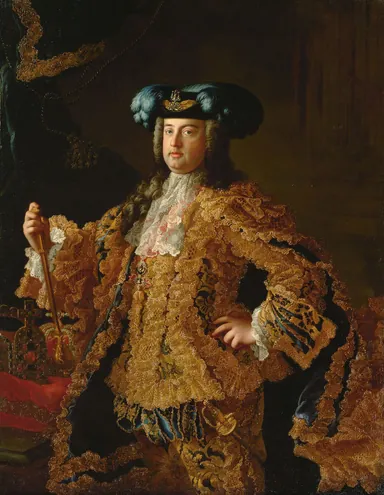 Francis I of the Holy Roman EmpireEmperor1708 – 1765
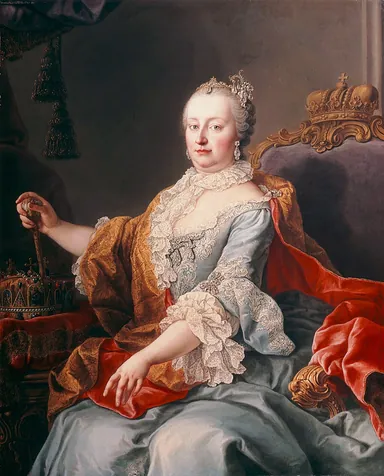 Maria Theresa of AustriaQueen / Archduchess1717 – 1780Maria Luisa of Spain · ESConsort1745 – 1792
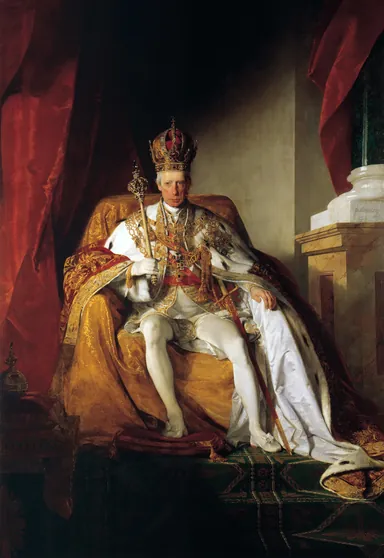 Francis II of the Holy Roman EmpireEmperor1768 – 1835
Same dynasty
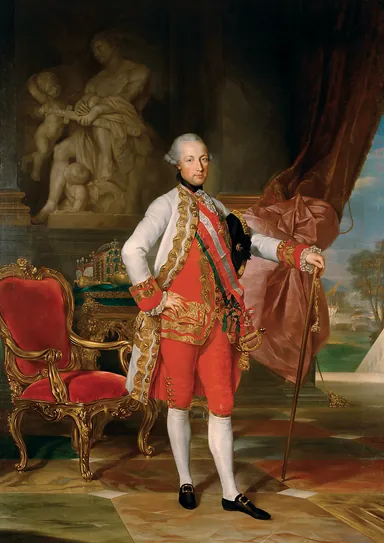 Joseph II of the Holy Roman EmpireEmperor1741 – 1790
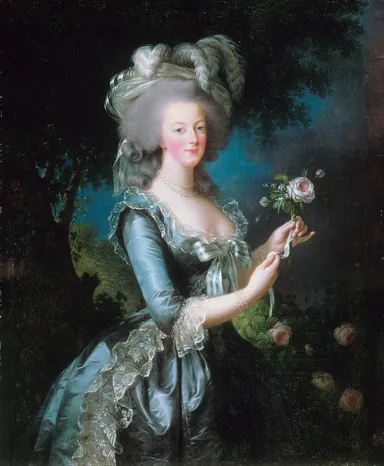 Marie Antoinette of AustriaConsort1755 – 1793Ferdinand III of Tuscany · ESGrand duke1769 – 1824Maria Leopoldina of Austria · ESConsort1797 – 1826
In their lifetime
Joseph II of the Holy Roman EmpireEmperor1741 – 1790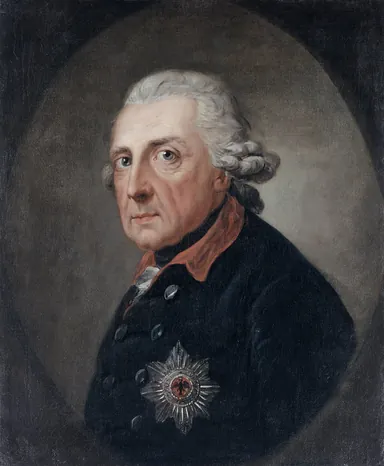 Frederick II of Prussia“the Great”King of Prussia · Elector of Brandenburg1712 – 1786Maria Amalia of Austria · ESConsort1701 – 1756Elizabeth Christina of Brunswick-Wolfenbüttel · ESConsort1691 – 1750Frederick William II of PrussiaKing1744 – 1797Frederick William III of Prussia · ESKing1770 – 1840