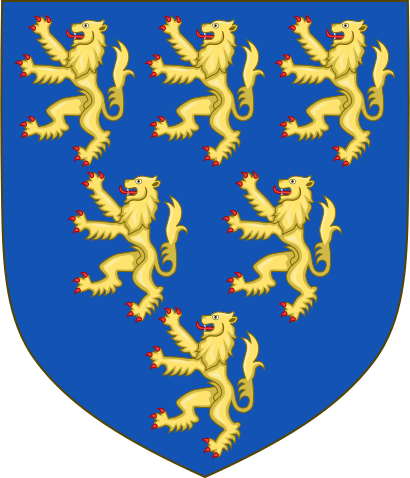
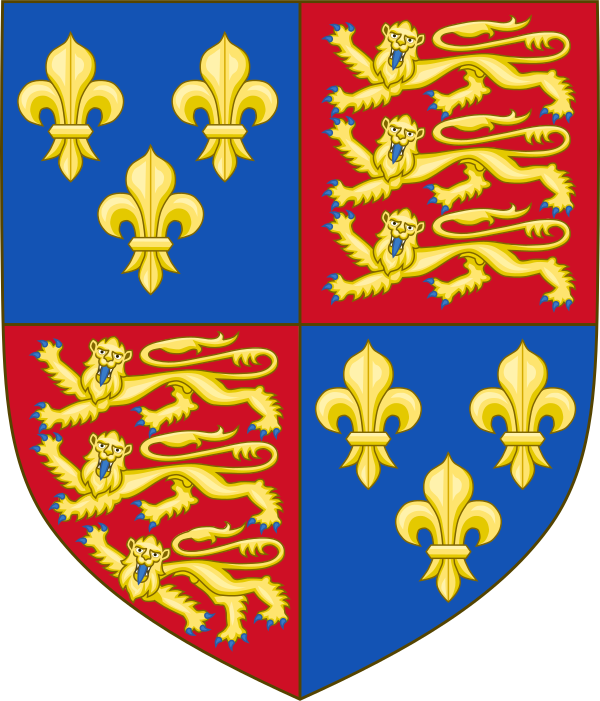
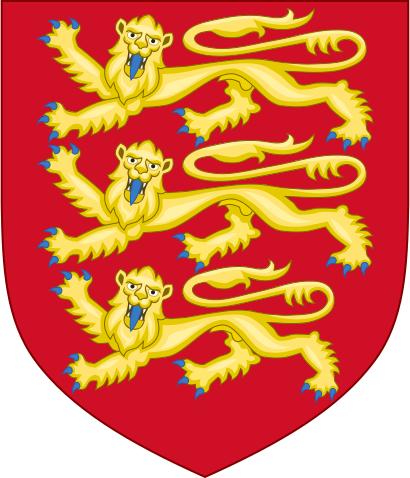
Arms of Plantagenet: Gules, three lions passant guardant in pale or.
Houses and lineages

Plantagenet

The descendants of Geoffrey of Anjou reigned in England from 1154 and governed much of western France as vassals of the French king.

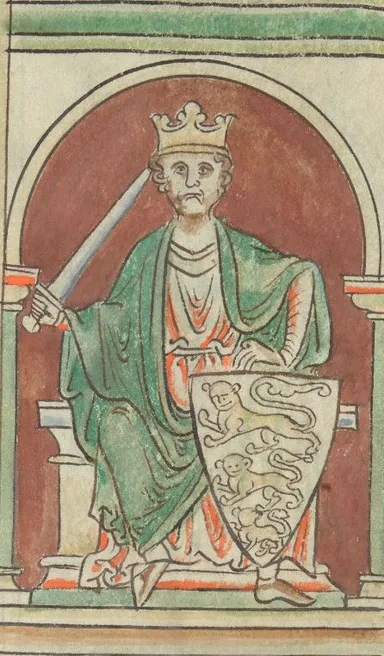
Arms. Gules, three lions passant guardant in pale or. The three lions became established as the royal arms under Richard I.

27 recorded people2 documented connections
Explore in the Spanish Atlas
Genealogy, inheritance and alliances

Parent houses and branches

Descent, marriage and inheritance connect houses in different ways. Each documented link retains its own explanation.

Parent house

Branches of this house

Arms of York
Branches of this house

York

13

Edmund of Langley’s branch combined male-line descent from Edward III with the Mortimer inheritance and contested the English crown with Lancaster.

Read the record
Cadet branch · 1385

Edmund of Langley founded the ducal York branch. His grandson Richard combined that descent with Lionel of Antwerp’s line transmitted through Anne Mortimer.

View the connection in the Spanish tree

Origin

Geoffrey of Anjou, whose emblem gave the house its name, married Matilda, Henry I of England’s daughter. Their son Henry II inherited England in 1154 and, with his wife Eleanor of Aquitaine, brought together Normandy, Anjou and Aquitaine: a group of dominions on both sides of the Channel.

Development

John lost Normandy and Anjou to Philip II of France in 1202–1204 and had to accept Magna Carta in 1215. Henry III and Edward I strengthened Parliament; Edward I conquered Wales. Edward III claimed the French crown in 1337 and began the Hundred Years’ War, in which his son the Black Prince won important victories.

Legacy

Richard II was deposed in 1399 by his cousin Henry of Lancaster, John of Gaunt’s son. The Lancaster and York branches of the Plantagenets subsequently fought for the throne in the Wars of the Roses. Henry Tudor won the crown in 1485 and defeated another Yorkist challenge at Stoke in 1487.

People who connect the history

Protagonists and connections

Territorial context

Linked territories

Recorded members of this house

People in this house

Recorded governments of members

Includes nominal titles, regencies and disputes when recorded. Annual intervals do not establish continuous or exclusive control.

PersonTerritory and titlePeriodStatus
Geoffrey V of Anjou · ESCount · Anjou · ES1129–1151Effective rule
Geoffrey V of Anjou · ESCount · Maine · ES1129–1151Effective rule
Geoffrey V of Anjou · ESDuke · Normandy1144–1150Effective ruleHe conquered Normandy on his wife’s behalf during the English civil war and transferred it to his son Henry in 1150.
Henry II of EnglandDuke · Normandy1150–1189Effective ruleHis father transferred the duchy to him in 1150; Louis VII invested him in 1151.
Henry II of EnglandCount · Anjou · ES1151–1189Effective ruleHe inherited Anjou, including Touraine, and Maine on his father’s death in 1151.
Henry II of EnglandCount · Maine · ES1151–1189Effective rule
Henry II of EnglandDuke · Aquitaine · ES1152–1189Jure uxorisThrough his marriage to Eleanor of Aquitaine in 1152.
Henry II of EnglandKing · England · ES1154–1189Effective rule
Richard I of EnglandDuke · Aquitaine · ES1172–1199Co-rulerInvested as duke at Limoges in 1172; he governed the duchy alongside his mother, Duchess Eleanor.
Geoffrey II of Brittany · ESDuke · Brittany · ES1181–1186Jure uxorisThrough his marriage to Duchess Constance in 1181.
Richard I of EnglandKing · England · ES1189–1199Effective ruleHe spent less than a year in England: the Third Crusade (1190–1192), his captivity in Germany (1192–1194) and war against Philip Augustus kept him on the continent.
Richard I of EnglandDuke · Normandy1189–1199Effective rule
Richard I of EnglandCount · Anjou · ES1189–1199Effective rule
Richard I of EnglandCount · Maine · ES1189–1199Effective rule
John of EnglandKing · England · ES1199–1216Effective rule
John of EnglandDuke · Normandy1199–1203Effective ruleAngevin rule before the French conquest of 1204; the cutoff represents complete years.
John of EnglandCount · Anjou · ES1199–1203Effective ruleAn Angevin county; effective control is not extended beyond the French conquest.
John of EnglandCount · Maine · ES1199–1203Effective ruleA continental Angevin county, distinct from the English occupation of the fifteenth century.
Arthur I of Brittany · ESDuke · Brittany · ES1201–1203Effective ruleProclaimed duke alongside his mother in 1196. A rival of his uncle John for the Angevin inheritance, he was captured at Mirebeau in 1202 and disappeared in 1203.
John of EnglandDuke · Aquitaine · ES1204–1216Effective ruleA separate Aquitanian government; boundaries, confiscations and conquests follow the dated regional versions. A title retained after a territorial loss does not create a filled area.
Henry III of England · ESKing · England · ES1216–1272Effective rule
Henry III of England · ESDuke · Aquitaine · ES1216–1254Effective ruleA separate Aquitanian government; boundaries, confiscations and conquests follow the dated regional versions. A title retained after a territorial loss does not create a filled area.
Edward I of EnglandDuke · Aquitaine · ES1254–1306Effective ruleA separate Aquitanian government; boundaries, confiscations and conquests follow the dated regional versions. A title retained after a territorial loss does not create a filled area.
Richard of CornwallKing of the Romans · Germany · ES1257–1272Rival
Edward I of EnglandKing · England · ES1272–1307Effective rule
Edward II of EnglandDuke · Aquitaine · ES1306–1325Effective ruleA separate Aquitanian government; boundaries, confiscations and conquests follow the dated regional versions. A title retained after a territorial loss does not create a filled area.
Edward II of EnglandKing · England · ES1307–1327Effective rule
Edward III of EnglandDuke · Aquitaine · ES1325–1362Effective ruleA separate Aquitanian government; boundaries, confiscations and conquests follow the dated regional versions. A title retained after a territorial loss does not create a filled area.
Edward III of EnglandKing · England · ES1327–1377Effective rule
Edward of WoodstockPrince · Aquitaine · ES1362–1372Effective rulePrincipality granted in 1362 and relinquished in October 1372; not an independent reign over England.
Edward III of EnglandDuke · Aquitaine · ES1372–1377Effective ruleA separate Aquitanian government; boundaries, confiscations and conquests follow the dated regional versions. A title retained after a territorial loss does not create a filled area.
Richard II of England · ESKing · England · ES1377–1399Effective rule
Richard II of England · ESDuke · Aquitaine · ES1377–1399Effective ruleA separate Aquitanian government; boundaries, confiscations and conquests follow the dated regional versions. A title retained after a territorial loss does not create a filled area.

Contextual bibliography

General references do not by themselves verify every relationship or date. Bibliographic titles retain their original language.

Sources and methodology
Arms: Sodacan · CC BY-SA 4.0 · Wikimedia Commons. Original drawing and proportions preserved.