The Lancaster inheritance turned a Plantagenet branch into a territorial power and subsequently an English royal house.
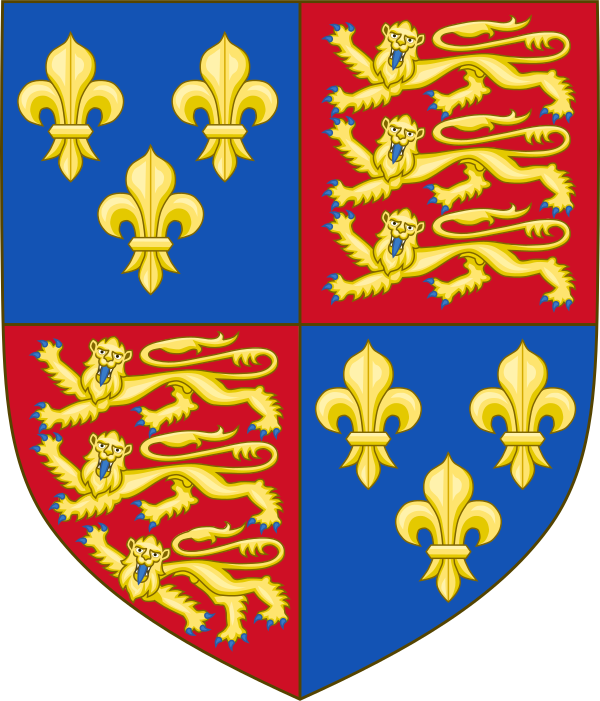
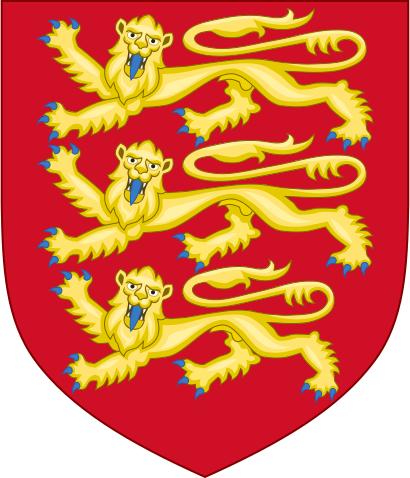
Arms. Quarterly: first and fourth, azure, three fleurs-de-lis or; second and third, gules, three lions passant guardant in pale or. Royal arms from Henry IV. Before accession, members of the Lancaster line used differences such as labels and bordures.
John of Gaunt and Katherine de Roet’s children were legitimised in 1397. The descendants of John Beaufort, Earl of Somerset, led through Margaret Beaufort to Henry Tudor.
Henry III granted the earldom of Lancaster to his son Edmund. The patrimony grew into one of England’s largest collections of lordships. Henry of Grosmont received the ducal title in 1351, and his daughter Blanche married John of Gaunt, Edward III’s son.
Development
John combined Blanche’s inheritance with his position in the royal family. His son Henry Bolingbroke returned from exile in 1399, deposed Richard II and reigned as Henry IV. Henry V renewed the war in France and secured recognition of his succession rights at Troyes.
Legacy
Henry VI inherited as a child and lost most of the French conquests. The wars against York ended his rule and brought the death of his son Edward in 1471. John of Gaunt’s daughters extended other connections: Philippa became Queen of Portugal and Catherine Queen of Castile.
Effective ruleA separate Aquitanian government; boundaries, confiscations and conquests follow the dated regional versions. A title retained after a territorial loss does not create a filled area.
Effective ruleA separate Aquitanian government; boundaries, confiscations and conquests follow the dated regional versions. A title retained after a territorial loss does not create a filled area.
Effective ruleA separate Aquitanian government; boundaries, confiscations and conquests follow the dated regional versions. A title retained after a territorial loss does not create a filled area.