Edmund of Langley’s branch combined male-line descent from Edward III with the Mortimer inheritance and contested the English crown with Lancaster.
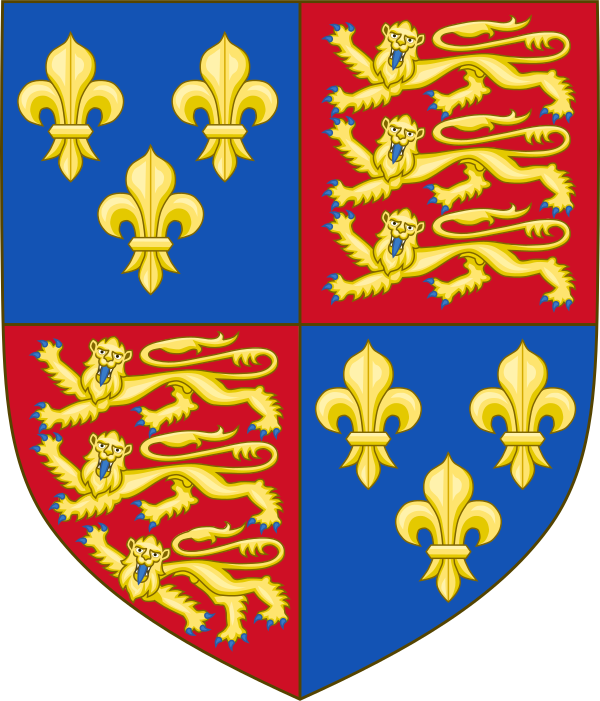
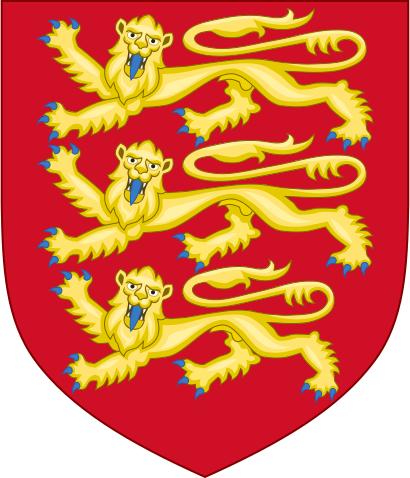
Arms. Quarterly: first and fourth, azure, three fleurs-de-lis or; second and third, gules, three lions passant guardant in pale or. Royal arms borne by the Yorkist kings. Members of the house used differences before accession.
Edmund of Langley founded the ducal York branch. His grandson Richard combined that descent with Lionel of Antwerp’s line transmitted through Anne Mortimer.
A Welsh family that gained the English throne through Henry VII’s victory in 1485 and held it for five reigns, from the break with Rome to the Elizabethan age.
Continuity through marriage and inheritance · 1486
Henry VII’s marriage to Elizabeth, Edward IV’s daughter, united Tudor and York ancestry in their children. Arthur and Henry VIII inherited this double family connection.
Edmund of Langley, Edward III’s son, received the Duchy of York in 1385. His son Richard of Conisburgh married Anne Mortimer. Their son Richard of York combined Langley’s descent with the rights transmitted from Lionel of Antwerp through Philippa of Clarence and the Mortimers.
Development
Richard of York claimed the crown in 1460 and died at Wakefield. His sons Edward IV and Richard III became kings. The alliance with the Nevilles, the marriages of George of Clarence and Richard of Gloucester to Warwick’s daughters, and Edward’s marriage to Elizabeth Woodville transformed the family network and distribution of power.
Legacy
After Edward IV’s death, his children were excluded in 1483 and Richard III became king. He died at Bosworth in 1485. Elizabeth of York married Henry VII in 1486 and transmitted Yorkist ancestry to the Tudors. Clarence’s son Edward of Warwick retained a significant position in succession disputes.