
Philip V of Spain
The first Bourbon king of Spain. The War of the Spanish Succession cost him Milan, Naples and Sardinia; he briefly recovered Sardinia between 1717 and 1720. His Iberian and Italian domains followed different paths.
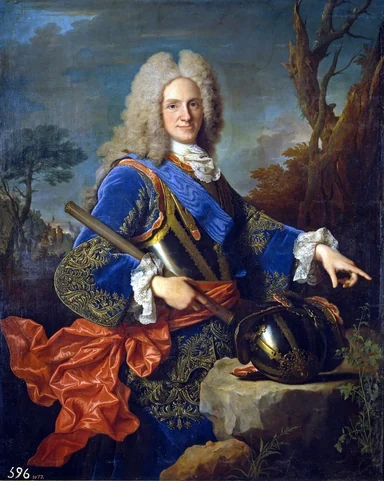
Life of Philip V of Spain
Charles II’s heir
Philip of Bourbon, Duke of Anjou and grandson of Louis XIV, was born at Versailles in 1683. Charles II named him heir in his will, and in 1700 he was proclaimed king of the Spanish crowns. His arrival triggered the War of the Spanish Succession, in which Archduke Charles of Austria had the support of England, the United Provinces and much of the Crown of Aragon.
References: Real Academia de la Historia · Diccionario Biográfico español · Deutsche Biographie · Encyclopaedia Britannica
The war and the Nueva Planta decrees
After the Battle of Almansa in 1707 he abolished the fueros of Aragon and Valencia, and after the fall of Barcelona in 1714 those of Catalonia and Majorca, through the Nueva Planta decrees. The treaties of Utrecht and Rastatt in 1713–1714 recognised him as king in exchange for renouncing the French crown and ceding the Low Countries, Milan, Naples, Sardinia, Sicily, Gibraltar and Minorca.
References: Real Academia de la Historia · Diccionario Biográfico español · Deutsche Biographie · Encyclopaedia Britannica
A long reign in two periods
His second wife, Elisabeth Farnese, directed foreign policy towards securing Italian states for her sons: Charles obtained Naples and Sicily, and Philip, Parma. In 1724 he abdicated in favour of his son Louis I but returned to the throne a few months later when the young king died. He suffered severe depressive episodes. He died in Madrid in 1746 after the monarchy’s longest reign and was succeeded by Ferdinand VI.
References: Real Academia de la Historia · Diccionario Biográfico español · Deutsche Biographie · Encyclopaedia Britannica
This complete profile is available in English. Bibliographic titles retain their original language. Links marked ES open the Spanish edition.
Key details
Birth: 19 December 1683 Documented
Death: 9 July 1746 Documented
Role: King of Spain
Other recorded names: Philip the Spirited
Dynasty: Bourbon · ES
Territories: Spain (ES) · Navarre (ES) · Castile (ES) · León (ES) · Aragon (ES) · County of Barcelona (ES) · Valencia (ES) · Majorca (ES) · Sardinia (ES) · Milan (ES) · Naples (ES) · Trinacria (ES) · Brabant (ES) · Limburg (ES) · Luxembourg (ES) · Guelders (ES) · Flanders (ES) · Hainaut (ES) · Namur (ES) · Lordship of Mechelen (ES)
Recorded relationships
Their titles over time
Follow the changing territories and offices of Philip V of Spain. Each title retains its own status.
Governments in 1700
- Spain11 titles and offices
View titles and jurisdictions
- Castile · ESKing · Effective rule1700–1724
- León · ESKing · Effective rule1700–1724
- Aragon · ESKing · Effective rule1700–1724
- Navarre · ESKing · Branch rule · Upper Navarre after the conquest1700–1724 · From 1512 the two lines did not effectively govern the whole of the former kingdom.
- County of Barcelona · ESCount · Effective rule1700–1724
- Valencia · ESKing · Effective rule1700–1724
- Majorca · ESKing · Effective rule1700–1724
- Sardinia · ESKing · Effective rule1700–1708 · Bourbon allegiance until occupation by supporters of Archduke Charles in 1708; recovered in 1717 and ceded to Savoy in 1720.
- Milan · ESDuke · Effective rule1700–1706 · The Austrian occupation of 1706 ended Bourbon government in the Milanese territories.
- Naples · ESKing · Effective rule1700–1707 · Naples passed to Austrian allegiance in 1707.
- Trinacria · ESKing · Effective rule1700–1713 · Sicily was transferred to Victor Amadeus II under Utrecht in 1713.
The monarchy’s crowns and dominions. Portugal retained a separate administration during the dynastic union of 1580–1640. Source for this grouping
- Habsburg Netherlands8 titles and offices
View titles and jurisdictions
- Brabant · ESDuke · Effective rule1700–1711 · A distinct provincial title. Recognised in 1700–1701 by Governor-General Maximilian II Emanuel of Bavaria; after the defeat at Ramillies in 1706 most provinces were held by the Allies. In June 1711 Philip transferred sovereignty over the Spanish Netherlands to Maximilian II Emanuel. The area effectively controlled is distinguished by the map’s dated phases.
- Limburg · ESDuke · Effective rule1700–1711 · A distinct provincial title. Recognised in 1700–1701 by Governor-General Maximilian II Emanuel of Bavaria; after the defeat at Ramillies in 1706 most provinces were held by the Allies. In June 1711 Philip transferred sovereignty over the Spanish Netherlands to Maximilian II Emanuel. The area effectively controlled is distinguished by the map’s dated phases.
- Luxembourg · ESDuke · Effective rule1700–1711 · A distinct provincial title. Recognised in 1700–1701 by Governor-General Maximilian II Emanuel of Bavaria; the town remained under Bourbon control until Philip transferred sovereignty over the Spanish Netherlands to Maximilian II Emanuel in June 1711.
- Guelders · ESDuke · Effective rule1700–1711 · A distinct provincial title. Recognised in 1700–1701 by Governor-General Maximilian II Emanuel of Bavaria; after the defeat at Ramillies in 1706 most provinces were held by the Allies. In June 1711 Philip transferred sovereignty over the Spanish Netherlands to Maximilian II Emanuel. The area effectively controlled is distinguished by the map’s dated phases.
- Flanders · ESCount · Effective rule1700–1711 · A distinct provincial title. Recognised in 1700–1701 by Governor-General Maximilian II Emanuel of Bavaria; after the defeat at Ramillies in 1706 most provinces were held by the Allies. In June 1711 Philip transferred sovereignty over the Spanish Netherlands to Maximilian II Emanuel. The area effectively controlled is distinguished by the map’s dated phases.
- Hainaut · ESCount · Effective rule1700–1711 · A distinct provincial title. Recognised in 1700–1701 by Governor-General Maximilian II Emanuel of Bavaria; after the defeat at Ramillies in 1706 most provinces were held by the Allies. In June 1711 Philip transferred sovereignty over the Spanish Netherlands to Maximilian II Emanuel. The area effectively controlled is distinguished by the map’s dated phases.
- Namur · ESCount · Effective rule1700–1711 · A distinct provincial title. Recognised in 1700–1701 by Governor-General Maximilian II Emanuel of Bavaria; the town remained under Bourbon control until Philip transferred sovereignty over the Spanish Netherlands to Maximilian II Emanuel in June 1711.
- Lordship of Mechelen · ESLord · Effective rule1700–1711 · A distinct provincial title. Recognised in 1700–1701 by Governor-General Maximilian II Emanuel of Bavaria; after the defeat at Ramillies in 1706 most provinces were held by the Allies. In June 1711 Philip transferred sovereignty over the Spanish Netherlands to Maximilian II Emanuel. The area effectively controlled is distinguished by the map’s dated phases.
Joint succession of the provinces under the Pragmatic Sanction of 1549. Each title retains its identity, and only the area under control in the selected year is shown. Rebel provinces are not included merely because the sovereign claimed them. Source for this grouping
Annual dates: overlap within one year does not prove that two offices were held on the same day. Regencies and co-rulerships retain their labels.
How these titles came together
- 1700 · MilanInheritance
Philip inherited Charles II’s ducal position; imperial troops took Milan in 1706 and Bourbon rule ended.
- 1717 · SardiniaConquest
The Spanish expedition of 1717 temporarily recovered Sardinia. The subsequent settlement led to its transfer to Savoy in 1720.
Selected explained accessions. Other titles remain in the profile’s list of recorded governments.
Sources for this profile
- Neue Deutsche Biographie · Maximilian II. Emanuel
- Treccani · Carlos VI y los cambios italianos de 1706–1734
- Treccani · Cerdeña durante la Guerra de Sucesión
- Treccani · Saboya y el intercambio de 1720
- Deutsche Nationalbibliothek · GND authority record · Philipp V., Spanien, König
- Real Academia de la Historia · Diccionario Biográfico español
- Encyclopaedia Britannica
Biographical and contextual references in their original language. Sources and methodology.
Evidence for this profile
35 recorded claims · 16 without a claim-specific source. Context references do not by themselves verify every fact.
Dates (2/2 with a precise source)
- BirthDocumented
19 December 1683
The authority record gives the birth as 1683-12-19. - DeathDocumented
9 July 1746
The authority record gives the death as 1746-07-09.
Family and relationships (3/4 with a precise source)
- FatherDocumented
Louis, Grand Dauphin
The authority record identifies Louis, Grand Dauphin (GND 119209853) as father. - MotherDocumented
Maria Anna Victoria of Bavaria
The authority record identifies Maria Anna Victoria of Bavaria (GND 120251922) as mother. - Marriage or partnershipDocumented
Maria Luisa Gabriella of Savoy
The authority record identifies Maria Luisa Gabriella of Savoy (GND 122666526) as spouse. - Marriage or partnershipPending review
Elisabeth Farnese
A precise source has not yet been added.
Governments (12/27 with a precise source)
- GovernmentPending review
King · Castile · 1700–1724
A precise source has not yet been added. - GovernmentPending review
King · León · 1700–1724
A precise source has not yet been added. - GovernmentPending review
King · Aragon · 1700–1724
A precise source has not yet been added. - GovernmentPending review
King · Castile · 1724–1746
A precise source has not yet been added. - GovernmentPending review
King · León · 1724–1746
A precise source has not yet been added. - GovernmentPending review
King · Aragon · 1724–1746
A precise source has not yet been added. - GovernmentPending review
Count · County of Barcelona · 1700–1724
A precise source has not yet been added. - GovernmentPending review
King · Valencia · 1700–1724
A precise source has not yet been added. - GovernmentPending review
King · Majorca · 1700–1724
A precise source has not yet been added. - GovernmentInferred
King · Sardinia · 1700–1708
The final year is that of Cagliari’s surrender to the forces supporting Archduke Charles. - GovernmentPending review
Count · County of Barcelona · 1724–1746
A precise source has not yet been added. - GovernmentPending review
King · Valencia · 1724–1746
A precise source has not yet been added. - GovernmentPending review
King · Majorca · 1724–1746
A precise source has not yet been added. - GovernmentInferred
King · Sardinia · 1717–1720
Spanish reconquest in 1717 and evacuation in 1720; transition years overlap at annual resolution. - GovernmentInferred
Duke · Milan · 1700–1706
The source documents the change of control in 1706; the initial personal title follows the succession of 1700. - GovernmentInferred
King · Naples · 1700–1707
The change to Austrian control is dated to 1707; the start follows Charles II’s inheritance. - GovernmentPending review
King · Trinacria · 1700–1713
A precise source has not yet been added. - GovernmentDocumented
Duke · Brabant · 1700–1711
Sovereign of the province as King of Spain from Charles II’s death until the transfer of the Spanish Netherlands to Maximilian II Emanuel in June 1711; from 1706 the Allies occupied most of the territory, as recorded by the map’s phases. - GovernmentDocumented
Duke · Limburg · 1700–1711
Sovereign of the province as King of Spain from Charles II’s death until the transfer of the Spanish Netherlands to Maximilian II Emanuel in June 1711; from 1706 the Allies occupied most of the territory, as recorded by the map’s phases. - GovernmentDocumented
Duke · Luxembourg · 1700–1711
Sovereign of the province as King of Spain until the transfer of June 1711; Namur and Luxembourg remained under Bourbon control and then passed to Maximilian II Emanuel. - GovernmentDocumented
Duke · Guelders · 1700–1711
Sovereign of the province as King of Spain from Charles II’s death until the transfer of the Spanish Netherlands to Maximilian II Emanuel in June 1711; from 1706 the Allies occupied most of the territory, as recorded by the map’s phases. - GovernmentDocumented
Count · Flanders · 1700–1711
Sovereign of the province as King of Spain from Charles II’s death until the transfer of the Spanish Netherlands to Maximilian II Emanuel in June 1711; from 1706 the Allies occupied most of the territory, as recorded by the map’s phases. - GovernmentDocumented
Count · Hainaut · 1700–1711
Sovereign of the province as King of Spain from Charles II’s death until the transfer of the Spanish Netherlands to Maximilian II Emanuel in June 1711; from 1706 the Allies occupied most of the territory, as recorded by the map’s phases. - GovernmentDocumented
Count · Namur · 1700–1711
Sovereign of the province as King of Spain until the transfer of June 1711; Namur and Luxembourg remained under Bourbon control and then passed to Maximilian II Emanuel. - GovernmentDocumented
Lord · Lordship of Mechelen · 1700–1711
Sovereign of the province as King of Spain from Charles II’s death until the transfer of the Spanish Netherlands to Maximilian II Emanuel in June 1711; from 1706 the Allies occupied most of the territory, as recorded by the map’s phases.
Successions (2/2 with a precise source)
- SuccessionDocumented
Milan · Unrecorded successor · 1700
Philip inherited Charles II’s ducal position; imperial troops took Milan in 1706 and Bourbon rule ended. - SuccessionDocumented
Sardinia · Unrecorded successor · 1717
The Spanish expedition of 1717 temporarily recovered Sardinia. The subsequent settlement led to its transfer to Savoy in 1720.
Biographical and contextual references (7)
- Neue Deutsche Biographie · Maximilian II. Emanuel
- Treccani · Carlos VI y los cambios italianos de 1706–1734
- Treccani · Cerdeña durante la Guerra de Sucesión
- Treccani · Saboya y el intercambio de 1720
- Deutsche Nationalbibliothek · GND authority record · Philipp V., Spanien, König
- Real Academia de la Historia · Diccionario Biográfico español
- Encyclopaedia Britannica
Editorial history
- 2026-10-12 · Claim registry added; existing historical data kept. Specific sourcing remains to be reviewed.
- 2026-10-08 · Claim registry added; existing historical data kept. Specific sourcing remains to be reviewed.
- 2026-10-04 · Claim registry added; existing historical data kept. Specific sourcing remains to be reviewed.
- 2026-10-04 · Claim registry added; existing historical data kept. Specific sourcing remains to be reviewed.
- 2026-10-03 · Claim registry added; existing historical data kept. Specific sourcing remains to be reviewed.
- 2026-09-30 · The duchy is limited to Dijon and Autun; each other fief now enters the map only under its dated ruler. John III of Namur and the Nevers/Rethel branch were added. The previous shape combined later counties and unrelated lands as if all belonged to the duchy from 1363.
- 2026-09-28 · Claim registry added; existing historical data kept. Specific sourcing remains to be reviewed.
More paths from Philip V of Spain
Family
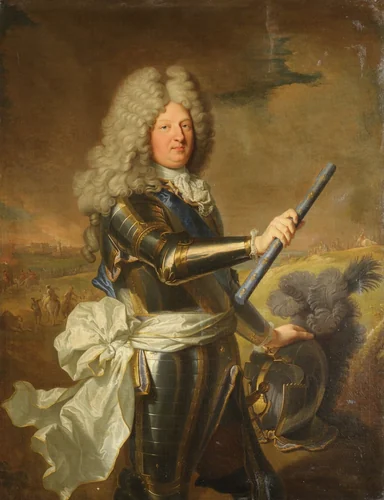 Louis, Grand Dauphin · ESPrince / Dauphin1661 – 1711Maria Anna Victoria of Bavaria · ESConsort1660 – 1690Maria Luisa Gabriella of Savoy · ESConsort1688 – 1714Elisabeth Farnese · ESConsort1692 – 1766Maria Teresa Rafaela of Spain · ESConsort / Dauphine1726 – 1746
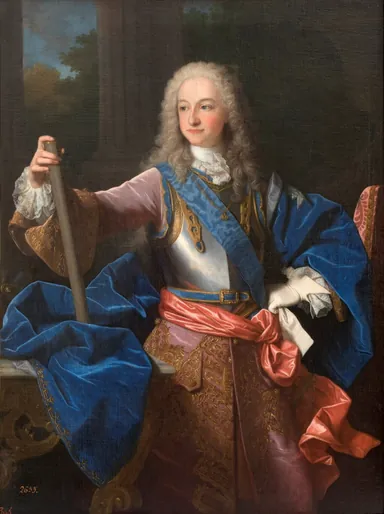 Louis I of Spain“the Beloved”King of Spain1707 – 1724
Same dynasty
Louis, Duke of Burgundy · ESPrince / Dauphin1682 – 1712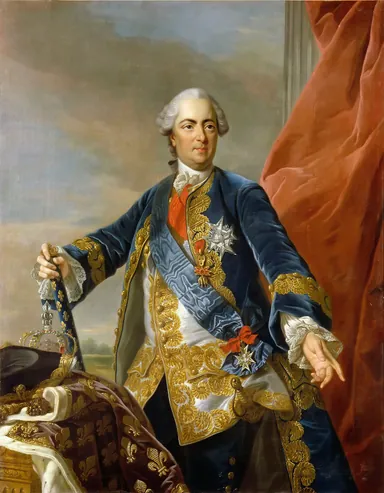 Louis XV of France“the Beloved”King of France · Titular king of Navarre1710 – 1774Louis, Dauphin of France · ESPrince / Dauphin1729 – 1765Mariana Victoria of Spain · ESConsort1718 – 1781
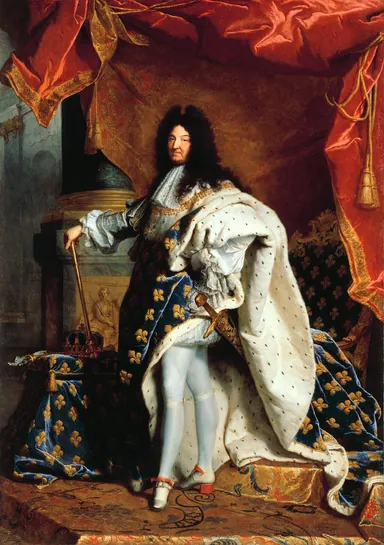 Louis XIV of France“the Sun King”King of France and Navarre1638 – 1715Maria Luisa of Spain · ESConsort1745 – 1792
In their lifetime
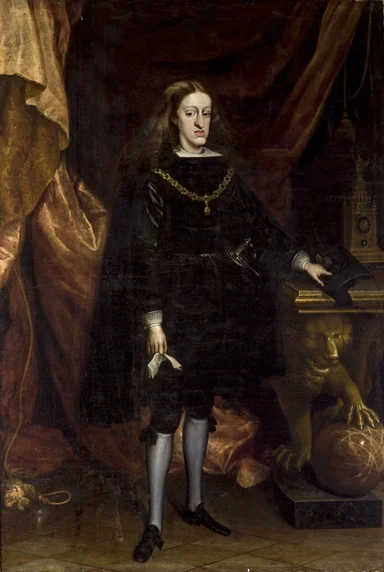 Charles II of Spain“the Bewitched”King of Spain1661 – 1700
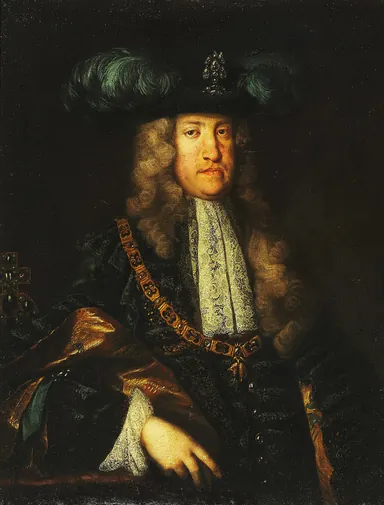 Charles VI, Holy Roman Emperor · ESEmperor1685 – 1740
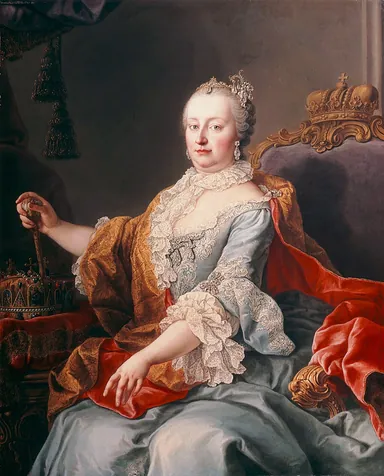 Maria Theresa · ESQueen / Archduchess1717 – 1780
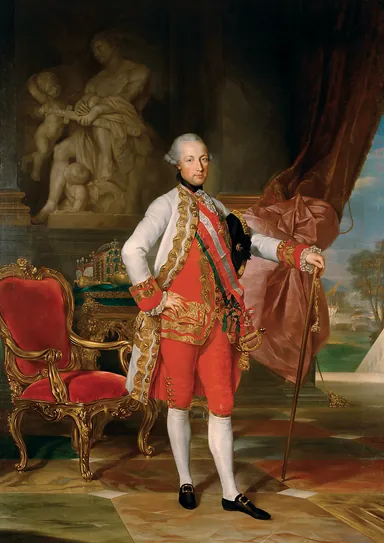 Joseph II, Holy Roman Emperor · ESEmperor1741 – 1790
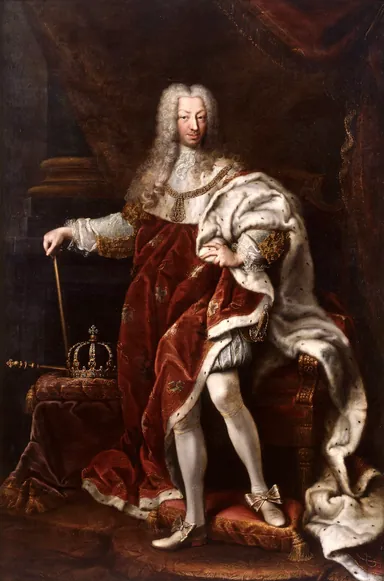 Charles Emmanuel III of Savoy · ESKing / Duke1701 – 1773Maria Theresa of Spain · ESConsort1638 – 1683