
Charles II of Spain
The last Habsburg king of Spain. His lack of descendants turned the succession into a European question and, after his death, triggered the War of the Spanish Succession.
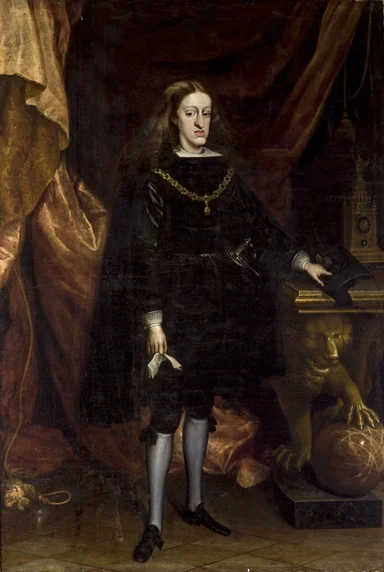
Life of Charles II of Spain
A child king
The son of Philip IV and Mariana of Austria, he was born in Madrid in 1661 and inherited the throne before the age of four, under his mother’s regency. His fragile health, partly linked to dynastic inbreeding, fuelled uncertainty about the succession from an early stage.
References: Real Academia de la Historia · Diccionario Biográfico español · Deutsche Biographie · Encyclopaedia Britannica
Government and wars
His reign saw struggles between chief ministers such as Nithard, Valenzuela and John Joseph of Austria, and monetary reforms under Oropesa and Medinaceli that stabilised the treasury. Wars with Louis XIV cost Franche-Comté in 1678 and towns in the Low Countries. He married Marie Louise of Orléans and then Maria Anna of Neuburg, without issue.
References: Real Academia de la Historia · Diccionario Biográfico español · Deutsche Biographie · Encyclopaedia Britannica
The will
The powers negotiated the partition of his inheritance during his lifetime. Shortly before his death in 1700 he named Philip of Anjou, Louis XIV’s grandson, as heir on condition that the monarchy remain united. With him the Spanish Habsburg line became extinct.
References: Real Academia de la Historia · Diccionario Biográfico español · Deutsche Biographie · Encyclopaedia Britannica
This complete profile is available in English. Bibliographic titles retain their original language. Links marked ES open the Spanish edition.
Key details
Birth: 6 November 1661 Documented
Death: 1 November 1700 Documented
Role: King of Spain
Other recorded names: Charles the Bewitched
Dynasty: Habsburg · ES
Territories: Spain (ES) · Castile (ES) · Aragon (ES) · Navarre (ES) · Naples (ES) · Trinacria (ES) · Milan (ES) · Flanders (ES) · León (ES) · Sardinia (ES) · County of Barcelona (ES) · Valencia (ES) · Majorca (ES) · Brabant (ES) · Limburg (ES) · Luxembourg (ES) · Guelders (ES) · Hainaut (ES) · Namur (ES) · Lordship of Mechelen (ES) · Tournai (ES) · Artois (ES) · County of Burgundy (ES)
Recorded relationships
Their titles over time
Follow the changing territories and offices of Charles II of Spain. Each title retains its own status.
Governments in 1665
- Spain11 titles and offices
View titles and jurisdictions
- Castile · ESKing · Effective rule1665–1700
- León · ESKing · Effective rule1665–1700
- Aragon · ESKing · Effective rule1665–1700
- Navarre · ESKing · Branch rule · Upper Navarre after the conquest1665–1700 · From 1512 the two lines did not effectively govern the whole of the former kingdom.
- Milan · ESDuke · Effective rule1665–1700 · His title began during Charles II’s minority; his mother Mariana of Austria acted as regent until 1675.
- Naples · ESKing · Effective rule1665–1700 · His title began during Charles II’s minority; his mother Mariana of Austria acted as regent until 1675.
- Trinacria · ESKing · Effective rule1665–1700 · His title began during Charles II’s minority; his mother Mariana of Austria acted as regent until 1675.
- Sardinia · ESKing · Effective rule1665–1700 · His title began during Charles II’s minority; his mother Mariana of Austria acted as regent until 1675.
- County of Barcelona · ESCount · Effective rule1665–1700
- Valencia · ESKing · Effective rule1665–1700
- Majorca · ESKing · Effective rule1665–1700
The monarchy’s crowns and dominions. Portugal retained a separate administration during the dynastic union of 1580–1640. Source for this grouping
- Habsburg Netherlands11 titles and offices
View titles and jurisdictions
- Brabant · ESDuke · Effective rule1665–1700 · A provincial title in its own right. Sovereignty and the area effectively controlled are distinguished through the map’s dated conquests and partitions.
- Limburg · ESDuke · Effective rule1665–1700 · A provincial title in its own right. Sovereignty and the area effectively controlled are distinguished through the map’s dated conquests and partitions.
- Luxembourg · ESDuke · Effective rule1665–1700 · A provincial title in its own right. Sovereignty and the area effectively controlled are distinguished through the map’s dated conquests and partitions.
- Guelders · ESDuke · Effective rule1665–1700 · A provincial title in its own right. Sovereignty and the area effectively controlled are distinguished through the map’s dated conquests and partitions.
- Flanders · ESCount · Effective rule1665–1700 · A provincial title in its own right. Sovereignty and the area effectively controlled are distinguished through the map’s dated conquests and partitions.
- Hainaut · ESCount · Effective rule1665–1700 · A provincial title in its own right. Sovereignty and the area effectively controlled are distinguished through the map’s dated conquests and partitions.
- Namur · ESCount · Effective rule1665–1700 · A provincial title in its own right. Sovereignty and the area effectively controlled are distinguished through the map’s dated conquests and partitions.
- Lordship of Mechelen · ESLord · Effective rule1665–1700 · A provincial title in its own right. Sovereignty and the area effectively controlled are distinguished through the map’s dated conquests and partitions.
- Tournai · ESLord · Effective rule1665–1666 · A provincial title in its own right. Sovereignty and the area effectively controlled are distinguished through the map’s dated conquests and partitions.
- Artois · ESCount · Effective rule1665–1677 · A provincial title in its own right. Sovereignty and the area effectively controlled are distinguished through the map’s dated conquests and partitions.
- County of Burgundy · ESCount · Effective rule1665–1673 · A provincial title in its own right. Sovereignty and the area effectively controlled are distinguished through the map’s dated conquests and partitions.
Joint succession of the provinces under the Pragmatic Sanction of 1549. Each title retains its identity, and only the area under control in the selected year is shown. Rebel provinces are not included merely because the sovereign claimed them. Source for this grouping
Annual dates: overlap within one year does not prove that two offices were held on the same day. Regencies and co-rulerships retain their labels.
How these titles came together
- 1665 · Milan · Naples · Trinacria · SardiniaInheritance
Charles II inherited this domain as a minor. PARES lists his Italian titles; Mariana of Austria acted as regent during his minority.
Selected explained accessions. Other titles remain in the profile’s list of recorded governments.
Sources for this profile
- Lombardia Beni Culturali · Stato di Milano (1535–1749)
- PARES · Carlos II
- Deutsche Nationalbibliothek · GND authority record · Karl II., Spanien, König
- Real Academia de la Historia · Diccionario Biográfico español
- Encyclopaedia Britannica
Biographical and contextual references in their original language. Sources and methodology.
Evidence for this profile
30 recorded claims · 7 without a claim-specific source. Context references do not by themselves verify every fact.
Dates (2/2 with a precise source)
- BirthDocumented
6 November 1661
The authority record gives the birth as 1661-11-06. - DeathDocumented
1 November 1700
The authority record gives the death as 1700-11-01.
Family and relationships (2/2 with a precise source)
- FatherDocumented
Philip IV of Spain
The authority record identifies Philip IV of Spain (GND 118593870) as father. - MotherDocumented
Mariana of Austria
The authority record identifies Mariana of Austria (GND 118781863) as mother.
Governments (15/22 with a precise source)
- GovernmentPending review
King · Castile · 1665–1700
A precise source has not yet been added. - GovernmentPending review
King · León · 1665–1700
A precise source has not yet been added. - GovernmentPending review
King · Aragon · 1665–1700
A precise source has not yet been added. - GovernmentInferred
Duke · Milan · 1665–1700
PARES confirms the title and the Lombard source confirms the monarchy’s rule in Milan. The annual interval 1665–1700 is inferred from Charles II’s reign and requires specific local verification. - GovernmentDocumented
King · Naples · 1665–1700
The title began during Mariana of Austria’s regency. - GovernmentDocumented
King · Trinacria · 1665–1700
PARES calls this kingdom Sicily; the Atlas retains its entity name “Trinacria”. - GovernmentDocumented
King · Sardinia · 1665–1700
The title began during Mariana of Austria’s regency. - GovernmentPending review
Count · County of Barcelona · 1665–1700
A precise source has not yet been added. - GovernmentPending review
King · Valencia · 1665–1700
A precise source has not yet been added. - GovernmentPending review
King · Majorca · 1665–1700
A precise source has not yet been added. - GovernmentDocumented
Duke · Brabant · 1665–1700
A provincial title in its own right. Sovereignty and the area effectively controlled are distinguished through the map’s dated conquests and partitions.René Vermeir / Archives de l’État · Ordonnances de Philippe IV, tome IV · Ordinance 1656/12, 21 November 1656, pp. 23–24: ducal, comital and seigneurial titles; ordinance 1656/11, p. 23: bailiff of Tournai and the Tournaisis. The title does not prove control of each town.Ministère belge de la Justice · Recueil des ordonnances des Pays-Bas · Second series: reigns of Philip IV (1621–1665) and Charles II (1665–1700); the provinces’ monarchical continuity must be compared with the local conquests recorded in the cartography.William R. Shepherd · The Netherlands, 1559–1609 · Historical Atlas (1923), p. 117: provinces, towns in Spanish possession and the frontier of 1609/1648; a visual comparison, not a match between the place name and a modern province.Service public de Wallonie · Le territoire de la Wallonie · Historical atlas: principalities and provinces since the Middle Ages; Liège, Stavelot-Malmedy and Bouillon remained distinct from the Burgundian, Spanish and Austrian provinces until the late eighteenth century. - GovernmentDocumented
Duke · Limburg · 1665–1700
A provincial title in its own right. Sovereignty and the area effectively controlled are distinguished through the map’s dated conquests and partitions.René Vermeir / Archives de l’État · Ordonnances de Philippe IV, tome IV · Ordinance 1656/12, 21 November 1656, pp. 23–24: ducal, comital and seigneurial titles; ordinance 1656/11, p. 23: bailiff of Tournai and the Tournaisis. The title does not prove control of each town.Ministère belge de la Justice · Recueil des ordonnances des Pays-Bas · Second series: reigns of Philip IV (1621–1665) and Charles II (1665–1700); the provinces’ monarchical continuity must be compared with the local conquests recorded in the cartography.Service public de Wallonie · Le territoire de la Wallonie · Historical atlas: principalities and provinces since the Middle Ages; Liège, Stavelot-Malmedy and Bouillon remained distinct from the Burgundian, Spanish and Austrian provinces until the late eighteenth century.William R. Shepherd · The Netherlands, 1559–1609 · Historical Atlas (1923), p. 117: provinces, towns in Spanish possession and the frontier of 1609/1648; a visual comparison, not a match between the place name and a modern province. - GovernmentDocumented
Duke · Luxembourg · 1665–1700
A provincial title in its own right. Sovereignty and the area effectively controlled are distinguished through the map’s dated conquests and partitions.René Vermeir / Archives de l’État · Ordonnances de Philippe IV, tome IV · Ordinance 1656/12, 21 November 1656, pp. 23–24: ducal, comital and seigneurial titles; ordinance 1656/11, p. 23: bailiff of Tournai and the Tournaisis. The title does not prove control of each town.Ministère belge de la Justice · Recueil des ordonnances des Pays-Bas · Second series: reigns of Philip IV (1621–1665) and Charles II (1665–1700); the provinces’ monarchical continuity must be compared with the local conquests recorded in the cartography.Service public de Wallonie · Le territoire de la Wallonie · Historical atlas: principalities and provinces since the Middle Ages; Liège, Stavelot-Malmedy and Bouillon remained distinct from the Burgundian, Spanish and Austrian provinces until the late eighteenth century.William R. Shepherd · The Netherlands, 1559–1609 · Historical Atlas (1923), p. 117: provinces, towns in Spanish possession and the frontier of 1609/1648; a visual comparison, not a match between the place name and a modern province. - GovernmentDocumented
Duke · Guelders · 1665–1700
A provincial title in its own right. Sovereignty and the area effectively controlled are distinguished through the map’s dated conquests and partitions.René Vermeir / Archives de l’État · Ordonnances de Philippe IV, tome IV · Ordinance 1656/12, 21 November 1656, pp. 23–24: ducal, comital and seigneurial titles; ordinance 1656/11, p. 23: bailiff of Tournai and the Tournaisis. The title does not prove control of each town.Ministère belge de la Justice · Recueil des ordonnances des Pays-Bas · Second series: reigns of Philip IV (1621–1665) and Charles II (1665–1700); the provinces’ monarchical continuity must be compared with the local conquests recorded in the cartography.Erfgoedfestival / Mijn Gelderland · Overkwartier · Upper Quarter of Guelders, conquests of 1632 and 1637, and the Utrecht partition of 1713 between four powers; Roermond, Venlo and Geldern do not constitute the entire Duchy of Limburg.William R. Shepherd · The Netherlands, 1559–1609 · Historical Atlas (1923), p. 117: provinces, towns in Spanish possession and the frontier of 1609/1648; a visual comparison, not a match between the place name and a modern province. - GovernmentDocumented
Count · Flanders · 1665–1700
A provincial title in its own right. Sovereignty and the area effectively controlled are distinguished through the map’s dated conquests and partitions.René Vermeir / Archives de l’État · Ordonnances de Philippe IV, tome IV · Ordinance 1656/12, 21 November 1656, pp. 23–24: ducal, comital and seigneurial titles; ordinance 1656/11, p. 23: bailiff of Tournai and the Tournaisis. The title does not prove control of each town.Ministère belge de la Justice · Recueil des ordonnances des Pays-Bas · Second series: reigns of Philip IV (1621–1665) and Charles II (1665–1700); the provinces’ monarchical continuity must be compared with the local conquests recorded in the cartography.Service public de Wallonie · Le territoire de la Wallonie · Historical atlas: principalities and provinces since the Middle Ages; Liège, Stavelot-Malmedy and Bouillon remained distinct from the Burgundian, Spanish and Austrian provinces until the late eighteenth century.William R. Shepherd · The Netherlands, 1559–1609 · Historical Atlas (1923), p. 117: provinces, towns in Spanish possession and the frontier of 1609/1648; a visual comparison, not a match between the place name and a modern province. - GovernmentDocumented
Count · Hainaut · 1665–1700
A provincial title in its own right. Sovereignty and the area effectively controlled are distinguished through the map’s dated conquests and partitions.René Vermeir / Archives de l’État · Ordonnances de Philippe IV, tome IV · Ordinance 1656/12, 21 November 1656, pp. 23–24: ducal, comital and seigneurial titles; ordinance 1656/11, p. 23: bailiff of Tournai and the Tournaisis. The title does not prove control of each town.Ministère belge de la Justice · Recueil des ordonnances des Pays-Bas · Second series: reigns of Philip IV (1621–1665) and Charles II (1665–1700); the provinces’ monarchical continuity must be compared with the local conquests recorded in the cartography.Service public de Wallonie · Le territoire de la Wallonie · Historical atlas: principalities and provinces since the Middle Ages; Liège, Stavelot-Malmedy and Bouillon remained distinct from the Burgundian, Spanish and Austrian provinces until the late eighteenth century.William R. Shepherd · The Netherlands, 1559–1609 · Historical Atlas (1923), p. 117: provinces, towns in Spanish possession and the frontier of 1609/1648; a visual comparison, not a match between the place name and a modern province. - GovernmentDocumented
Count · Namur · 1665–1700
A provincial title in its own right. Sovereignty and the area effectively controlled are distinguished through the map’s dated conquests and partitions.René Vermeir / Archives de l’État · Ordonnances de Philippe IV, tome IV · Ordinance 1656/12, 21 November 1656, pp. 23–24: ducal, comital and seigneurial titles; ordinance 1656/11, p. 23: bailiff of Tournai and the Tournaisis. The title does not prove control of each town.Ministère belge de la Justice · Recueil des ordonnances des Pays-Bas · Second series: reigns of Philip IV (1621–1665) and Charles II (1665–1700); the provinces’ monarchical continuity must be compared with the local conquests recorded in the cartography.Service public de Wallonie · Le territoire de la Wallonie · Historical atlas: principalities and provinces since the Middle Ages; Liège, Stavelot-Malmedy and Bouillon remained distinct from the Burgundian, Spanish and Austrian provinces until the late eighteenth century.William R. Shepherd · The Netherlands, 1559–1609 · Historical Atlas (1923), p. 117: provinces, towns in Spanish possession and the frontier of 1609/1648; a visual comparison, not a match between the place name and a modern province. - GovernmentDocumented
Lord · Lordship of Mechelen · 1665–1700
A provincial title in its own right. Sovereignty and the area effectively controlled are distinguished through the map’s dated conquests and partitions.René Vermeir / Archives de l’État · Ordonnances de Philippe IV, tome IV · Ordinance 1656/12, 21 November 1656, pp. 23–24: ducal, comital and seigneurial titles; ordinance 1656/11, p. 23: bailiff of Tournai and the Tournaisis. The title does not prove control of each town.Ministère belge de la Justice · Recueil des ordonnances des Pays-Bas · Second series: reigns of Philip IV (1621–1665) and Charles II (1665–1700); the provinces’ monarchical continuity must be compared with the local conquests recorded in the cartography.Agentschap Onroerend Erfgoed · Kanton Mechelen · Jurisdictions of Liège and the Berthout family, the Brabant period and transfer to Flanders after the war and Treaty of Ath in 1357; Burgundian inheritance in 1384, with a distinct lordship until the end of the Ancien Régime.Service public de Wallonie · Le territoire de la Wallonie · Historical atlas: principalities and provinces since the Middle Ages; Liège, Stavelot-Malmedy and Bouillon remained distinct from the Burgundian, Spanish and Austrian provinces until the late eighteenth century. - GovernmentDocumented
Lord · Tournai · 1665–1666
A provincial title in its own right. Sovereignty and the area effectively controlled are distinguished through the map’s dated conquests and partitions.René Vermeir / Archives de l’État · Ordonnances de Philippe IV, tome IV · Ordinance 1656/12, 21 November 1656, pp. 23–24: ducal, comital and seigneurial titles; ordinance 1656/11, p. 23: bailiff of Tournai and the Tournaisis. The title does not prove control of each town.Ministère belge de la Justice · Recueil des ordonnances des Pays-Bas · Second series: reigns of Philip IV (1621–1665) and Charles II (1665–1700); the provinces’ monarchical continuity must be compared with the local conquests recorded in the cartography.Service public de Wallonie · Le territoire de la Wallonie · Historical atlas: principalities and provinces since the Middle Ages; Liège, Stavelot-Malmedy and Bouillon remained distinct from the Burgundian, Spanish and Austrian provinces until the late eighteenth century.William R. Shepherd · The Netherlands, 1559–1609 · Historical Atlas (1923), p. 117: provinces, towns in Spanish possession and the frontier of 1609/1648; a visual comparison, not a match between the place name and a modern province. - GovernmentDocumented
Count · Artois · 1665–1677
A provincial title in its own right. Sovereignty and the area effectively controlled are distinguished through the map’s dated conquests and partitions.René Vermeir / Archives de l’État · Ordonnances de Philippe IV, tome IV · Ordinance 1656/12, 21 November 1656, pp. 23–24: ducal, comital and seigneurial titles; ordinance 1656/11, p. 23: bailiff of Tournai and the Tournaisis. The title does not prove control of each town.Ministère belge de la Justice · Recueil des ordonnances des Pays-Bas · Second series: reigns of Philip IV (1621–1665) and Charles II (1665–1700); the provinces’ monarchical continuity must be compared with the local conquests recorded in the cartography.Service public de Wallonie · Le territoire de la Wallonie · Historical atlas: principalities and provinces since the Middle Ages; Liège, Stavelot-Malmedy and Bouillon remained distinct from the Burgundian, Spanish and Austrian provinces until the late eighteenth century.William R. Shepherd · The Netherlands, 1559–1609 · Historical Atlas (1923), p. 117: provinces, towns in Spanish possession and the frontier of 1609/1648; a visual comparison, not a match between the place name and a modern province. - GovernmentDocumented
Count · County of Burgundy · 1665–1673
A provincial title in its own right. Sovereignty and the area effectively controlled are distinguished through the map’s dated conquests and partitions.René Vermeir / Archives de l’État · Ordonnances de Philippe IV, tome IV · Ordinance 1656/12, 21 November 1656, pp. 23–24: ducal, comital and seigneurial titles; ordinance 1656/11, p. 23: bailiff of Tournai and the Tournaisis. The title does not prove control of each town.Ministère belge de la Justice · Recueil des ordonnances des Pays-Bas · Second series: reigns of Philip IV (1621–1665) and Charles II (1665–1700); the provinces’ monarchical continuity must be compared with the local conquests recorded in the cartography.Treccani · Franca Contea · County of Burgundy, the dispute of 1477 and return to the Habsburgs; effective French occupation and incorporation from 1674, followed by legal recognition.William R. Shepherd · Historical Atlas, Italy about 1494 · Complete Italian territories in 1494, Milanese expansion in 1339–1402 and Florentine expansion in 1300–1494. The map is compared with institutional chronologies and SVG boundaries; its colours are not copied as personal titles.
Successions (4/4 with a precise source)
- SuccessionDocumented
Milan · Unrecorded successor · 1665
Charles II inherited this domain as a minor. PARES lists his Italian titles; Mariana of Austria acted as regent during his minority. - SuccessionDocumented
Naples · Unrecorded successor · 1665
Charles II inherited this domain as a minor. PARES lists his Italian titles; Mariana of Austria acted as regent during his minority. - SuccessionDocumented
Trinacria · Unrecorded successor · 1665
Charles II inherited this domain as a minor. PARES lists his Italian titles; Mariana of Austria acted as regent during his minority. - SuccessionDocumented
Sardinia · Unrecorded successor · 1665
Charles II inherited this domain as a minor. PARES lists his Italian titles; Mariana of Austria acted as regent during his minority.
Biographical and contextual references (5)
Editorial history
- 2026-10-12 · Claim registry added; existing historical data kept. Specific sourcing remains to be reviewed.
- 2026-10-08 · Claim registry added; existing historical data kept. Specific sourcing remains to be reviewed.
- 2026-10-04 · Claim registry added; existing historical data kept. Specific sourcing remains to be reviewed.
- 2026-10-04 · Claim registry added; existing historical data kept. Specific sourcing remains to be reviewed.
- 2026-10-03 · Claim registry added; existing historical data kept. Specific sourcing remains to be reviewed.
- 2026-09-30 · The duchy is limited to Dijon and Autun; each other fief now enters the map only under its dated ruler. John III of Namur and the Nevers/Rethel branch were added. The previous shape combined later counties and unrelated lands as if all belonged to the duchy from 1363.
- 2026-09-28 · Claim registry added; existing historical data kept. Specific sourcing remains to be reviewed.
- 2026-09-30 · Milan, Naples, Sicily and Sardinia are added for Charles II, and Sardinia for Philip III and IV. PARES records the Italian titles; Milan retains an inferred interval pending local verification.
More paths from Charles II of Spain
Family
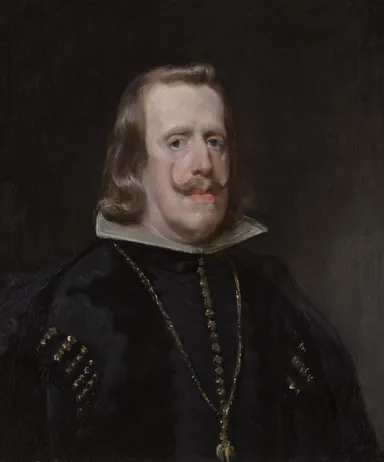 Philip IV of Spain“the Planet King”King of Spain1605 – 1665Mariana of Austria · ESConsort / Regent1634 – 1696
Same dynasty
Maria Antonia of Austria · ESConsort1669 – 1692Eleonore Maria Josefa of Austria · ESArchduchess / Duchess1653 – 1697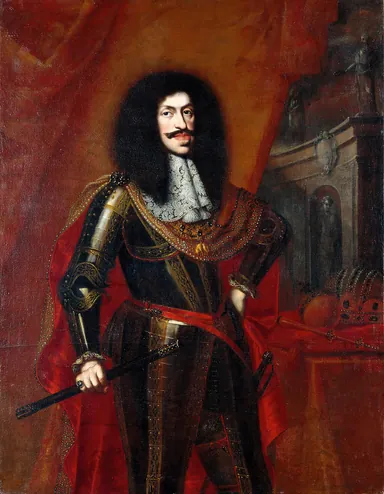 Leopold I, Holy Roman Emperor · ESEmperor1640 – 1705
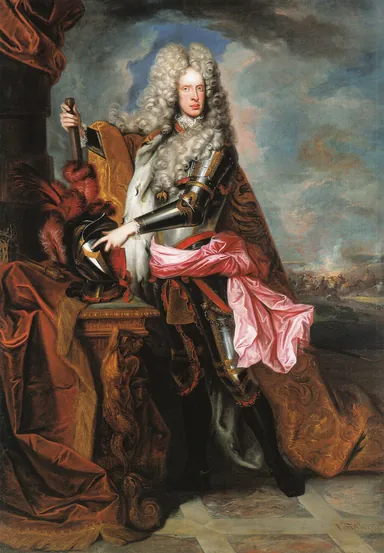 Joseph I, Holy Roman Emperor · ESEmperor1678 – 1711Claudia Felicitas of Austria · ESConsort1653 – 1676Margaret Theresa of Austria · ESConsort1651 – 1673
In their lifetime
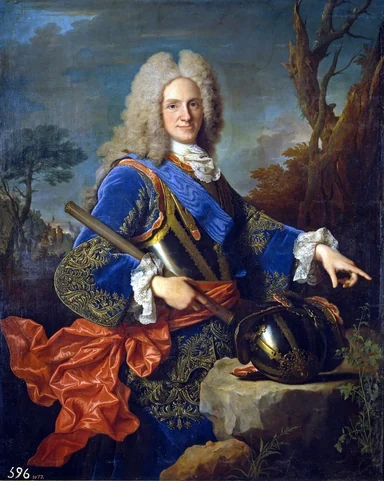 Philip V of Spain“the Spirited”King of Spain1683 – 1746
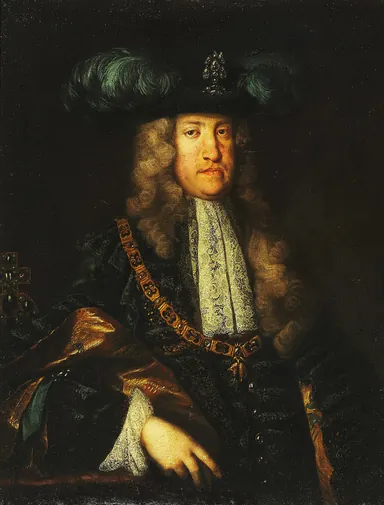 Charles VI, Holy Roman Emperor · ESEmperor1685 – 1740
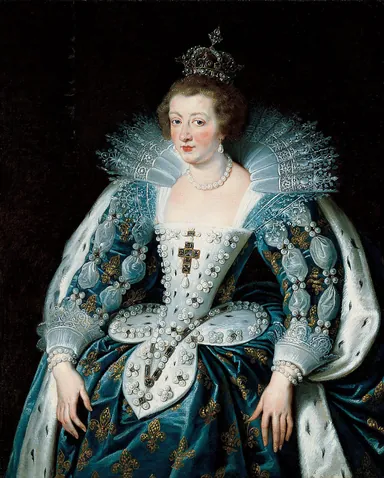 Anne of Austria · ESConsort / Regent1601 – 1666Maria Theresa of Spain · ESConsort1638 – 1683
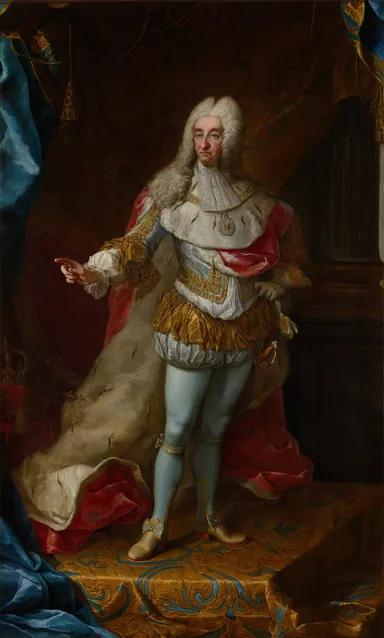 Victor Amadeus II of Savoy · ESDuke / King1666 – 1732
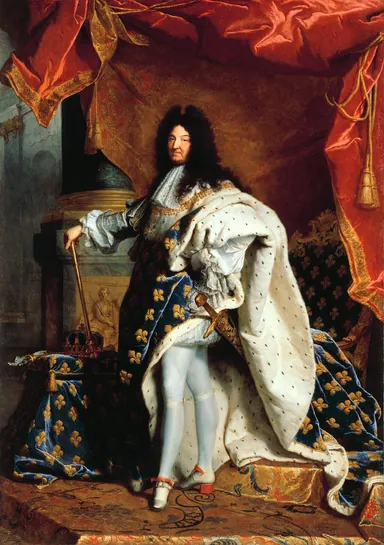 Louis XIV of France“the Sun King”King of France and Navarre1638 – 1715