
Leopold I of the Holy Roman Empire
A Habsburg emperor for almost half a century. His reign was marked by wars against Louis XIV and the great confrontation with the Ottoman Empire that culminated at Vienna in 1683.
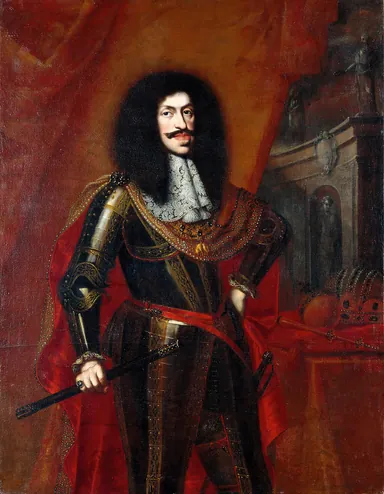
Life of Leopold I of the Holy Roman Empire
An unexpected emperor
The second son of Ferdinand III, he was born in Vienna in 1640 and was intended for a career in the Church. The death of his brother Ferdinand IV made him heir, and he was elected emperor in 1658. He reigned for almost half a century.
References: Deutsche Biographie · Encyclopaedia Britannica
Between France and the Ottomans
He faced Louis XIV’s wars on the Rhine and Ottoman pressure in Hungary. The siege of Vienna in 1683 was lifted by an imperial and Polish army led by John III Sobieski. The reconquest of Hungary followed: Buda fell in 1686, and the Peace of Karlowitz (1699) gave the Habsburgs almost the entire kingdom and Transylvania.
References: Deutsche Biographie · Encyclopaedia Britannica
The Spanish succession
His first wife was Margaret Theresa, daughter of Philip IV, and he claimed Charles II’s inheritance for his son, Archduke Charles. The War of the Spanish Succession had already begun when he died in Vienna in 1705.
References: Deutsche Biographie · Encyclopaedia Britannica
This complete profile is available in English. Bibliographic titles retain their original language. Links marked ES open the Spanish edition.
Key details
Birth: 1640 Pending review
Death: 1705 Pending review
Role: Emperor
Dynasty: Habsburg · ES
Territories: Holy Roman Empire (ES) · Germany (ES) · Bohemia (ES) · Hungary (ES) · Austria (ES) · Croatia (ES) · Tyrol (ES) · Moravia (ES) · Silesia (ES) · Inner Austria (ES) · Habsburg Transylvania (ES)
Recorded relationships
Their titles over time
Follow the changing territories and offices of Leopold I of the Holy Roman Empire. Each title retains its own status.
Governments in 1699
- Austrian Habsburg Monarchy9 titles and offices
View titles and jurisdictions
- Bohemia · ESKing · Effective rule1657–1705
- Hungary · ESKing · Effective rule1658–1705
- Austria · ESArchduke · Effective rule1657–1705
- Croatia · ESKing · Effective rule1658–1705
- Tyrol · ESCount · Effective rule1665–1705 · He reunited Tyrol with the other Austrian hereditary lands after Sigismund Francis’s death in 1665.
- Moravia · ESMargrave · Effective rule · Royal centres of Brno and Olomouc; regional authority over the margraviate, distinct from the full geography of the Bohemian title1657–1705 · Brno and Olomouc are regional urban centres; they are not equated with the monarch’s exclusive ownership of Moravia and do not erase seigneurial or episcopal jurisdictions. Olomouc begins with the privilege of 1378 and is excluded during the documented Swedish and Prussian occupations.
- Silesia · ESSovereign · Effective rule · Overlordship of the Bohemian crown over the Silesian duchies; not direct ducal possession1657–1705 · The enfeoffed princes and the bishop of Nysa retain their own governments. The area represents superior sovereignty; Schweidnitz-Jauer was incorporated in 1392. Greater Poland, Lusatia and Glatz are excluded. This does not derive from the imperial office.
- Inner Austria · ESSovereign · Effective rule1657–1705 · Inner hereditary provinces reunited with the Austrian line from 1619; provincial administrations and autonomies are retained. The connection does not arise from the imperial title.
- Habsburg Transylvania · ESSovereign · Effective rule1699–1705 · Personal tenure inferred from the Austrian hereditary succession and the treaty’s territorial boundary; an administratively separate province.
Joint direction of the domains effectively governed by this ruler. Excludes the imperial framework, Ottoman Hungary and independent or tributary Transylvanian principalities. Austrian branches under another ruler retain their own grouping. Source for this grouping
- Holy Roman Empire (Germany)2 titles and offices
View titles and jurisdictions
- Germany · ESKing of the Romans · Effective rule1658–1705
- Holy Roman Empire · ESEmperor · Effective rule1658–1705
Annual dates: overlap within one year does not prove that two offices were held on the same day. Regencies and co-rulerships retain their labels.
Sources for this profile
Biographical and contextual references in their original language. Sources and methodology.
Evidence for this profile
20 recorded claims · 14 without a claim-specific source. Context references do not by themselves verify every fact.
Dates (0/2 with a precise source)
- BirthPending review
1640
A precise source has not yet been added. - DeathPending review
1705
A precise source has not yet been added.
Family and relationships (0/5 with a precise source)
- FatherPending review
Ferdinand III of the Holy Roman Empire
A precise source has not yet been added. - MotherPending review
Maria Anna of Spain
A precise source has not yet been added. - Marriage or partnershipPending review
Margaret Theresa of Austria
A precise source has not yet been added. - Marriage or partnershipPending review
Claudia Felicitas of Austria
A precise source has not yet been added. - Marriage or partnershipPending review
Eleanor Magdalena of Palatinate-Neuburg
A precise source has not yet been added.
Governments (6/13 with a precise source)
- GovernmentPending review
King · Bohemia · 1657–1705
A precise source has not yet been added. - GovernmentPending review
King · Hungary · 1655–1657
A precise source has not yet been added. - GovernmentPending review
King · Hungary · 1658–1705
A precise source has not yet been added. - GovernmentInferred
Archduke · Austria · 1657–1705
Austria is listed as a territory in its own right on the basis of his government of the composite monarchy. - GovernmentPending review
King of the Romans · Germany · 1658–1705
A precise source has not yet been added. - GovernmentPending review
Emperor · Holy Roman Empire · 1658–1705
A precise source has not yet been added. - GovernmentPending review
King · Croatia · 1655–1657
A precise source has not yet been added. - GovernmentPending review
King · Croatia · 1658–1705
A precise source has not yet been added. - GovernmentInferred
Count · Tyrol · 1665–1705
Tyrol’s incorporation into the main branch in 1665 is documented; the personal end date of 1705 follows Leopold I’s death. - GovernmentInferred
Margrave · Moravia · 1657–1705
Brno and Olomouc are regional urban centres; they are not equated with the monarch’s exclusive ownership of Moravia and do not erase seigneurial or episcopal jurisdictions. Olomouc begins with the privilege of 1378 and is excluded during the documented Swedish and Prussian occupations.Instituto de Historia de la Academia Checa · Jaroslav Pánek · Biografický slovník českých zemí 16 (2013), pp. 119–122: separate hereditary acceptance by Moravia and Silesia in 1526; these do not simply follow from the Bohemian title.City of Olomouc · history of the city · Jobst’s privilege in 1378; loyalty to Sigismund; election of Corvinus in 1469 and agreement of 1479; Frederick of the Palatinate in 1620; Swedish occupation, 1642–1650, and Prussian occupation, 1741–1742; royal confirmation by Maria Theresa in 1762.Olomouc Municipal Archives · original charter of Jobst · Olomouc District Archive, City Archive collection, Charters, inventory 37: Margrave Jobst’s permission of 1378 to build a town hall and merchants’ hall. - GovernmentInferred
Sovereign · Silesia · 1657–1705
The enfeoffed princes and the bishop of Nysa retain their own governments. The area represents superior sovereignty; Schweidnitz-Jauer was incorporated in 1392. Greater Poland, Lusatia and Glatz are excluded. This does not derive from the imperial office.City of Wrocław · history · The Duchy of Wrocław (Breslau) was incorporated into the Crown of Bohemia in 1335 after the death of Henry VI; Habsburg from 1526; Prussian conquest in 1741.Homann · Ducatus Silesiae, 1716 · David Rumsey Collection · Regional map of Upper and Lower Silesia and its duchies. Crown sovereignty is distinguished from each prince’s local government.German Historical Institute · Growth of the Habsburg Empire, 1282–1918 · Map of acquisitions: Austria and Styria in 1282, Carinthia in 1335, Tyrol in 1363, Bohemia and Silesia in 1526, Hungary in 1699 and the Banat in 1718. Imperial office did not confer dominion over all imperial states. - GovernmentDocumented
Sovereign · Inner Austria · 1657–1705
Inner hereditary provinces reunited with the Austrian line from 1619; provincial administrations and autonomies are retained. The connection does not arise from the imperial title.Schönbrunn / Die Welt der Habsburger: Tripartite division of the Austrian inheritance · The Inner Austrian line reunites Austria from 1619; Tyrol is reunited in 1665. Tenures are added as hereditary jurisdictions, independently of the imperial office.Cancillería Federal de Austria: 1713 · Indivisibility and succession of the Austrian hereditary lands; not all states of the Holy Roman Empire. - GovernmentInferred
Sovereign · Habsburg Transylvania · 1699–1705
Personal tenure inferred from the Austrian hereditary succession and the treaty’s territorial boundary; an administratively separate province.
Biographical and contextual references (1)
Editorial history
- 2026-10-12 · Claim registry added; existing historical data kept. Specific sourcing remains to be reviewed.
- 2026-10-08 · Claim registry added; existing historical data kept. Specific sourcing remains to be reviewed.
- 2026-10-04 · Claim registry added; existing historical data kept. Specific sourcing remains to be reviewed.
- 2026-10-04 · Claim registry added; existing historical data kept. Specific sourcing remains to be reviewed.
- 2026-10-03 · Claim registry added; existing historical data kept. Specific sourcing remains to be reviewed.
- 2026-09-30 · The duchy is limited to Dijon and Autun; each other fief now enters the map only under its dated ruler. John III of Namur and the Nevers/Rethel branch were added. The previous shape combined later counties and unrelated lands as if all belonged to the duchy from 1363.
- 2026-09-28 · Claim registry added; existing historical data kept. Specific sourcing remains to be reviewed.
Follow this person through history
More paths from Leopold I of the Holy Roman Empire
Family
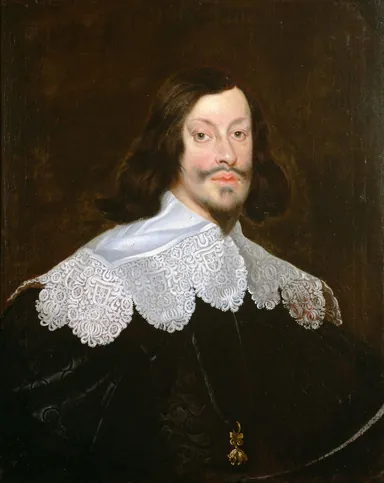 Ferdinand III of the Holy Roman EmpireEmperor1608 – 1657Maria Anna of Spain · ESConsort1606 – 1646Margaret Theresa of Austria · ESConsort1651 – 1673Claudia Felicitas of Austria · ESConsort1653 – 1676Eleanor Magdalena of Palatinate-Neuburg · ESConsort1655 – 1720Maria Antonia of Austria · ESConsort1669 – 1692
Same dynasty
Eleonore Maria Josefa of Austria · ESArchduchess / Duchess1653 – 1697Mariana of Austria · ESConsort / Regent1634 – 1696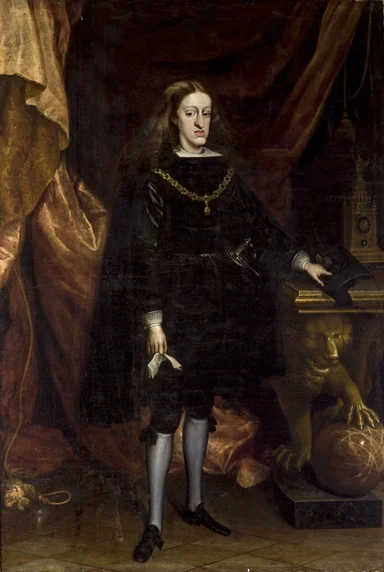 Charles II of Spain“the Bewitched”King of Spain1661 – 1700Maria Theresa of Spain · ESConsort1638 – 1683Sigismund Francis of Austria-Tyrol · ESArchduke1630 – 1665Ferdinand Charles of Austria-Tyrol · ESArchduke1628 – 1662
In their lifetime
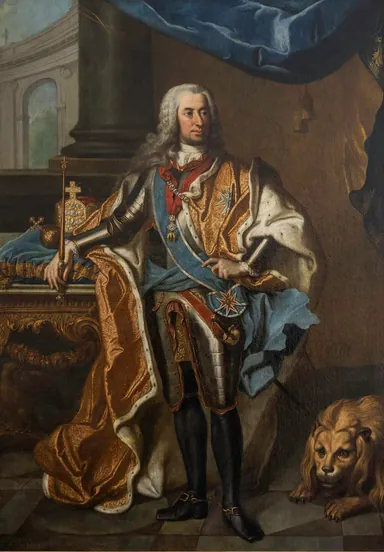 Charles VII of the Holy Roman EmpireEmperor1697 – 1745
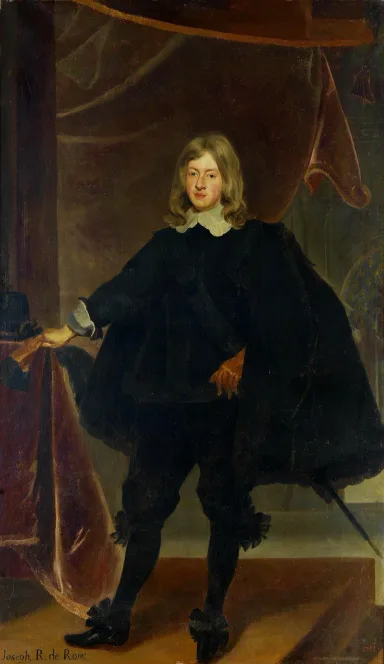 Ferdinand IV of Bohemia · ESKing1633 – 1654
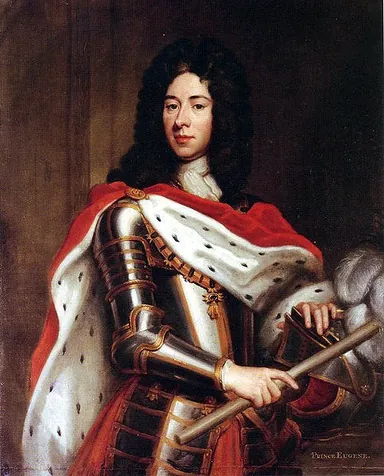 Eugene of Savoy · ESPrince / Imperial field marshal1663 – 1736Nikola VII Zrinski · ESBan and writer1620 – 1664Jelena Zrinski · ESNoble1643 – 1703Maria Amalia of Austria · ESConsort1701 – 1756