
Frederick William III of Prussia
King of Prussia from 1797. After Napoleon defeated Prussia at Jena in 1806, he supported the reforms of Stein and Hardenberg and joined the coalition that defeated France in 1813–1815.
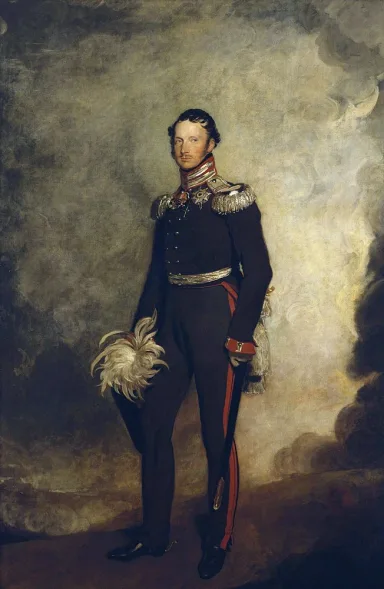
This complete profile is available in English. Bibliographic titles retain their original language. Links marked ES open the Spanish edition.
Key details
Birth: 3 August 1770 Documented
Death: 7 June 1840 Documented
Role: King
Dynasty: Hohenzollern · ES
Territories: Prussia (ES) · Brandenburg (ES) · Silesia (ES)
Recorded relationships
Their titles over time
Follow the changing territories and offices of Frederick William III of Prussia. Each title retains its own status.
Governments in 1797
- Prussian monarchy3 titles and offices
View titles and jurisdictions
- Prussia · ESKing · Effective rule1797–1840
- Brandenburg · ESElector · Effective rule1797–1840
- Silesia · ESSovereign · Effective rule · Prussian part of Silesia and the County of Glatz; Austrian remnant excluded1797–1840 · Prussian sovereignty after the cession of 1742. Teschen/Bielsko and the southern Austrian parts of Opava, Krnov and Nysa are excluded. Frontier cells are approximate.
From 1701 the electors of Brandenburg were kings in Prussia; their lands, including Silesia, conquered in 1742, shared a sovereign and an administration. Each territory retains its own title. Source for this grouping
Annual dates: overlap within one year does not prove that two offices were held on the same day. Regencies and co-rulerships retain their labels.
Sources for this profile
- Deutsche Nationalbibliothek · GND authority record · Friedrich Wilhelm III., Preußen, König
- Encyclopaedia Britannica
Biographical and contextual references in their original language. Sources and methodology.
Evidence for this profile
8 recorded claims · 2 without a claim-specific source. Context references do not by themselves verify every fact.
Dates (2/2 with a precise source)
- BirthDocumented
3 August 1770
The authority record gives the birth as 1770-08-03. - DeathDocumented
7 June 1840
The authority record gives the death as 1840-06-07.
Family and relationships (3/3 with a precise source)
- FatherDocumented
Frederick William II of Prussia
The authority record identifies Frederick William II of Prussia (GND 11869362X) as father. - MotherDocumented
Frederica Louisa of Hesse-Darmstadt
The authority record identifies Frederica Louisa of Hesse-Darmstadt (GND 121733394) as mother. - Marriage or partnershipDocumented
Louise of Mecklenburg-Strelitz
The authority record identifies Louise of Mecklenburg-Strelitz (GND 118575155) as spouse.
Governments (1/3 with a precise source)
- GovernmentPending review
King · Prussia · 1797–1840
A precise source has not yet been added. - GovernmentPending review
Elector · Brandenburg · 1797–1840
A precise source has not yet been added. - GovernmentInferred
Sovereign · Silesia · 1797–1840
Prussian sovereignty after the cession of 1742. Teschen/Bielsko and the southern Austrian parts of Opava, Krnov and Nysa are excluded. Frontier cells are approximate.City of Opava · history of the city · Treaty of Breslau (Wrocław), 11 June 1742: division of Silesia between Prussia and Austria. The River Opava separates the jurisdictions; whole cells of Opava, Hlučín or Krnov are not assigned to the Austrian remnant.Głogów County · institutional history · A fief of the Crown from 1329–1331; a hereditary territory of the Crown de facto in 1488 and formally in 1508; Habsburg from 1526; Prussian from 1742. The record begins in 1508 to exclude the earlier Jagiellonian princely governments.Geheimes Staatsarchiv Preußischer Kulturbesitz · homage documents of 1741 · I. HA GR Rep. 46 B, Nr. 94–98: homage of Lower Silesia to Frederick II in October and November 1741. Occupation in 1741; legal territorial cession in 1742.Landtag de Brandeburgo · antiguo palacio de Potsdam · Frederick William III's reign: 1797–1840. The ruler's chronology is combined with the documented incorporation of Silesia in 1742.City of Opava · history of the city · Partition of 1742: Opava, capital of Austrian Silesia. The outlines of Opava, Krnov and Jeseník/Fryvaldov approximate the southern parts that Austria retained, not the exact river frontier.German Historical Institute · Administrative Divisions, 1780 · Areas of the hereditary provinces, Hungary and the Austrian remnant of Silesia.
Biographical and contextual references (2)
Editorial history
- 2026-10-12 · Claim registry added; existing historical data kept. Specific sourcing remains to be reviewed.
- 2026-10-08 · Claim registry added; existing historical data kept. Specific sourcing remains to be reviewed.
- 2026-10-04 · Claim registry added; existing historical data kept. Specific sourcing remains to be reviewed.
- 2026-10-04 · Claim registry added; existing historical data kept. Specific sourcing remains to be reviewed.
- 2026-10-03 · Claim registry added; existing historical data kept. Specific sourcing remains to be reviewed.
- 2026-09-30 · The duchy is limited to Dijon and Autun; each other fief now enters the map only under its dated ruler. John III of Namur and the Nevers/Rethel branch were added. The previous shape combined later counties and unrelated lands as if all belonged to the duchy from 1363.
- 2026-09-28 · Claim registry added; existing historical data kept. Specific sourcing remains to be reviewed.
More paths from Frederick William III of Prussia
Family
Frederick William II of PrussiaKing1744 – 1797Frederica Louisa of Hesse-Darmstadt · ESConsort1751 – 1805Louise of Mecklenburg-Strelitz · ESConsort1776 – 1810Frederick William IV of Prussia · ESKing1795 – 1861William I of PrussiaKing / Emperor1797 – 1888Same dynasty
Wilhelmina of Prussia, Princess of Orange · ESPrincess of Orange1751 – 1820Louisa Ulrika of Prussia · ESConsort1720 – 1782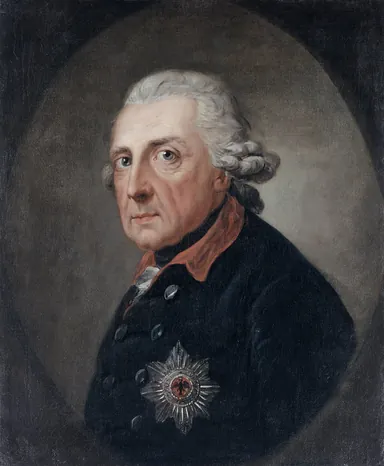 Frederick II of Prussia“the Great”King of Prussia · Elector of Brandenburg1712 – 1786Prince Augustus William of Prussia · ESPrince1722 – 1758Sophie Magdalene of Brandenburg-Kulmbach · ESConsort1700 – 1770
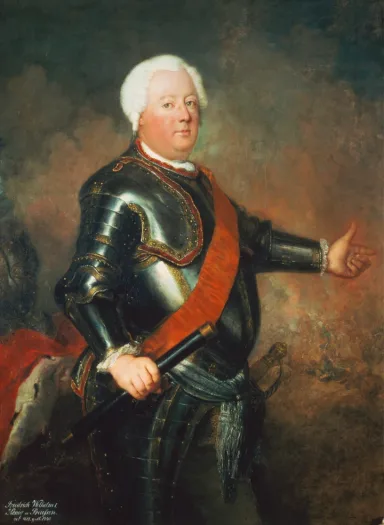 Frederick William I of Prussia“the Soldier King”King1688 – 1740
In their lifetime
Frederick II of Prussia“the Great”King of Prussia · Elector of Brandenburg1712 – 1786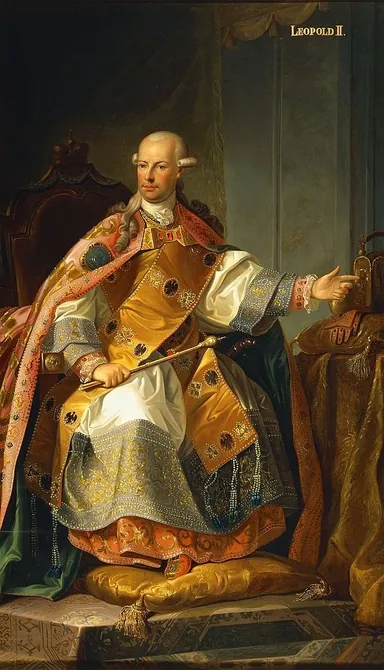 Leopold II of the Holy Roman EmpireEmperor1747 – 1792
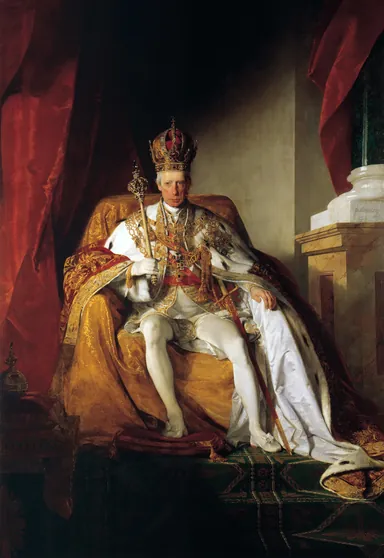 Francis II of the Holy Roman EmpireEmperor1768 – 1835
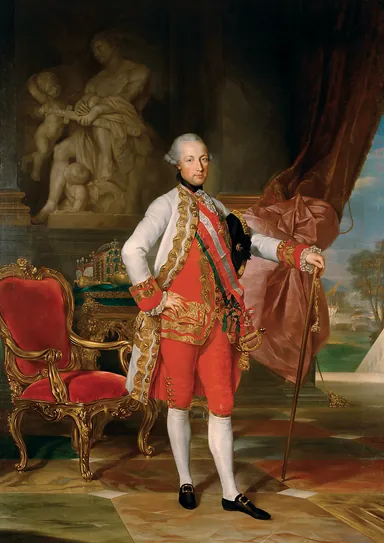 Joseph II of the Holy Roman EmpireEmperor1741 – 1790
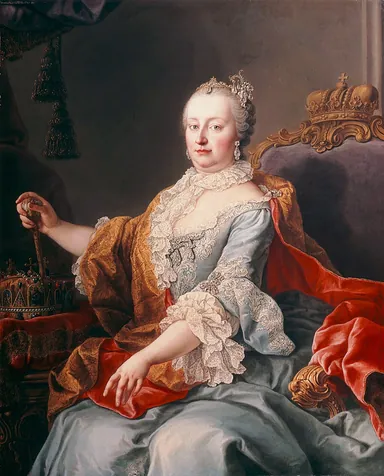 Maria Theresa of AustriaQueen / Archduchess1717 – 1780Wilhelmina of Prussia, Princess of Orange · ESPrincess of Orange1751 – 1820