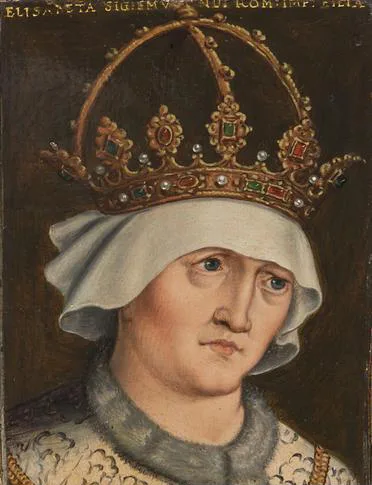
Arms of Luxembourg: Barry argent and azure, a lion rampant gules crowned or.
Houses and lineages

Luxembourg

A comital house from the Moselle whose fourteenth-century rulers held the imperial, Bohemian and Hungarian crowns. Its male line ended with Sigismund in 1437.

Arms. Barry argent and azure, a lion rampant gules crowned or. Arms associated with the House of Luxembourg.

20 recorded people1 documented connection
Explore in the Spanish Atlas
Genealogy, inheritance and alliances

Parent houses and branches

Descent, marriage and inheritance connect houses in different ways. Each documented link retains its own explanation.

Alliances and inheritances

Origin

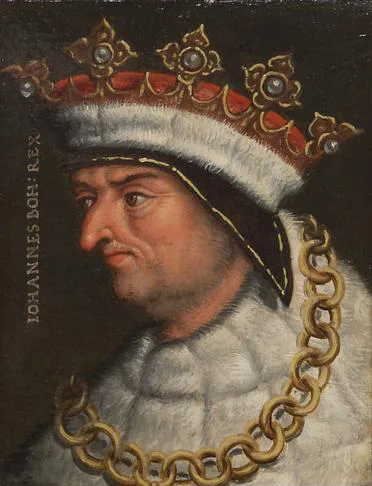
Henry VII, Count of Luxembourg, was elected King of the Romans in 1308 and crowned emperor in Rome in 1312, the first since Frederick II. His son John the Blind obtained Bohemia through marriage to Elizabeth, the Přemyslid heiress, and died at Crécy in 1346.

Development

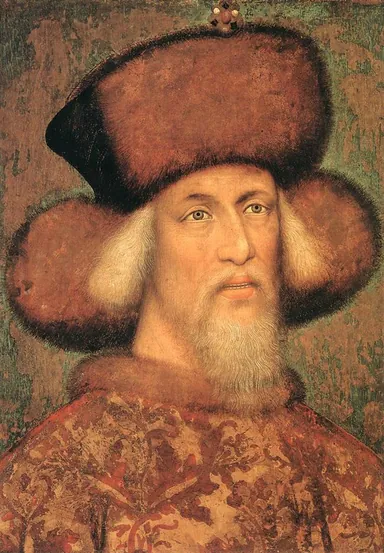
Charles IV, John’s son, made Prague the imperial capital, founded its university in 1348 and issued the Golden Bull in 1356, establishing election by seven princes. His son Wenceslaus IV was deposed as King of the Romans in 1400. Sigismund, King of Hungary through his marriage to Mary, presided over the Council of Constance of 1414–1418, which ended the schism.

Legacy

Sigismund also became King of Bohemia and emperor, but had no son. His daughter Elizabeth married Albert II of Habsburg, who succeeded in Hungary and Bohemia and was elected King of the Romans in 1438. The Luxembourg inheritance thus became one foundation of Habsburg power in central Europe.

People who connect the history

Protagonists and connections

Territorial context

Linked territories

Recorded members of this house

People in this house

Recorded governments of members

Includes nominal titles, regencies and disputes when recorded. Annual intervals do not establish continuous or exclusive control.

PersonTerritory and titlePeriodStatus
Henry VI of Luxembourg · ESCount · Luxembourg · ES1281–1288Effective rule
Henry VII of the Holy Roman EmpireCount · Luxembourg · ES1288–1313Effective rule
Henry VII of the Holy Roman EmpireKing of the Romans · Germany · ES1308–1313Effective rule
John of Bohemia · ESKing · Bohemia · ES1310–1346Effective rule
Henry VII of the Holy Roman EmpireEmperor · Holy Roman Empire · ES1312–1313Effective rule
John of Bohemia · ESCount · Luxembourg · ES1313–1346Effective rule
Charles IV of LuxembourgMargrave · Moravia · ES1334–1348Effective ruleMoravian title from early 1334; John Henry received the margraviate in 1349.
John of Bohemia · ESSovereign · Silesia · ES1335–1346Effective ruleThe enfeoffed princes and the bishop of Nysa retain their own governments. The area represents superior sovereignty; Schweidnitz-Jauer was incorporated in 1392. Greater Poland, Lusatia and Glatz are excluded. This does not derive from the imperial office.
Charles IV of LuxembourgKing · Bohemia · ES1346–1378Effective rule
Charles IV of LuxembourgKing of the Romans · Germany · ES1346–1347RivalRival election against Louis IV.
Charles IV of LuxembourgSovereign · Silesia · ES1346–1378Effective ruleThe enfeoffed princes and the bishop of Nysa retain their own governments. The area represents superior sovereignty; Schweidnitz-Jauer was incorporated in 1392. Greater Poland, Lusatia and Glatz are excluded. This does not derive from the imperial office.
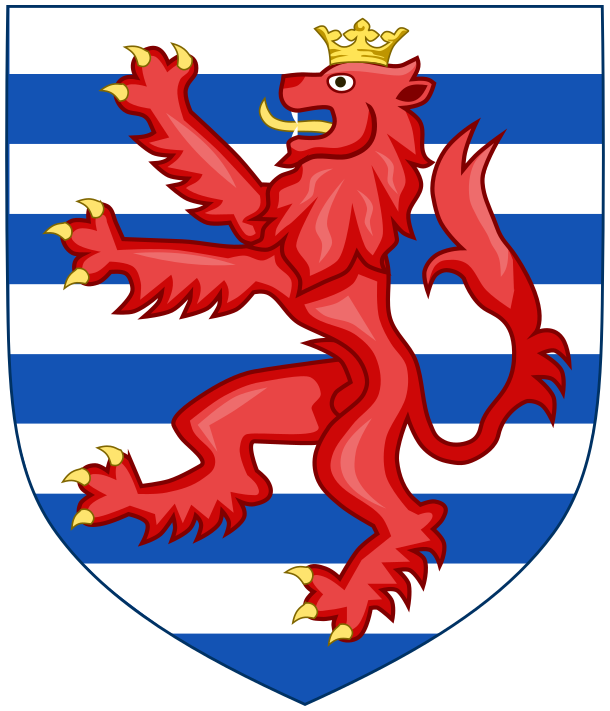
Charles IV of LuxembourgKing of the Romans · Germany · ES1348–1378Effective rule
John Henry of Moravia · ESMargrave · Moravia · ES1349–1375Effective rule
Wenceslaus I of Luxembourg · ESDuke · Luxembourg · ES1353–1383Effective ruleCount from 1353; Charles IV elevated Luxembourg to a duchy in 1354.
Charles IV of LuxembourgEmperor · Holy Roman Empire · ES1355–1378Effective rule
Wenceslaus I of Luxembourg · ESDuke · Brabant · ES1355–1383Jure uxorisDuke of Brabant and Limburg through his marriage to Duchess Joanna.
Jobst of Moravia · ESMargrave · Moravia · ES1375–1411Effective rule
Wenceslaus IV of LuxembourgKing of the Romans · Germany · ES1376–1378Co-rulerElected or crowned during the predecessor’s lifetime; authority was not exclusive.
Wenceslaus IV of LuxembourgKing · Bohemia · ES1378–1419Effective rule
Wenceslaus IV of LuxembourgSovereign · Silesia · ES1378–1419Effective ruleThe enfeoffed princes and the bishop of Nysa retain their own governments. The area represents superior sovereignty; Schweidnitz-Jauer was incorporated in 1392. Greater Poland, Lusatia and Glatz are excluded. This does not derive from the imperial office.
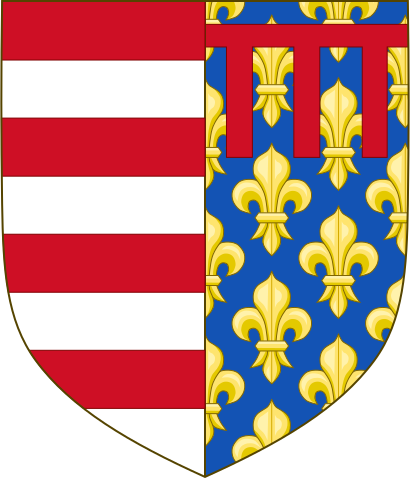
Wenceslaus IV of LuxembourgKing of the Romans · Germany · ES1379–1400Effective rule
Sigismund of LuxembourgKing · Hungary · ES1387–1437Co-rulerShared authority; not treated as an exclusive succession.
Sigismund of LuxembourgKing · Croatia · ES1387–1437Co-rulerShared authority; not treated as an exclusive succession.
Jobst of Moravia · ESDuke · Luxembourg · ES1388–1411Effective rule
Jobst of Moravia · ESKing of the Romans · Germany · ES1410–1411Rival
Sigismund of LuxembourgKing of the Romans · Germany · ES1410–1437Effective rule
Wenceslaus IV of LuxembourgMargrave · Moravia · ES1411–1419Effective ruleBrno and Olomouc are regional urban centres; they are not equated with the monarch’s exclusive ownership of Moravia and do not erase seigneurial or episcopal jurisdictions. Olomouc begins with the privilege of 1378 and is excluded during the documented Swedish and Prussian occupations.
Elizabeth of Görlitz · ESDuchess · Luxembourg · ES1411–1443Effective ruleShe sold her rights to Philip the Good in 1441; the city fell in 1443.
Sigismund of LuxembourgKing · Bohemia · ES1419–1437Effective rule
Sigismund of LuxembourgMargrave · Moravia · ES1419–1422Effective ruleBrno and Olomouc are regional urban centres; they are not equated with the monarch’s exclusive ownership of Moravia and do not erase seigneurial or episcopal jurisdictions. Olomouc begins with the privilege of 1378 and is excluded during the documented Swedish and Prussian occupations.
Sigismund of LuxembourgSovereign · Silesia · ES1420–1437Effective ruleThe enfeoffed princes and the bishop of Nysa retain their own governments. The area represents superior sovereignty; Schweidnitz-Jauer was incorporated in 1392. Greater Poland, Lusatia and Glatz are excluded. This does not derive from the imperial office.
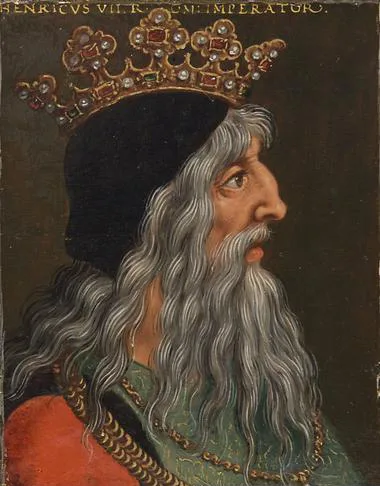
Sigismund of LuxembourgEmperor · Holy Roman Empire · ES1433–1437Effective rule
Marie of Luxembourg, Countess of Saint-Pol · ESCountess · Saint-Pol · ES1482–1547Effective rule
Marie of Luxembourg, Countess of Saint-Pol · ESCountess · Soissons · ES1482–1547Effective rule

Contextual bibliography

General references do not by themselves verify every relationship or date. Bibliographic titles retain their original language.

Sources and methodology
Arms: Katepanomegas · CC BY-SA 3.0 · Wikimedia Commons. Original drawing and proportions preserved.