
Philip II of Spain
Ruler of the Spanish Monarchy when its European and Atlantic power was at its height. His reign saw Lepanto, the dynastic union with Portugal and the great revolt of the Low Countries.
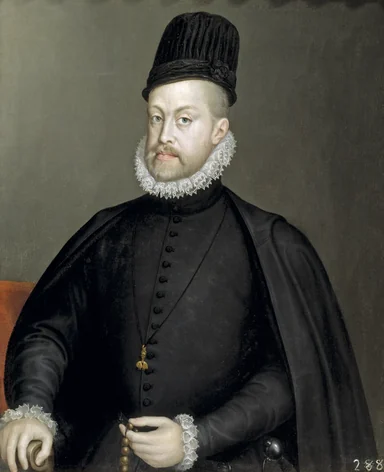
Life of Philip II of Spain
The making of an heir
The son of Charles V and Isabella of Portugal, Philip was born at Valladolid in 1527 and trained as a ruler in Castile, where he acted as regent during his father’s absences. His first marriage, to Maria Manuela of Portugal, gave him Don Carlos; the second, to Mary Tudor, made him king consort of England from 1554 to 1558.
References: Real Academia de la Historia · Diccionario Biográfico español · Oxford Dictionary of National Biography · Deutsche Biographie · Encyclopaedia Britannica
King of a world monarchy
From 1556 he inherited Castile, Aragon, the Italian dominions, the Low Countries and the Indies, but not the Empire. He settled the court in Madrid in 1561 and promoted the building of El Escorial. He governed through a system of councils and an abundant correspondence, earning a reputation as prudent and meticulous. The Peace of Cateau-Cambrésis (1559) ended the Italian Wars with France and brought him a third wife, Elisabeth of Valois.
References: Real Academia de la Historia · Diccionario Biográfico español · Oxford Dictionary of National Biography · Deutsche Biographie · Encyclopaedia Britannica
Rebellions and wars of religion
In 1568 the revolt of the Low Countries broke out; under William of Orange it became the Eighty Years’ War and gave rise to the Republic of the United Provinces. At home he suppressed the revolt of the Alpujarras (1568–1571). In the Mediterranean, the Holy League defeated the Ottoman fleet at Lepanto (1571). His support for the Catholic cause in France and his conflict with England culminated in the failed Armada of 1588.
References: Real Academia de la Historia · Diccionario Biográfico español · Oxford Dictionary of National Biography · Deutsche Biographie · Encyclopaedia Britannica
Portugal and the final years
In 1580, after the extinction of the house of Aviz, he asserted his rights through his mother, occupied the kingdom and was recognised as king of Portugal by the Cortes of Tomar in 1581, with guarantees that Portugal would keep its laws, its coinage and its offices. The union lasted until 1640. His final years were marked by royal bankruptcies and by the unrest in Aragon of 1591, triggered by the flight of his former secretary Antonio Pérez. He died at El Escorial in 1598 and was succeeded by his son Philip III.
References: Real Academia de la Historia · Diccionario Biográfico español · Oxford Dictionary of National Biography · Deutsche Biographie · Encyclopaedia Britannica
This complete profile is available in English. Bibliographic titles retain their original language. Links marked ES open the Spanish edition.
Key details
Birth: 21 May 1527 Documented
Death: 13 September 1598 Documented
Role: King of Spain and Portugal · King of England jure uxoris
Other recorded names: Philip II · Philip the Prudent · Philip I of Portugal
Dynasty: Habsburg · ES
Territories: Castile (ES) · Aragon (ES) · Portugal (ES) · Navarre (ES) · Naples (ES) · Trinacria (ES) · Burgundy (ES) · Milan (ES) · Flanders (ES) · England (ES) · Spain (ES) · León (ES) · County of Burgundy (ES) · Brabant (ES) · Limburg (ES) · Holland (ES) · Hainaut (ES) · Zeeland (ES) · Sardinia (ES) · Artois (ES) · Namur (ES) · Luxembourg (ES) · County of Barcelona (ES) · Valencia (ES) · Majorca (ES) · Friesland (ES) · Utrecht (ES) · Groningen (ES) · Guelders (ES) · Overijssel (ES) · Drenthe (ES) · Lordship of Mechelen (ES) · Tournai (ES)
Recorded relationships
Their titles over time
Follow the changing territories and offices of Philip II of Spain. Each title retains its own status.
Governments in 1556
- Spain11 titles and offices
View titles and jurisdictions
- Milan · ESDuke · Effective rule1556–1598 · He took possession when Charles V abdicated; the ducal title had earlier been attributed to Philip, with sources disagreeing between 1540 and 1546 on the date of his investiture.
- Castile · ESKing · Effective rule1556–1598
- Aragon · ESKing · Effective rule1556–1598
- Navarre · ESKing · Branch rule · Upper Navarre after the conquest1556–1598 · From 1512 the two lines did not effectively govern the whole of the former kingdom.
- Naples · ESKing · Effective rule1554–1598 · His father handed the kingdom over to him in 1554, before his marriage to Mary Tudor.
- Trinacria · ESKing · Effective rule1556–1598
- León · ESKing · Effective rule1556–1598
- Sardinia · ESKing · Effective rule1556–1598 · A documented royal title; the annual limits follow the general transfer of the Spanish monarchy.
- County of Barcelona · ESCount · Effective rule1556–1598
- Valencia · ESKing · Effective rule1556–1598
- Majorca · ESKing · Effective rule1556–1598
The monarchy’s crowns and dominions. Portugal retained a separate administration during the dynastic union of 1580–1640. Source for this grouping
- EnglandKing
View titles and jurisdictions
- England · ESKing · Jure uxoris1554–1558
- Habsburg Netherlands18 titles and offices
View titles and jurisdictions
- Flanders · ESCount · Effective rule1555–1598
- County of Burgundy · ESCount · Effective rule1556–1598 · Franche-Comté; a separate entity from the Duchy of Burgundy.
- Brabant · ESDuke · Effective rule1555–1598
- Limburg · ESDuke · Effective rule1555–1598
- Holland · ESCount · Effective rule1555–1577 · His recognition was disputed during the revolt; the States abjured Philip II in 1581.
- Hainaut · ESCount · Effective rule1555–1598
- Zeeland · ESCount · Effective rule1555–1573 · His recognition was disputed during the revolt; the States abjured Philip II in 1581.
- Artois · ESCount · Effective rule1555–1598 · Part of the Habsburgs’ Burgundian inheritance, distinct from the duchy under the French crown.
- Namur · ESCount · Effective rule1555–1598 · Continuity of the Burgundian inheritance in the southern Low Countries.
- Luxembourg · ESDuke · Effective rule1555–1598 · Continuity of the Burgundian inheritance; distinct from the French Duchy of Burgundy.
- Friesland · ESLord · Effective rule1555–1579 · Succession from Charles V; the extent follows the provincial chronology and documented garrisons, without treating 1581 as a uniform loss of all the Low Countries.
- Utrecht · ESLord · Effective rule1555–1576 · Succession from Charles V; the extent follows the provincial chronology and documented garrisons, without treating 1581 as a uniform loss of all the Low Countries.
- Groningen · ESLord · Effective rule1555–1593 · Succession from Charles V; the extent follows the provincial chronology and documented garrisons, without treating 1581 as a uniform loss of all the Low Countries.
- Guelders · ESDuke · Effective rule1555–1598 · Succession from Charles V; the extent follows the provincial chronology and documented garrisons, without treating 1581 as a uniform loss of all the Low Countries.
- Overijssel · ESLord · Effective rule1555–1596 · Succession from Charles V; the extent follows the provincial chronology and documented garrisons, without treating 1581 as a uniform loss of all the Low Countries.
- Drenthe · ESLord · Effective rule1555–1595 · Succession from Charles V; the extent follows the provincial chronology and documented garrisons, without treating 1581 as a uniform loss of all the Low Countries.
- Lordship of Mechelen · ESLord · Effective rule1555–1598 · A provincial title in its own right. Sovereignty and the area effectively controlled are distinguished through the map’s dated conquests and partitions.
- Tournai · ESLord · Effective rule1555–1598 · Lordship of Tournai and the Tournaisis. The disputed period of 1577–1581 is approximate; the reconquest of 1581 is documented. The record does not reconstruct each garrison or assert continuous Spanish control during the revolt.
Joint succession of the provinces under the Pragmatic Sanction of 1549. Each title retains its identity, and only the area under control in the selected year is shown. Rebel provinces are not included merely because the sovereign claimed them. Source for this grouping
Nominal and disputed titles (1)
- Burgundy · ESDuke · Titular1556–1598 · The ducal title was retained after the duchy was incorporated into France.
Annual dates: overlap within one year does not prove that two offices were held on the same day. Regencies and co-rulerships retain their labels.
How these titles came together
- 1546 · MilanAppointment
The Lombard historical record dates Philip’s investiture to 1546; another institutional chronology places the title in 1540. Direct imperial control continued until 1556: this accession represents a dignity whose date is disputed, not effective possession.
- 1555 · FlandersAbdication
Charles ceded the territories of the Low Countries to Philip in 1555. The abdication of the Spanish crowns took place in 1556; that date should not be applied to Flanders.
- 1555 · ArtoisInheritance
Philip received Artois in the transfer of the Burgundian Netherlands. The Treaty of Senlis documents the restitution of 1493, not the exact day of the 1555 transfer.
- 1556 · MilanAbdication
The Lombard historical narrative places Philip’s taking of possession after Charles V’s abdication in 1556.
- 1580 · PortugalInheritance · Conquest
The death of Cardinal Henry opened a dispute. Philip claimed descent from Manuel I through Isabella of Portugal and prevailed militarily; the Cortes of Tomar recognised him in 1581.
Selected explained accessions. Other titles remain in the profile’s list of recorded governments.
Sources for this profile
- Service public de Wallonie · Tournai and the Tournaisis
- Rijksmuseum · Allegory of the abdication of Charles V
- BnF, CCFr · Treaty of Senlis, 1493
- Lombardia Beni Culturali · Stato di Milano (1535–1749)
- Lombardia Beni Culturali · Milan under Spanish rule
- Deutsche Nationalbibliothek · GND authority record · Philipp II., Spanien, König
- Real Academia de la Historia · Diccionario Biográfico español
- Oxford Dictionary of National Biography
- Encyclopaedia Britannica
Biographical and contextual references in their original language. Sources and methodology.
Evidence for this profile
53 recorded claims · 0 without a claim-specific source. Context references do not by themselves verify every fact.
Dates (2/2 with a precise source)
- BirthDocumented
21 May 1527
The authority record gives the birth as 1527-05-21. - DeathDocumented
13 September 1598
The authority record gives the death as 1598-09-13.
Family and relationships (6/6 with a precise source)
- FatherDocumented
Charles V
Paternal relationship confirmed by the source. - MotherDocumented
Isabella of Portugal
Maternal relationship confirmed by the source. - Marriage or partnershipDocumented
Maria Manuela of Portugal
The authority record identifies Maria Manuela of Portugal (GND 104378301) as spouse. - Marriage or partnershipDocumented
Mary I of England
The authority record identifies Mary I of England (GND 118640917) as spouse. - Marriage or partnershipDocumented
Elisabeth of Valois
The authority record identifies Elisabeth of Valois (GND 119232820) as spouse. - Marriage or partnershipDocumented
Anna of Austria
The authority record identifies Anna of Austria (GND 123922240) as spouse.
Governments (40/40 with a precise source)
- GovernmentDocumented
Duke · Milan · 1556–1598
The narrative places the taking of possession in 1556; the end follows the death of Philip II. - GovernmentDocumented
King · England · 1554–1558
King of England, 1554–1558, checked against the source.Treccani · Dizionario di Storia · Filippo II re di Spagna · Valladolid 1527 – El Escorial 1598; Naples in 1554; invested with Milan from 1546; marriage to Mary Tudor in 1554; the Low Countries on 25 October 1555; Castile and Aragon on 16 January 1556; Portugal in 1580, sworn in as king the following year.Deutsche Nationalbibliothek · GND · Maria I., England, Königin · Mary I of England, queen from 1553 to 1558. - GovernmentDocumented
King · Castile · 1556–1598
King of Castile, 1556–1598, checked against the source.Treccani · Dizionario di Storia · Filippo II re di Spagna · Valladolid 1527 – El Escorial 1598; Naples in 1554; invested with Milan from 1546; marriage to Mary Tudor in 1554; the Low Countries on 25 October 1555; Castile and Aragon on 16 January 1556; Portugal in 1580, sworn in as king the following year.Neue Deutsche Biographie · Karl V. · Marriage at Seville, 10 March 1526; coming of age in 1515; succession in 1516; Aachen, 23 October 1520, and Bologna, 24 February 1530; Milan in 1535 and Philip’s secret investiture in 1540; Venlo, 7 September 1543; abdications on 25 October 1555 and 16 January 1556; imperial administration handed to Ferdinand in September 1556 and the Frankfurt election in February 1558. - GovernmentDocumented
King · Aragon · 1556–1598
King of Aragon, 1556–1598, checked against the source.Treccani · Dizionario di Storia · Filippo II re di Spagna · Valladolid 1527 – El Escorial 1598; Naples in 1554; invested with Milan from 1546; marriage to Mary Tudor in 1554; the Low Countries on 25 October 1555; Castile and Aragon on 16 January 1556; Portugal in 1580, sworn in as king the following year.Neue Deutsche Biographie · Karl V. · Marriage at Seville, 10 March 1526; coming of age in 1515; succession in 1516; Aachen, 23 October 1520, and Bologna, 24 February 1530; Milan in 1535 and Philip’s secret investiture in 1540; Venlo, 7 September 1543; abdications on 25 October 1555 and 16 January 1556; imperial administration handed to Ferdinand in September 1556 and the Frankfurt election in February 1558. - GovernmentDocumented
King · Naples · 1554–1598
His father handed the kingdom over to him in 1554, before his marriage to Mary Tudor.Treccani · Dizionario di Storia · Filippo II re di Spagna · Valladolid 1527 – El Escorial 1598; Naples in 1554; invested with Milan from 1546; marriage to Mary Tudor in 1554; the Low Countries on 25 October 1555; Castile and Aragon on 16 January 1556; Portugal in 1580, sworn in as king the following year.Neue Deutsche Biographie · Karl V. · Marriage at Seville, 10 March 1526; coming of age in 1515; succession in 1516; Aachen, 23 October 1520, and Bologna, 24 February 1530; Milan in 1535 and Philip’s secret investiture in 1540; Venlo, 7 September 1543; abdications on 25 October 1555 and 16 January 1556; imperial administration handed to Ferdinand in September 1556 and the Frankfurt election in February 1558. - GovernmentDocumented
King · Trinacria · 1556–1598
King of Trinacria, 1556–1598, checked against the source.Treccani · Dizionario di Storia · Filippo II re di Spagna · Valladolid 1527 – El Escorial 1598; Naples in 1554; invested with Milan from 1546; marriage to Mary Tudor in 1554; the Low Countries on 25 October 1555; Castile and Aragon on 16 January 1556; Portugal in 1580, sworn in as king the following year.Neue Deutsche Biographie · Karl V. · Marriage at Seville, 10 March 1526; coming of age in 1515; succession in 1516; Aachen, 23 October 1520, and Bologna, 24 February 1530; Milan in 1535 and Philip’s secret investiture in 1540; Venlo, 7 September 1543; abdications on 25 October 1555 and 16 January 1556; imperial administration handed to Ferdinand in September 1556 and the Frankfurt election in February 1558. - GovernmentDocumented
Duke · Burgundy · 1556–1598
The ducal title was retained after the duchy was incorporated into France.Treccani · Dizionario di Storia · Filippo II re di Spagna · Valladolid 1527 – El Escorial 1598; Naples in 1554; invested with Milan from 1546; marriage to Mary Tudor in 1554; the Low Countries on 25 October 1555; Castile and Aragon on 16 January 1556; Portugal in 1580, sworn in as king the following year.Neue Deutsche Biographie · Karl V. · Marriage at Seville, 10 March 1526; coming of age in 1515; succession in 1516; Aachen, 23 October 1520, and Bologna, 24 February 1530; Milan in 1535 and Philip’s secret investiture in 1540; Venlo, 7 September 1543; abdications on 25 October 1555 and 16 January 1556; imperial administration handed to Ferdinand in September 1556 and the Frankfurt election in February 1558. - GovernmentDocumented
Count · Flanders · 1555–1598
Count of Flanders, 1555–1598, checked against the source.Treccani · Dizionario di Storia · Filippo II re di Spagna · Valladolid 1527 – El Escorial 1598; Naples in 1554; invested with Milan from 1546; marriage to Mary Tudor in 1554; the Low Countries on 25 October 1555; Castile and Aragon on 16 January 1556; Portugal in 1580, sworn in as king the following year.Neue Deutsche Biographie · Karl V. · Marriage at Seville, 10 March 1526; coming of age in 1515; succession in 1516; Aachen, 23 October 1520, and Bologna, 24 February 1530; Milan in 1535 and Philip’s secret investiture in 1540; Venlo, 7 September 1543; abdications on 25 October 1555 and 16 January 1556; imperial administration handed to Ferdinand in September 1556 and the Frankfurt election in February 1558. - GovernmentDocumented
King · Portugal · 1580–1598
King of Portugal, 1580–1598, checked against the source.Treccani · Dizionario di Storia · Filippo II re di Spagna · Valladolid 1527 – El Escorial 1598; Naples in 1554; invested with Milan from 1546; marriage to Mary Tudor in 1554; the Low Countries on 25 October 1555; Castile and Aragon on 16 January 1556; Portugal in 1580, sworn in as king the following year.Neue Deutsche Biographie · Karl V. · Marriage at Seville, 10 March 1526; coming of age in 1515; succession in 1516; Aachen, 23 October 1520, and Bologna, 24 February 1530; Milan in 1535 and Philip’s secret investiture in 1540; Venlo, 7 September 1543; abdications on 25 October 1555 and 16 January 1556; imperial administration handed to Ferdinand in September 1556 and the Frankfurt election in February 1558. - GovernmentDocumented
King · León · 1556–1598
King of León, 1556–1598, checked against the source.Treccani · Dizionario di Storia · Filippo II re di Spagna · Valladolid 1527 – El Escorial 1598; Naples in 1554; invested with Milan from 1546; marriage to Mary Tudor in 1554; the Low Countries on 25 October 1555; Castile and Aragon on 16 January 1556; Portugal in 1580, sworn in as king the following year.Neue Deutsche Biographie · Karl V. · Marriage at Seville, 10 March 1526; coming of age in 1515; succession in 1516; Aachen, 23 October 1520, and Bologna, 24 February 1530; Milan in 1535 and Philip’s secret investiture in 1540; Venlo, 7 September 1543; abdications on 25 October 1555 and 16 January 1556; imperial administration handed to Ferdinand in September 1556 and the Frankfurt election in February 1558. - GovernmentDocumented
Count · County of Burgundy · 1556–1598
Franche-Comté; a separate entity from the Duchy of Burgundy.Treccani · Dizionario di Storia · Filippo II re di Spagna · Valladolid 1527 – El Escorial 1598; Naples in 1554; invested with Milan from 1546; marriage to Mary Tudor in 1554; the Low Countries on 25 October 1555; Castile and Aragon on 16 January 1556; Portugal in 1580, sworn in as king the following year.Neue Deutsche Biographie · Karl V. · Marriage at Seville, 10 March 1526; coming of age in 1515; succession in 1516; Aachen, 23 October 1520, and Bologna, 24 February 1530; Milan in 1535 and Philip’s secret investiture in 1540; Venlo, 7 September 1543; abdications on 25 October 1555 and 16 January 1556; imperial administration handed to Ferdinand in September 1556 and the Frankfurt election in February 1558. - GovernmentDocumented
Duke · Brabant · 1555–1598
Duke of Brabant, 1555–1598, checked against the source.Treccani · Dizionario di Storia · Filippo II re di Spagna · Valladolid 1527 – El Escorial 1598; Naples in 1554; invested with Milan from 1546; marriage to Mary Tudor in 1554; the Low Countries on 25 October 1555; Castile and Aragon on 16 January 1556; Portugal in 1580, sworn in as king the following year.Neue Deutsche Biographie · Karl V. · Marriage at Seville, 10 March 1526; coming of age in 1515; succession in 1516; Aachen, 23 October 1520, and Bologna, 24 February 1530; Milan in 1535 and Philip’s secret investiture in 1540; Venlo, 7 September 1543; abdications on 25 October 1555 and 16 January 1556; imperial administration handed to Ferdinand in September 1556 and the Frankfurt election in February 1558. - GovernmentDocumented
Duke · Limburg · 1555–1598
Duke of Limburg, 1555–1598, checked against the source.Treccani · Dizionario di Storia · Filippo II re di Spagna · Valladolid 1527 – El Escorial 1598; Naples in 1554; invested with Milan from 1546; marriage to Mary Tudor in 1554; the Low Countries on 25 October 1555; Castile and Aragon on 16 January 1556; Portugal in 1580, sworn in as king the following year.Neue Deutsche Biographie · Karl V. · Marriage at Seville, 10 March 1526; coming of age in 1515; succession in 1516; Aachen, 23 October 1520, and Bologna, 24 February 1530; Milan in 1535 and Philip’s secret investiture in 1540; Venlo, 7 September 1543; abdications on 25 October 1555 and 16 January 1556; imperial administration handed to Ferdinand in September 1556 and the Frankfurt election in February 1558. - GovernmentDocumented
Count · Holland · 1555–1577
His recognition was disputed during the revolt; the States abjured Philip II in 1581.Treccani · Dizionario di Storia · Paesi Bassi · Charles V brought the provinces together between 1524 and 1543; Union of Utrecht, 1579; in 1581 the States General rejected Philip II as sovereign.William R. Shepherd · The Netherlands, 1559–1609 · Historical Atlas: provinces held by the king and by the rebel States. - GovernmentDocumented
Count · Hainaut · 1555–1598
Count of Hainaut, 1555–1598, checked against the source.Treccani · Dizionario di Storia · Filippo II re di Spagna · Valladolid 1527 – El Escorial 1598; Naples in 1554; invested with Milan from 1546; marriage to Mary Tudor in 1554; the Low Countries on 25 October 1555; Castile and Aragon on 16 January 1556; Portugal in 1580, sworn in as king the following year.Neue Deutsche Biographie · Karl V. · Marriage at Seville, 10 March 1526; coming of age in 1515; succession in 1516; Aachen, 23 October 1520, and Bologna, 24 February 1530; Milan in 1535 and Philip’s secret investiture in 1540; Venlo, 7 September 1543; abdications on 25 October 1555 and 16 January 1556; imperial administration handed to Ferdinand in September 1556 and the Frankfurt election in February 1558. - GovernmentDocumented
Count · Zeeland · 1555–1573
His recognition was disputed during the revolt; the States abjured Philip II in 1581.Treccani · Dizionario di Storia · Paesi Bassi · Charles V brought the provinces together between 1524 and 1543; Union of Utrecht, 1579; in 1581 the States General rejected Philip II as sovereign.William R. Shepherd · The Netherlands, 1559–1609 · Historical Atlas: provinces held by the king and by the rebel States. - GovernmentDocumented
Count · Holland · 1578–1598
Amsterdam, the last city loyal to the king, went over to the revolt in 1578; the States General deposed him in 1581.Treccani · Dizionario di Storia · Paesi Bassi · Charles V brought the provinces together between 1524 and 1543; Union of Utrecht, 1579; in 1581 the States General rejected Philip II as sovereign.William R. Shepherd · The Netherlands, 1559–1609 · Historical Atlas: provinces held by the king and by the rebel States. - GovernmentDocumented
Count · Zeeland · 1574–1598
Middelburg, the last royal stronghold in Zeeland, capitulated in 1574; the States General deposed him in 1581.Treccani · Dizionario di Storia · Paesi Bassi · Charles V brought the provinces together between 1524 and 1543; Union of Utrecht, 1579; in 1581 the States General rejected Philip II as sovereign.William R. Shepherd · The Netherlands, 1559–1609 · Historical Atlas: provinces held by the king and by the rebel States. - GovernmentDisputed
Duke · Milan · 1546–1555
The Lombard historical record dates the investiture to 1546; its chronology of dukes begins it in 1540. 1555 marks the end of the period before possession in 1556, without a specific day.Recorded alternatives: 1540 · chronology of dukes · 1546 · historical record - GovernmentDocumented
King · Sardinia · 1556–1598
A documented royal title; the annual limits follow the general transfer of the Spanish monarchy.Treccani · Dizionario di Storia · Filippo II re di Spagna · Valladolid 1527 – El Escorial 1598; Naples in 1554; invested with Milan from 1546; marriage to Mary Tudor in 1554; the Low Countries on 25 October 1555; Castile and Aragon on 16 January 1556; Portugal in 1580, sworn in as king the following year.Neue Deutsche Biographie · Karl V. · Marriage at Seville, 10 March 1526; coming of age in 1515; succession in 1516; Aachen, 23 October 1520, and Bologna, 24 February 1530; Milan in 1535 and Philip’s secret investiture in 1540; Venlo, 7 September 1543; abdications on 25 October 1555 and 16 January 1556; imperial administration handed to Ferdinand in September 1556 and the Frankfurt election in February 1558. - GovernmentDocumented
Count · Artois · 1555–1598
Part of the Habsburgs’ Burgundian inheritance, distinct from the duchy under the French crown.Treccani · Dizionario di Storia · Filippo II re di Spagna · Valladolid 1527 – El Escorial 1598; Naples in 1554; invested with Milan from 1546; marriage to Mary Tudor in 1554; the Low Countries on 25 October 1555; Castile and Aragon on 16 January 1556; Portugal in 1580, sworn in as king the following year.Neue Deutsche Biographie · Karl V. · Marriage at Seville, 10 March 1526; coming of age in 1515; succession in 1516; Aachen, 23 October 1520, and Bologna, 24 February 1530; Milan in 1535 and Philip’s secret investiture in 1540; Venlo, 7 September 1543; abdications on 25 October 1555 and 16 January 1556; imperial administration handed to Ferdinand in September 1556 and the Frankfurt election in February 1558. - GovernmentDocumented
Count · Namur · 1555–1598
Continuity of the Burgundian inheritance in the southern Low Countries.Treccani · Dizionario di Storia · Filippo II re di Spagna · Valladolid 1527 – El Escorial 1598; Naples in 1554; invested with Milan from 1546; marriage to Mary Tudor in 1554; the Low Countries on 25 October 1555; Castile and Aragon on 16 January 1556; Portugal in 1580, sworn in as king the following year.Neue Deutsche Biographie · Karl V. · Marriage at Seville, 10 March 1526; coming of age in 1515; succession in 1516; Aachen, 23 October 1520, and Bologna, 24 February 1530; Milan in 1535 and Philip’s secret investiture in 1540; Venlo, 7 September 1543; abdications on 25 October 1555 and 16 January 1556; imperial administration handed to Ferdinand in September 1556 and the Frankfurt election in February 1558. - GovernmentDocumented
Duke · Luxembourg · 1555–1598
Continuity of the Burgundian inheritance; distinct from the French Duchy of Burgundy.Treccani · Dizionario di Storia · Filippo II re di Spagna · Valladolid 1527 – El Escorial 1598; Naples in 1554; invested with Milan from 1546; marriage to Mary Tudor in 1554; the Low Countries on 25 October 1555; Castile and Aragon on 16 January 1556; Portugal in 1580, sworn in as king the following year.Neue Deutsche Biographie · Karl V. · Marriage at Seville, 10 March 1526; coming of age in 1515; succession in 1516; Aachen, 23 October 1520, and Bologna, 24 February 1530; Milan in 1535 and Philip’s secret investiture in 1540; Venlo, 7 September 1543; abdications on 25 October 1555 and 16 January 1556; imperial administration handed to Ferdinand in September 1556 and the Frankfurt election in February 1558. - GovernmentDocumented
Count · County of Barcelona · 1556–1598
Count of Barcelona, 1556–1598, checked against the source.Treccani · Dizionario di Storia · Filippo II re di Spagna · Valladolid 1527 – El Escorial 1598; Naples in 1554; invested with Milan from 1546; marriage to Mary Tudor in 1554; the Low Countries on 25 October 1555; Castile and Aragon on 16 January 1556; Portugal in 1580, sworn in as king the following year.Neue Deutsche Biographie · Karl V. · Marriage at Seville, 10 March 1526; coming of age in 1515; succession in 1516; Aachen, 23 October 1520, and Bologna, 24 February 1530; Milan in 1535 and Philip’s secret investiture in 1540; Venlo, 7 September 1543; abdications on 25 October 1555 and 16 January 1556; imperial administration handed to Ferdinand in September 1556 and the Frankfurt election in February 1558. - GovernmentDocumented
King · Valencia · 1556–1598
King of Valencia, 1556–1598, checked against the source.Treccani · Dizionario di Storia · Filippo II re di Spagna · Valladolid 1527 – El Escorial 1598; Naples in 1554; invested with Milan from 1546; marriage to Mary Tudor in 1554; the Low Countries on 25 October 1555; Castile and Aragon on 16 January 1556; Portugal in 1580, sworn in as king the following year.Neue Deutsche Biographie · Karl V. · Marriage at Seville, 10 March 1526; coming of age in 1515; succession in 1516; Aachen, 23 October 1520, and Bologna, 24 February 1530; Milan in 1535 and Philip’s secret investiture in 1540; Venlo, 7 September 1543; abdications on 25 October 1555 and 16 January 1556; imperial administration handed to Ferdinand in September 1556 and the Frankfurt election in February 1558. - GovernmentDocumented
King · Majorca · 1556–1598
King of Majorca, 1556–1598, checked against the source.Treccani · Dizionario di Storia · Filippo II re di Spagna · Valladolid 1527 – El Escorial 1598; Naples in 1554; invested with Milan from 1546; marriage to Mary Tudor in 1554; the Low Countries on 25 October 1555; Castile and Aragon on 16 January 1556; Portugal in 1580, sworn in as king the following year.Neue Deutsche Biographie · Karl V. · Marriage at Seville, 10 March 1526; coming of age in 1515; succession in 1516; Aachen, 23 October 1520, and Bologna, 24 February 1530; Milan in 1535 and Philip’s secret investiture in 1540; Venlo, 7 September 1543; abdications on 25 October 1555 and 16 January 1556; imperial administration handed to Ferdinand in September 1556 and the Frankfurt election in February 1558. - GovernmentDocumented
Lord · Friesland · 1555–1579
Succession from Charles V; the extent follows the provincial chronology and documented garrisons, without treating 1581 as a uniform loss of all the Low Countries.William R. Shepherd · The Netherlands, 1559–1609 · Historical Atlas (1923), p. 117: provinces, towns in Spanish possession and the frontier of 1609/1648; a visual comparison, not a match between the place name and a modern province.Archives de l’État en Belgique · Archives générales du Royaume · Institutional holdings: Burgundian, Spanish and Austrian periods until 1795, followed by French administration; no medieval sovereign state is called Belgium. - GovernmentDocumented
Lord · Friesland · 1580–1598
A title claimed after the loss of effective control; shown as a claim, without territorial fill.William R. Shepherd · The Netherlands, 1559–1609 · Historical Atlas (1923), p. 117: provinces, towns in Spanish possession and the frontier of 1609/1648; a visual comparison, not a match between the place name and a modern province.Nationaal Archief · Resoluties Staten-Generaal · Federal government of the Republic in 1588–1795; seven provinces with their own institutions. The rebel provinces are not equivalent to Charles V’s Seventeen Provinces. - GovernmentDocumented
Lord · Utrecht · 1555–1576
Succession from Charles V; the extent follows the provincial chronology and documented garrisons, without treating 1581 as a uniform loss of all the Low Countries.William R. Shepherd · The Netherlands, 1559–1609 · Historical Atlas (1923), p. 117: provinces, towns in Spanish possession and the frontier of 1609/1648; a visual comparison, not a match between the place name and a modern province.Archives de l’État en Belgique · Archives générales du Royaume · Institutional holdings: Burgundian, Spanish and Austrian periods until 1795, followed by French administration; no medieval sovereign state is called Belgium. - GovernmentDocumented
Lord · Utrecht · 1577–1598
A title claimed after the loss of effective control; shown as a claim, without territorial fill.William R. Shepherd · The Netherlands, 1559–1609 · Historical Atlas (1923), p. 117: provinces, towns in Spanish possession and the frontier of 1609/1648; a visual comparison, not a match between the place name and a modern province.Nationaal Archief · Resoluties Staten-Generaal · Federal government of the Republic in 1588–1795; seven provinces with their own institutions. The rebel provinces are not equivalent to Charles V’s Seventeen Provinces. - GovernmentDocumented
Lord · Groningen · 1555–1593
Succession from Charles V; the extent follows the provincial chronology and documented garrisons, without treating 1581 as a uniform loss of all the Low Countries.William R. Shepherd · The Netherlands, 1559–1609 · Historical Atlas (1923), p. 117: provinces, towns in Spanish possession and the frontier of 1609/1648; a visual comparison, not a match between the place name and a modern province.Archives de l’État en Belgique · Archives générales du Royaume · Institutional holdings: Burgundian, Spanish and Austrian periods until 1795, followed by French administration; no medieval sovereign state is called Belgium. - GovernmentDocumented
Lord · Groningen · 1594–1598
A title claimed after the loss of effective control; shown as a claim, without territorial fill.William R. Shepherd · The Netherlands, 1559–1609 · Historical Atlas (1923), p. 117: provinces, towns in Spanish possession and the frontier of 1609/1648; a visual comparison, not a match between the place name and a modern province.Nationaal Archief · Resoluties Staten-Generaal · Federal government of the Republic in 1588–1795; seven provinces with their own institutions. The rebel provinces are not equivalent to Charles V’s Seventeen Provinces. - GovernmentDocumented
Duke · Guelders · 1555–1598
Succession from Charles V; the extent follows the provincial chronology and documented garrisons, without treating 1581 as a uniform loss of all the Low Countries.William R. Shepherd · The Netherlands, 1559–1609 · Historical Atlas (1923), p. 117: provinces, towns in Spanish possession and the frontier of 1609/1648; a visual comparison, not a match between the place name and a modern province.Archives de l’État en Belgique · Archives générales du Royaume · Institutional holdings: Burgundian, Spanish and Austrian periods until 1795, followed by French administration; no medieval sovereign state is called Belgium. - GovernmentDocumented
Lord · Overijssel · 1555–1596
Succession from Charles V; the extent follows the provincial chronology and documented garrisons, without treating 1581 as a uniform loss of all the Low Countries.Treccani · Dizionario di Storia · Paesi Bassi · Charles V brought the provinces together between 1524 and 1543; Union of Utrecht, 1579; in 1581 the States General rejected Philip II as sovereign.William R. Shepherd · The Netherlands, 1559–1609 · Historical Atlas: provinces held by the king and by the rebel States. - GovernmentDocumented
Lord · Overijssel · 1597–1598
Maurice of Nassau’s campaigns of 1597 took the last royal strongholds in the province.Treccani · Dizionario di Storia · Paesi Bassi · Charles V brought the provinces together between 1524 and 1543; Union of Utrecht, 1579; in 1581 the States General rejected Philip II as sovereign.William R. Shepherd · The Netherlands, 1559–1609 · Historical Atlas: provinces held by the king and by the rebel States. - GovernmentDocumented
Lord · Drenthe · 1555–1595
Succession from Charles V; the extent follows the provincial chronology and documented garrisons, without treating 1581 as a uniform loss of all the Low Countries.William R. Shepherd · The Netherlands, 1559–1609 · Historical Atlas (1923), p. 117: provinces, towns in Spanish possession and the frontier of 1609/1648; a visual comparison, not a match between the place name and a modern province.Archives de l’État en Belgique · Archives générales du Royaume · Institutional holdings: Burgundian, Spanish and Austrian periods until 1795, followed by French administration; no medieval sovereign state is called Belgium. - GovernmentDocumented
Lord · Drenthe · 1596–1598
A title claimed after the loss of effective control; shown as a claim, without territorial fill.William R. Shepherd · The Netherlands, 1559–1609 · Historical Atlas (1923), p. 117: provinces, towns in Spanish possession and the frontier of 1609/1648; a visual comparison, not a match between the place name and a modern province.Nationaal Archief · Resoluties Staten-Generaal · Federal government of the Republic in 1588–1795; seven provinces with their own institutions. The rebel provinces are not equivalent to Charles V’s Seventeen Provinces. - GovernmentDocumented
Lord · Lordship of Mechelen · 1555–1598
A provincial title in its own right. Sovereignty and the area effectively controlled are distinguished through the map’s dated conquests and partitions.Charles V · Pragmatique sanction de 1549 · Edict of November 1549, transcription in the Klein plakkaatboek, pp. 77–79: common provincial succession; provincial councils and the schout of Mechelen. The beginning in 1506 follows Philip the Handsome’s patrimonial succession, rather than the date of the edict.René Vermeir / Archives de l’État · Ordonnances de Philippe IV, tome IV · Ordinance 1656/12, 21 November 1656, pp. 23–24: ducal, comital and seigneurial titles; ordinance 1656/11, p. 23: bailiff of Tournai and the Tournaisis. The title does not prove control of each town. - GovernmentApproximate
Lord · Tournai · 1555–1598
Lordship of Tournai and the Tournaisis. The disputed period of 1577–1581 is approximate; the reconquest of 1581 is documented. The record does not reconstruct each garrison or assert continuous Spanish control during the revolt.Service public de Wallonie · Tournai et le Tournaisis · Conquest in 1521 and annexation to the Low Countries: their sovereign became Lord of Tournai. The lordship is not equated with a new county.Rijksmuseum · Abdication of Charles V in Brussels · Abdication in 1555 and Philip II’s succession in the Low Countries; the subsequent governorship is distinguished from provincial sovereignty.Service public de Wallonie · Chronology of modern times · 1581: Spanish reconquest of Tournai, a centre of the Reformation. The source documents the recovery, not an exact starting date for the whole municipal dispute.
Successions (5/5 with a precise source)
- SuccessionDocumented
Flanders · Charles V → Philip II of Spain · 1555
Succession checked against the source. - SuccessionDocumented
Milan · Philip II of Spain · 1546
The Lombard historical record dates Philip’s investiture to 1546; another institutional chronology places the title in 1540. Direct imperial control continued until 1556: this accession represents a dignity whose date is disputed, not effective possession. - SuccessionDocumented
Milan · Philip II of Spain · 1556
The Lombard historical narrative places Philip’s taking of possession after Charles V’s abdication in 1556. - SuccessionDocumented
Portugal · Philip II of Spain · 1580
Succession checked against the source. - SuccessionDocumented
Artois · Philip II of Spain · 1555
Philip received Artois in the transfer of the Burgundian Netherlands. The Treaty of Senlis documents the restitution of 1493, not the exact day of the 1555 transfer.
Biographical and contextual references (9)
- Service public de Wallonie · Tournai and the Tournaisis
- Rijksmuseum · Allegory of the abdication of Charles V
- BnF, CCFr · Treaty of Senlis, 1493
- Lombardia Beni Culturali · Stato di Milano (1535–1749)
- Lombardia Beni Culturali · Milan under Spanish rule
- Deutsche Nationalbibliothek · GND authority record · Philipp II., Spanien, König
- Real Academia de la Historia · Diccionario Biográfico español
- Oxford Dictionary of National Biography
- Encyclopaedia Britannica
Editorial history
- 2026-10-12 · Claim registry added; existing historical data kept. Specific sourcing remains to be reviewed.
- 2026-10-08 · Claim registry added; existing historical data kept. Specific sourcing remains to be reviewed.
- 2026-10-04 · Claim registry added; existing historical data kept. Specific sourcing remains to be reviewed.
- 2026-10-04 · Claim registry added; existing historical data kept. Specific sourcing remains to be reviewed.
- 2026-10-03 · Claim registry added; existing historical data kept. Specific sourcing remains to be reviewed.
- 2026-09-30 · The duchy is limited to Dijon and Autun; each other fief now enters the map only under its dated ruler. John III of Namur and the Nevers/Rethel branch were added. The previous shape combined later counties and unrelated lands as if all belonged to the duchy from 1363.
- 2026-09-28 · Claim registry added; existing historical data kept. Specific sourcing remains to be reviewed.
- 2026-09-30 · The Milanese title is separated from possession in 1556, the investiture date is disputed, and Sardinia is added. Two Lombard resources differ between 1540 and 1546; the institutional history dates possession to 1556.
Follow this person through history
Emperors
From the Hohenstaufen to revolutionary Europe
Start readingStory · Spanish originalA crown between two creeds
Catherine de’ Medici, the Huguenots and the Catholic League
Start readingStory · Spanish originalLepanto: the unlikely alliance
How Rome, Spain and Venice assembled a fleet against the Ottoman Empire
Start readingMore paths from Philip II of Spain
Family
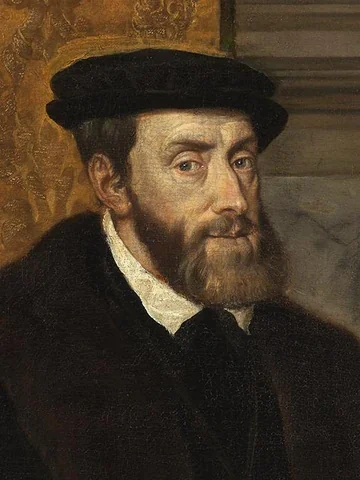 Charles V“Caesar”Holy Roman Emperor · Charles I of Spain1500 – 1558
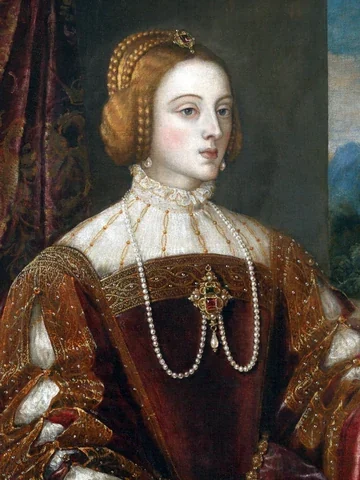 Isabella of Portugal · ESConsort1503 – 1539Maria Manuela of Portugal · ESConsort1527 – 1545
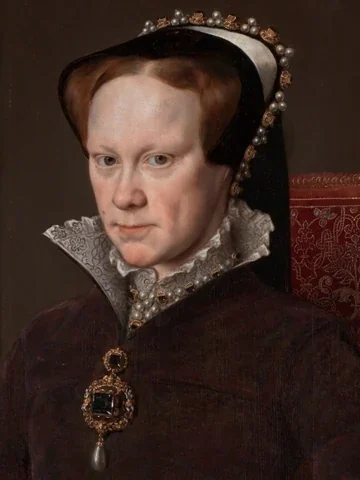 Mary I of England · ESQueen1516 – 1558Elisabeth of Valois · ESConsort1546 – 1568Anna of Austria · ESConsort1549 – 1580
Same dynasty
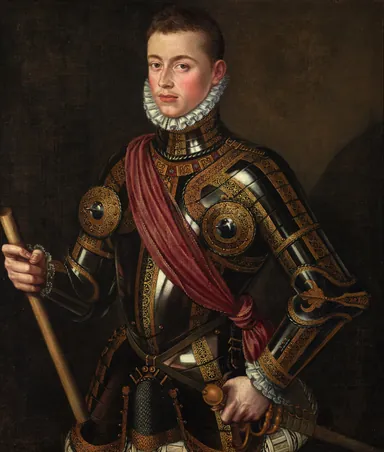 Don John of Austria · ESGeneral / Governor1547 – 1578Joanna of Austria, Grand Duchess of Tuscany · ESConsort1547 – 1578Ferdinand II, Archduke of Austria · ESArchduke1529 – 1595Eleanor of Austria, Duchess of Mantua · ESConsort1534 – 1594Charles II, Archduke of Inner Austria · ESArchduke1540 – 1590Maria of Austria · ESConsort1528 – 1603
In their lifetime
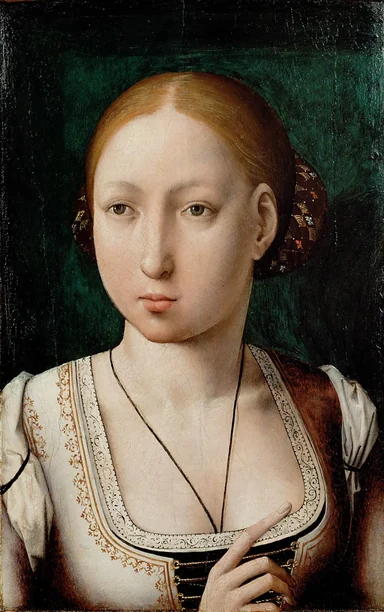 Joanna of Castile · ESQueen1479 – 1555
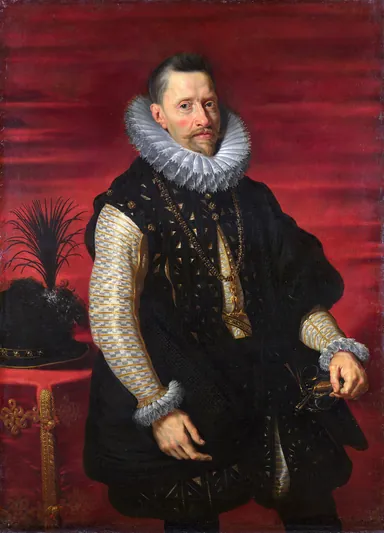 Albert VII, Archduke of Austria · ESArchduke / Sovereign1559 – 1621Margaret of Austria, Queen of Spain · ESConsort1584 – 1611Marcantonio II Colonna · ESAdmiral / Viceroy1535 – 1584Álvaro de Bazán · ESAdmiral / General / Marquis of Santa Cruz1526 – 1588Joanna of Austria · ESInfanta1535 – 1573