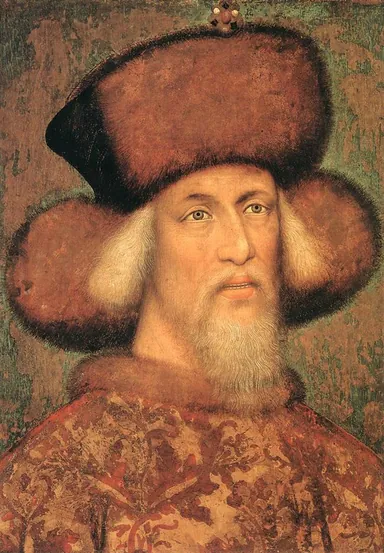
Frederick III of the Holy Roman Empire
A Habsburg emperor whose exceptionally long reign preserved and patiently extended his house’s interests. His son Maximilian’s marriage to Mary of Burgundy transformed the dynasty’s future.
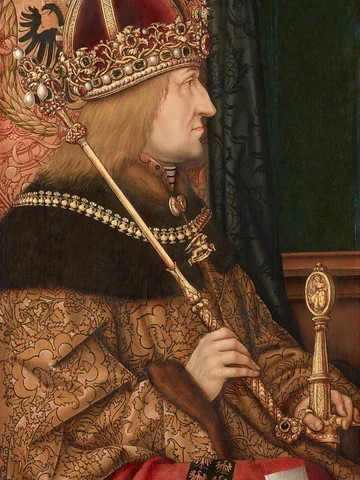
Life of Frederick III of the Holy Roman Empire
A Habsburg of the Styrian line
The son of Duke Ernest of Inner Austria, he was born in Innsbruck in 1415. In 1440 he was elected King of the Romans and became guardian of his cousin Ladislaus the Posthumous, heir to Austria, Bohemia and Hungary. He kept Ladislaus at his court until the Austrian estates forced him to surrender the boy in 1452.
References: Deutsche Biographie · Encyclopaedia Britannica
The last emperor crowned in Rome
In 1452 he married Eleanor of Portugal and was crowned emperor in Rome by Pope Nicholas V, the last to receive the imperial crown there. The Concordat of Vienna (1448) regulated his relations with the papacy. His motto AEIOU was later interpreted as an affirmation of Austria’s destiny.
References: Deutsche Biographie · Encyclopaedia Britannica
A reign of setbacks
His brother Albert VI besieged him in Vienna Castle in 1462, and Matthias Corvinus occupied the city in 1485, forcing him to reside in Linz. He was a slow and tenacious ruler who preferred waiting to fighting and retained his titles even when temporarily losing the lands.
References: Deutsche Biographie · Encyclopaedia Britannica
Burgundy
His greatest achievement was the marriage of his son Maximilian to Mary of Burgundy (1477), which brought the Low Countries to the Habsburgs. In 1486 he secured Maximilian’s election as King of the Romans. He died in Linz in 1493, after a reign of more than fifty years.
References: Deutsche Biographie · Encyclopaedia Britannica
This complete profile is available in English. Bibliographic titles retain their original language. Links marked ES open the Spanish edition.
Key details
Birth: 21 September 1415 Documented
Death: 19 August 1493 Documented
Role: Emperor
Dynasty: Habsburg · ES
Territories: Holy Roman Empire (ES) · Austria (ES) · Germany (ES) · Inner Austria (ES)
Recorded relationships
Their titles over time
Follow the changing territories and offices of Frederick III of the Holy Roman Empire. Each title retains its own status.
Governments in 1457
- Austria2 titles and offices
View titles and jurisdictions
- Inner Austria · ESArchduke · Branch rule · Inner Austria; Leopoldian branch1453–1493 · Territorial government by one branch; no exclusive rule over the entire grouping.
- Austria · ESArchduke · Branch rule · Austria below the Enns until 1463; Austrian inheritance reunited afterwards, with partial Hungarian occupation in 1485–14901457–1493 · Succession to Ladislaus and partition with Albert VI, who died in 1463. Austrian government distinct from the imperial office; Matthias Corvinus’s occupation of Vienna limits effective control.
A common colour groups the Austrian lands and directly administered provinces governed simultaneously by this person. Their titles and territorial identities remain distinct; Bohemia and Hungary require their own documented groupings. Source for this grouping
- Holy Roman Empire (Germany)2 titles and offices
View titles and jurisdictions
- Germany · ESKing of the Romans · Effective rule1440–1493
- Holy Roman Empire · ESEmperor · Effective rule1452–1493
Annual dates: overlap within one year does not prove that two offices were held on the same day. Regencies and co-rulerships retain their labels.
Sources for this profile
- Die Welt der Habsburger · Frederick III
- Académie de Dijon · Philippe le Hardi, duc apanagiste et lieutenant du roi (1363)
- Annales de Bourgogne · Charles VII et ses conseillers, assassins présumés de Jean sans Peur (1942), pp. 197–210
- Meinrad Lienert · Schweizer Sagen und Heldengeschichten (1915), Die Beute von Grandson; recogido por la Mutabor Märchenstiftung
- A. G. Jongkees · Charles le Téméraire et la souveraineté, BMGN 95 (1980), pp. 314–334
- Ruth Putnam · Charles the Bold, the Last Duke of Burgundy (1908), capítulos XIV y XXI; testimonios del ceremonial y del hallazgo del cuerpo
- Diccionario histórico de Suiza · Charles le Téméraire
- Museo Nacional Suizo · La bataille de Grandson
- Die Welt der Habsburger · Maximilian and the Burgundian inheritance
- Die Welt der Habsburger · Marrying into Burgundy
- Metropolitan Museum of Art · Burgundian Netherlands: Court Life and Patronage
- Deutsche Nationalbibliothek · GND authority record · Friedrich III., Heiliges Römisches Reich, Kaiser
- Encyclopaedia Britannica
Biographical and contextual references in their original language. Sources and methodology.
Evidence for this profile
9 recorded claims · 0 without a claim-specific source. Context references do not by themselves verify every fact.
Dates (2/2 with a precise source)
- BirthDocumented
21 September 1415
The authority record gives the birth as 1415-09-21. - DeathDocumented
19 August 1493
The authority record gives the death as 1493-08-19.
Family and relationships (2/2 with a precise source)
- FatherDocumented
Ernest I of Austria
Paternal relationship confirmed by the source. - Marriage or partnershipDocumented
Eleanor of Portugal
The authority record identifies Eleanor of Portugal (GND 119367459) as spouse.
Governments (5/5 with a precise source)
- GovernmentDocumented
Duke · Inner Austria · 1424–1452
Territorial government by one branch; no exclusive rule over the entire grouping. - GovernmentDocumented
Archduke · Inner Austria · 1453–1493
The archducal title was confirmed in 1453; Frederick’s branch governed Inner Austria. - GovernmentDocumented
King of the Romans · Germany · 1440–1493
King of the Romans of Germany, 1440–1493, checked against the source. - GovernmentDocumented
Emperor · Holy Roman Empire · 1452–1493
Emperor of Holy Roman Empire, 1452–1493, checked against the source. - GovernmentDocumented
Archduke · Austria · 1457–1493
Succession to Ladislaus and partition with Albert VI, who died in 1463. Austrian government distinct from the imperial office; Matthias Corvinus’s occupation of Vienna limits effective control.
Biographical and contextual references (13)
- Die Welt der Habsburger · Frederick III
- Académie de Dijon · Philippe le Hardi, duc apanagiste et lieutenant du roi (1363)
- Annales de Bourgogne · Charles VII et ses conseillers, assassins présumés de Jean sans Peur (1942), pp. 197–210
- Meinrad Lienert · Schweizer Sagen und Heldengeschichten (1915), Die Beute von Grandson; recogido por la Mutabor Märchenstiftung
- A. G. Jongkees · Charles le Téméraire et la souveraineté, BMGN 95 (1980), pp. 314–334
- Ruth Putnam · Charles the Bold, the Last Duke of Burgundy (1908), capítulos XIV y XXI; testimonios del ceremonial y del hallazgo del cuerpo
- Diccionario histórico de Suiza · Charles le Téméraire
- Museo Nacional Suizo · La bataille de Grandson
- Die Welt der Habsburger · Maximilian and the Burgundian inheritance
- Die Welt der Habsburger · Marrying into Burgundy
- Metropolitan Museum of Art · Burgundian Netherlands: Court Life and Patronage
- Deutsche Nationalbibliothek · GND authority record · Friedrich III., Heiliges Römisches Reich, Kaiser
- Encyclopaedia Britannica
Editorial history
- 2026-10-12 · Claim registry added; existing historical data kept. Specific sourcing remains to be reviewed.
- 2026-10-08 · Claim registry added; existing historical data kept. Specific sourcing remains to be reviewed.
- 2026-10-04 · Claim registry added; existing historical data kept. Specific sourcing remains to be reviewed.
- 2026-10-04 · Claim registry added; existing historical data kept. Specific sourcing remains to be reviewed.
- 2026-10-03 · Claim registry added; existing historical data kept. Specific sourcing remains to be reviewed.
- 2026-09-30 · The duchy is limited to Dijon and Autun; each other fief now enters the map only under its dated ruler. John III of Namur and the Nevers/Rethel branch were added. The previous shape combined later counties and unrelated lands as if all belonged to the duchy from 1363.
- 2026-09-28 · Claim registry added; existing historical data kept. Specific sourcing remains to be reviewed.
Follow this person through history
More paths from Frederick III of the Holy Roman Empire
Family
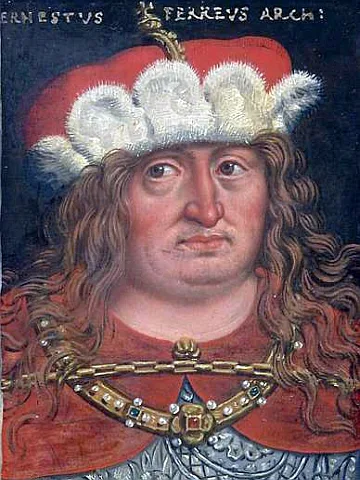 Ernest I of Austria · ESDuke1377 – 1424
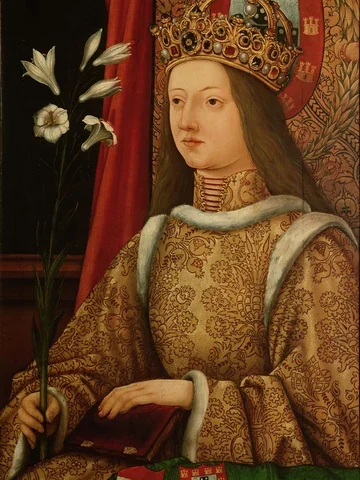 Eleanor of Portugal · ESConsort1434 – 1467
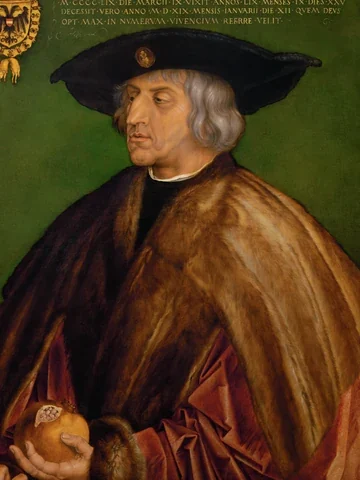 Maximilian I“the Last Knight”Holy Roman Emperor1459 – 1519
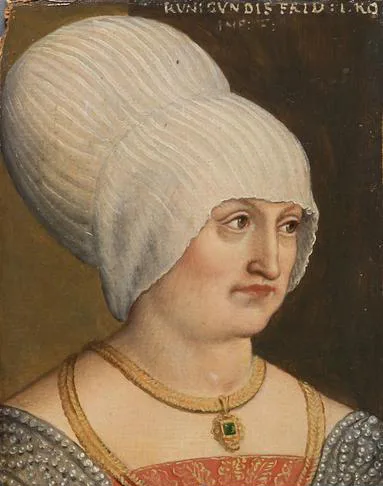 Kunigunde of Austria · ESConsort1465 – 1520
Same dynasty
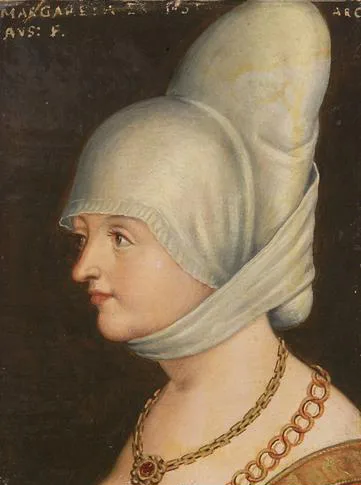 Margaret of Austria · ESConsort1416 – 1486
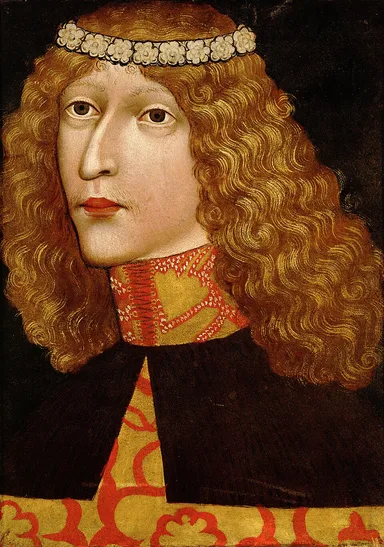 Ladislaus of Habsburg“the Posthumous”King1440 – 1457
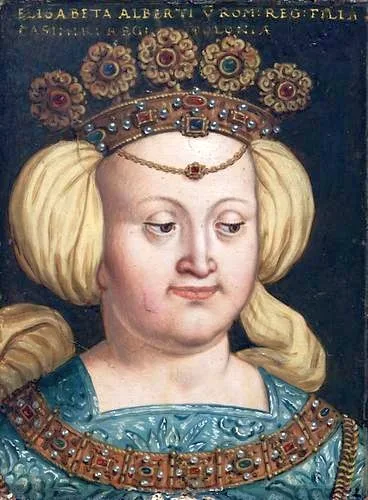 Elisabeth of Habsburg · ESConsort1436 – 1505
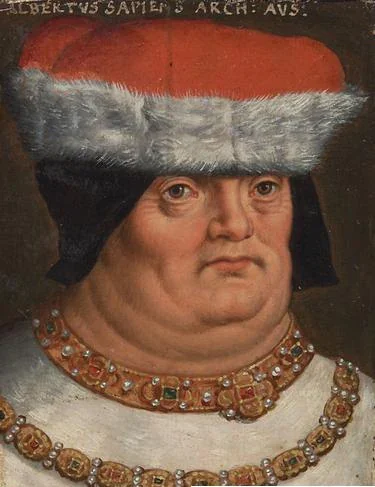 Albert II of GermanyKing / Duke1397 – 1439
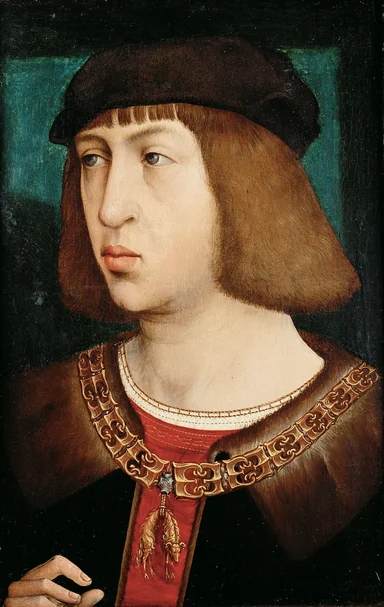 Philip I of Castile“the Handsome”King of Castile through marriage · Ruler of the Burgundian Low Countries1478 – 1506
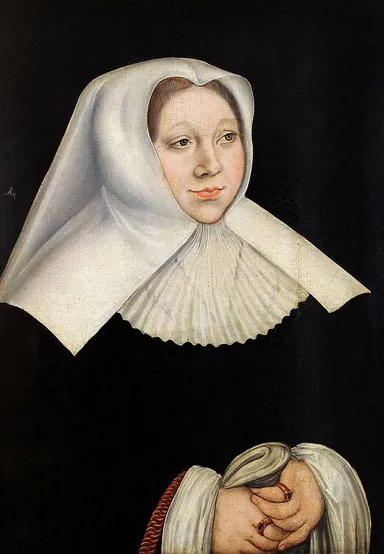 Margaret of Austria · ESGovernor1480 – 1530