
Ferdinand I of the Holy Roman Empire
Brother of Charles V and founder of the Austrian branch of the Habsburgs. He brought together Austria, Bohemia and much of Hungary, and eventually succeeded his brother as emperor.
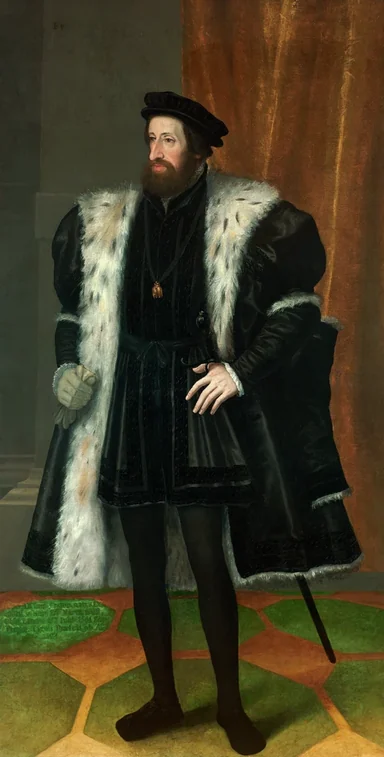
Life of Ferdinand I of the Holy Roman Empire
A Castilian infante
The second son of Joanna and Philip the Handsome, he was born at Alcalá de Henares in 1503 and grew up in Castile with his grandfather Ferdinand the Catholic. To prevent him becoming a rallying point for the discontented, his brother Charles sent him to the Low Countries in 1518.
References: Real Academia de la Historia · Diccionario Biográfico español · Deutsche Biographie · Encyclopaedia Britannica
Ruler of Austria, Bohemia and Hungary
In 1521–1522 he received the house’s Austrian territories. Married to Anna Jagiellon, he was elected King of Bohemia and Hungary after Louis II’s death at Mohács (1526). In Hungary he had to contest the crown with John Zápolya, supported by the Ottomans, who besieged Vienna in 1529. He controlled only part of the kingdom.
References: Real Academia de la Historia · Diccionario Biográfico español · Deutsche Biographie · Encyclopaedia Britannica
Emperor
King of the Romans from 1531, he negotiated the Peace of Augsburg of 1555 on his brother’s behalf. He assumed the imperial office after Charles V’s abdication and was recognised in 1558. He died in Vienna in 1564, dividing his territories among his sons Maximilian II, Ferdinand of Tyrol and Charles of Styria.
References: Real Academia de la Historia · Diccionario Biográfico español · Deutsche Biographie · Encyclopaedia Britannica
This complete profile is available in English. Bibliographic titles retain their original language. Links marked ES open the Spanish edition.
Key details
Birth: 10 March 1503 Documented
Death: 25 July 1564 Documented
Role: Emperor
Dynasty: Habsburg · ES
Territories: Holy Roman Empire (ES) · Austria (ES) · Bohemia (ES) · Hungary (ES) · Germany (ES) · Croatia (ES) · Inner Austria (ES) · Tyrol (ES) · Moravia (ES) · Silesia (ES)
Recorded relationships
Their titles over time
Follow the changing territories and offices of Ferdinand I of the Holy Roman Empire. Each title retains its own status.
Governments in 1558
- Austrian Habsburg Monarchy8 titles and offices
View titles and jurisdictions
- Austria · ESArchduke · Effective rule1521–1564
- Bohemia · ESKing · Effective rule1526–1564
- Hungary · ESKing · Branch rule · Northwestern historical Hungary1526–1564 · Ferdinand’s monarchy was contested by John Zápolya and Ottoman expansion; the House of Habsburg source places his initial control in the northwest rather than the entire former kingdom.
- Croatia · ESKing · Effective rule1527–1564
- Inner Austria · ESArchduke · Effective rule1521–1564 · Assigned together with Austria at Worms, 1521.
- Tyrol · ESCount · Effective rule1522–1564 · Assigned at Brussels, 1522.
- Moravia · ESMargrave · Effective rule · Royal centres of Brno and Olomouc; regional authority over the margraviate, distinct from the full geography of the Bohemian title1526–1564 · Brno and Olomouc are regional urban centres; they are not equated with the monarch’s exclusive ownership of Moravia and do not erase seigneurial or episcopal jurisdictions. Olomouc begins with the privilege of 1378 and is excluded during the documented Swedish and Prussian occupations.
- Silesia · ESSovereign · Effective rule · Overlordship of the Bohemian crown over the Silesian duchies; not direct ducal possession1526–1564 · The enfeoffed princes and the bishop of Nysa retain their own governments. The area represents superior sovereignty; Schweidnitz-Jauer was incorporated in 1392. Greater Poland, Lusatia and Glatz are excluded. This does not derive from the imperial office.
Joint direction of the domains effectively governed by this ruler. Excludes the imperial framework, Ottoman Hungary and independent or tributary Transylvanian principalities. Austrian branches under another ruler retain their own grouping. Source for this grouping
- Holy Roman Empire (Germany)2 titles and offices
View titles and jurisdictions
- Germany · ESKing of the Romans · Effective rule1557–1564
- Holy Roman Empire · ESEmperor · Effective rule1558–1564 · From September 1556 he administered the Empire as King of the Romans; the electors accepted Charles V’s resignation at Frankfurt in February 1558.
Annual dates: overlap within one year does not prove that two offices were held on the same day. Regencies and co-rulerships retain their labels.
Sources for this profile
- Die Welt der Habsburger · Cession of the Austrian lands to Ferdinand I
- Die Welt der Habsburger · Ferdinand I: new crowns for the Habsburgs
- Deutsche Nationalbibliothek · GND authority record · Ferdinand I., Heiliges Römisches Reich, Kaiser
- Real Academia de la Historia · Diccionario Biográfico español
- Encyclopaedia Britannica
Biographical and contextual references in their original language. Sources and methodology.
Evidence for this profile
16 recorded claims · 5 without a claim-specific source. Context references do not by themselves verify every fact.
Dates (2/2 with a precise source)
- BirthDocumented
10 March 1503
The authority record gives the birth as 1503-03-10. - DeathDocumented
25 July 1564
The authority record gives the death as 1564-07-25.
Family and relationships (2/3 with a precise source)
- FatherDocumented
Philip I of Castile
The authority record identifies Philip I of Castile (GND 11864162X) as father. - MotherPending review
Joanna I of Castile
A precise source has not yet been added. - Marriage or partnershipDocumented
Anne of Bohemia and Hungary
The authority record identifies Anne of Bohemia and Hungary (GND 133664473) as spouse.
Governments (7/11 with a precise source)
- GovernmentInferred
Archduke · Austria · 1521–1564
Worms (1521) documents the start. The end in 1564 follows Ferdinand I’s death and the succession partition. - GovernmentPending review
King · Bohemia · 1526–1564
A precise source has not yet been added. - GovernmentInferred
King · Hungary · 1526–1564
The source documents an election contested by John Zápolya and initial control of the northwest, with other parts of the kingdom outside Ferdinand’s authority. “Branch” marks that limited area; the full interval still requires sources by period. - GovernmentPending review
King of the Romans · Germany · 1531–1556
A precise source has not yet been added. - GovernmentPending review
King of the Romans · Germany · 1557–1564
A precise source has not yet been added. - GovernmentPending review
Emperor · Holy Roman Empire · 1558–1564
A precise source has not yet been added. - GovernmentInferred
King · Croatia · 1527–1564
Croatian election of 1527; not activated with his Hungarian succession of 1526. The old Habsburg Croatia layer already starts in 1527.Hrvatska enciklopedija · Slavonija · Medieval Kingdom of Slavonia; in 1527 its estates and the Croatian estates elected different kings. One election is not automatically extended to the other kingdom.Hrvatska enciklopedija · Senjska kapetanija · Matthias Corvinus recovers Senj from the Frankopans in 1469 and creates the royal captaincy; later integration into the Military Frontier in 1527. - GovernmentDocumented
Archduke · Inner Austria · 1521–1564
- GovernmentDocumented
Count · Tyrol · 1522–1564
- GovernmentDocumented
Margrave · Moravia · 1526–1564
Brno and Olomouc are regional urban centres; they are not equated with the monarch’s exclusive ownership of Moravia and do not erase seigneurial or episcopal jurisdictions. Olomouc begins with the privilege of 1378 and is excluded during the documented Swedish and Prussian occupations.Instituto de Historia de la Academia Checa · Jaroslav Pánek · Biografický slovník českých zemí 16 (2013), pp. 119–122: separate hereditary acceptance by Moravia and Silesia in 1526; these do not simply follow from the Bohemian title.City of Olomouc · history of the city · Jobst’s privilege in 1378; loyalty to Sigismund; election of Corvinus in 1469 and agreement of 1479; Frederick of the Palatinate in 1620; Swedish occupation, 1642–1650, and Prussian occupation, 1741–1742; royal confirmation by Maria Theresa in 1762.Olomouc Municipal Archives · original charter of Jobst · Olomouc District Archive, City Archive collection, Charters, inventory 37: Margrave Jobst’s permission of 1378 to build a town hall and merchants’ hall. - GovernmentInferred
Sovereign · Silesia · 1526–1564
The enfeoffed princes and the bishop of Nysa retain their own governments. The area represents superior sovereignty; Schweidnitz-Jauer was incorporated in 1392. Greater Poland, Lusatia and Glatz are excluded. This does not derive from the imperial office.Instituto de Historia de la Academia Checa · Jaroslav Pánek · Biografický slovník českých zemí 16 (2013), pp. 119–122: separate hereditary acceptance by Moravia and Silesia in 1526; these do not simply follow from the Bohemian title.City of Wrocław · history · The Duchy of Wrocław (Breslau) was incorporated into the Crown of Bohemia in 1335 after the death of Henry VI; Habsburg from 1526; Prussian conquest in 1741.Homann · Ducatus Silesiae, 1716 · David Rumsey Collection · Regional map of Upper and Lower Silesia and its duchies. Crown sovereignty is distinguished from each prince’s local government.German Historical Institute · Growth of the Habsburg Empire, 1282–1918 · Map of acquisitions: Austria and Styria in 1282, Carinthia in 1335, Tyrol in 1363, Bohemia and Silesia in 1526, Hungary in 1699 and the Banat in 1718. Imperial office did not confer dominion over all imperial states.
Biographical and contextual references (5)
- Die Welt der Habsburger · Cession of the Austrian lands to Ferdinand I
- Die Welt der Habsburger · Ferdinand I: new crowns for the Habsburgs
- Deutsche Nationalbibliothek · GND authority record · Ferdinand I., Heiliges Römisches Reich, Kaiser
- Real Academia de la Historia · Diccionario Biográfico español
- Encyclopaedia Britannica
Editorial history
- 2026-10-12 · Claim registry added; existing historical data kept. Specific sourcing remains to be reviewed.
- 2026-10-08 · Claim registry added; existing historical data kept. Specific sourcing remains to be reviewed.
- 2026-10-04 · Claim registry added; existing historical data kept. Specific sourcing remains to be reviewed.
- 2026-10-04 · Claim registry added; existing historical data kept. Specific sourcing remains to be reviewed.
- 2026-10-03 · Claim registry added; existing historical data kept. Specific sourcing remains to be reviewed.
- 2026-09-30 · The duchy is limited to Dijon and Autun; each other fief now enters the map only under its dated ruler. John III of Namur and the Nevers/Rethel branch were added. The previous shape combined later counties and unrelated lands as if all belonged to the duchy from 1363.
- 2026-09-28 · Claim registry added; existing historical data kept. Specific sourcing remains to be reviewed.
- 2026-09-30 · Rule in Hungary no longer implies effective control over the entire historical kingdom. The House of Habsburg describes John Zápolya’s rival election and Ferdinand’s initial control in the northwest.
Follow this person through history
More paths from Ferdinand I of the Holy Roman Empire
Family
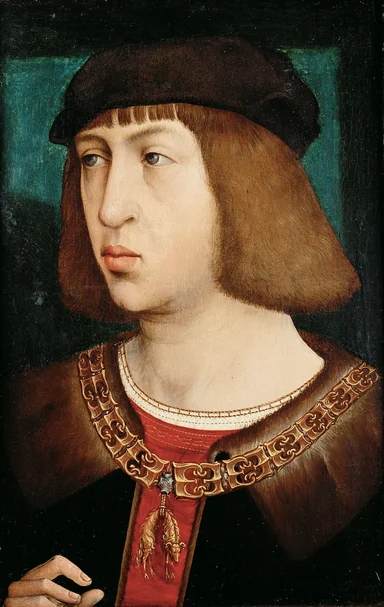 Philip I of Castile“the Handsome”King of Castile through marriage · Ruler of the Burgundian Low Countries1478 – 1506
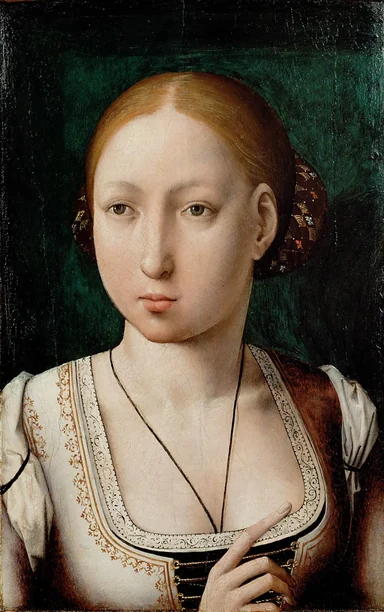 Joanna I of Castile“the Mad”Queen of Castile, León and Aragon1479 – 1555Anne of Bohemia and Hungary · ESConsort1503 – 1547Elisabeth of Austria · ESConsort1526 – 1545Anna of Austria · ESConsort1528 – 1590Catherine of Austria · ESConsort1533 – 1572
Same dynasty
Mary of Hungary · ESConsort1505 – 1558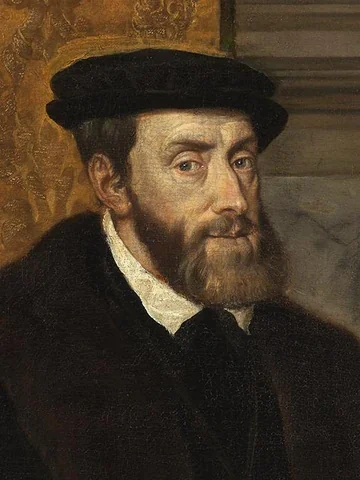 Charles V“Caesar”Holy Roman Emperor · Charles I of Spain1500 – 1558
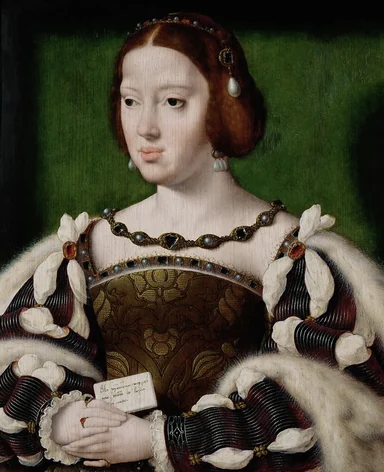 Eleanor of Austria · ESConsort1498 – 1558Catherine of Austria · ESConsort1507 – 1578Isabella of Austria · ESConsort1501 – 1526
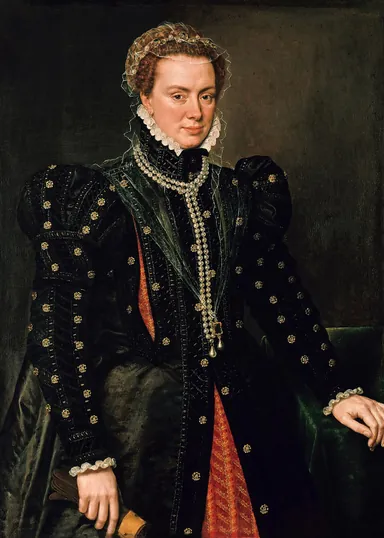 Margaret of ParmaGovernor1522 – 1586
In their lifetime
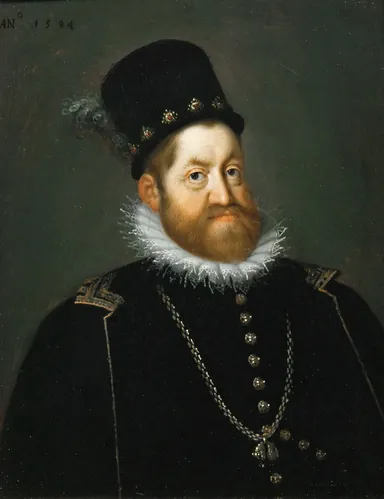 Rudolf II of the Holy Roman EmpireEmperor1552 – 1612
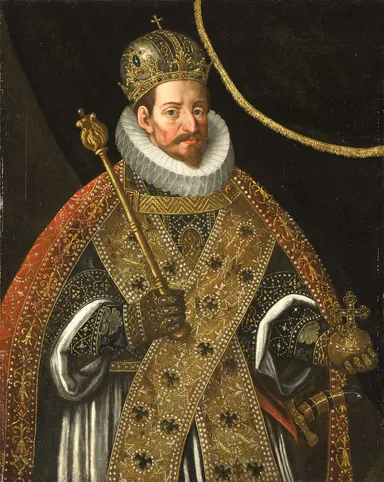 Matthias of HabsburgEmperor1557 – 1619Charles V“Caesar”Holy Roman Emperor · Charles I of Spain1500 – 1558
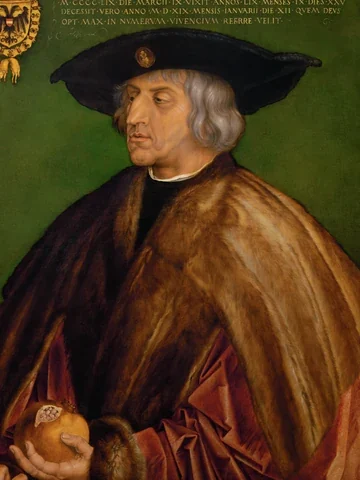 Maximilian I“the Last Knight”Holy Roman Emperor1459 – 1519
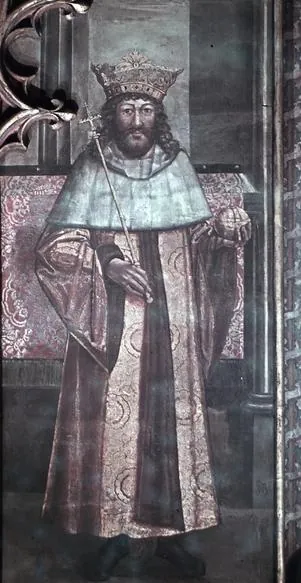 Vladislaus II of Hungary and Bohemia · ESKing1456 – 1516
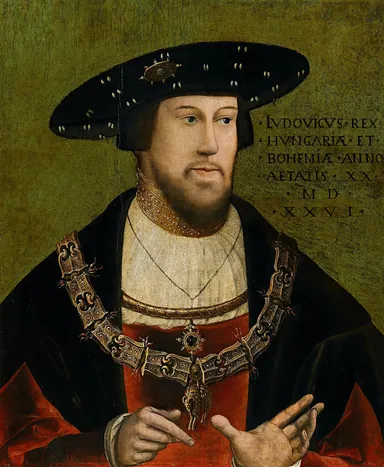 Louis II of Hungary and Bohemia · ESKing1506 – 1526