A Milanese family that transformed the city’s lordship into a hereditary duchy (1395) and dominated much of Lombardy until Filippo Maria’s death in 1447. Its inheritance passed to the Sforzas.
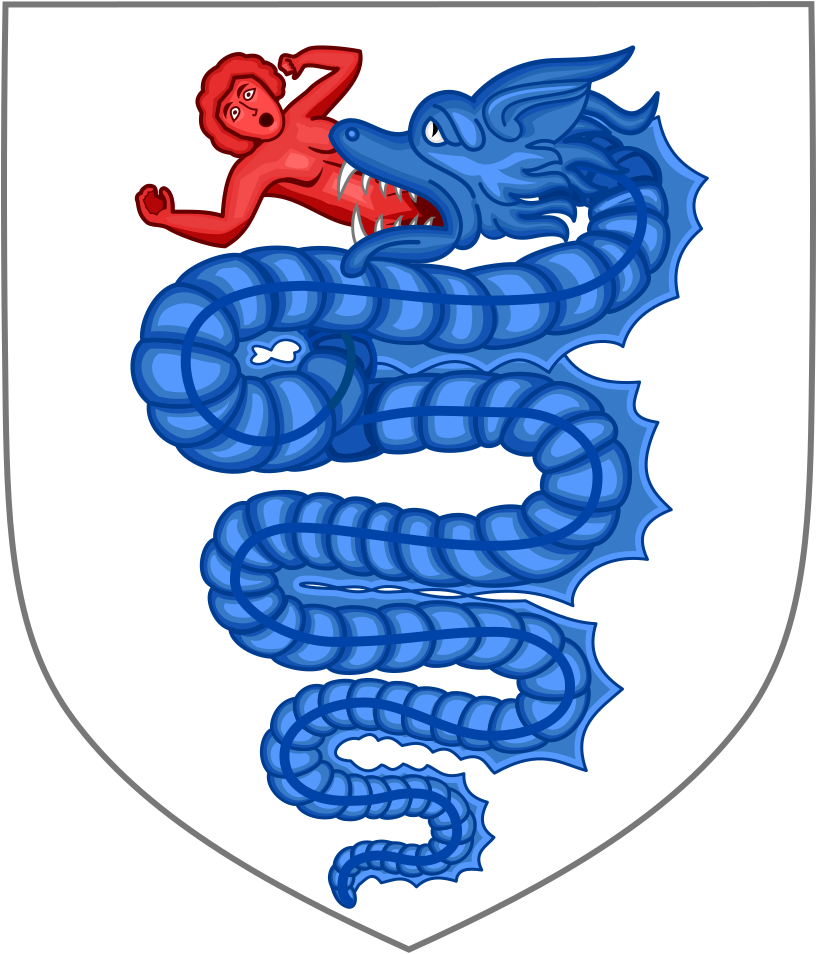
Arms. Argent, a serpent azure erect and undulating, swallowing a human figure gules. The Visconti biscione, in the form used by the house from Ottone Visconti’s capture of Milan in 1277. The dukes later quartered it with the imperial eagle.
Continuity through marriage and inheritance · 1441–1450
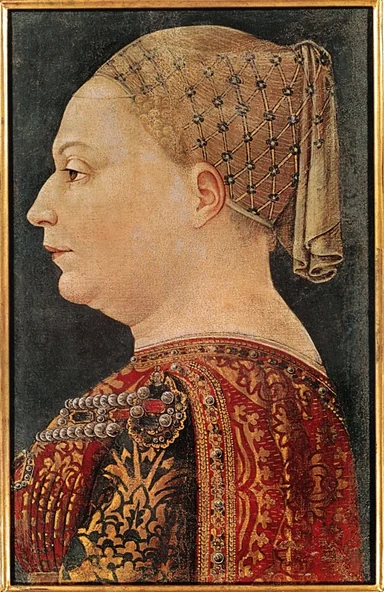
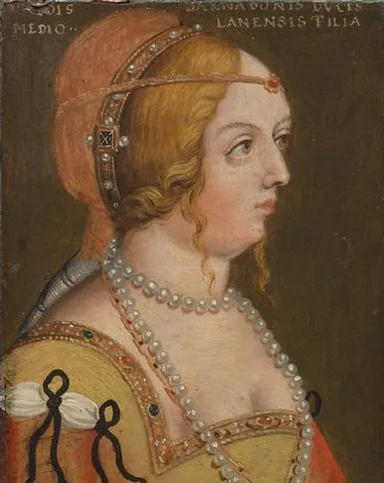
Bianca Maria Visconti, Filippo Maria’s daughter, married Francesco Sforza in 1441. After the last Visconti duke’s death and the Ambrosian Republic, Francesco obtained the Duchy of Milan in 1450.
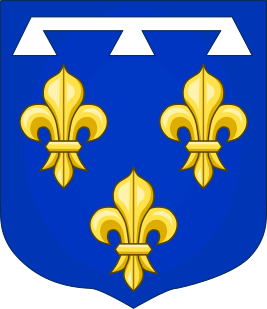
Valentina Visconti married Louis of Orléans. Her grandson Louis XII invoked Valentina’s inheritance to claim the Duchy of Milan and begin its conquest in 1499.
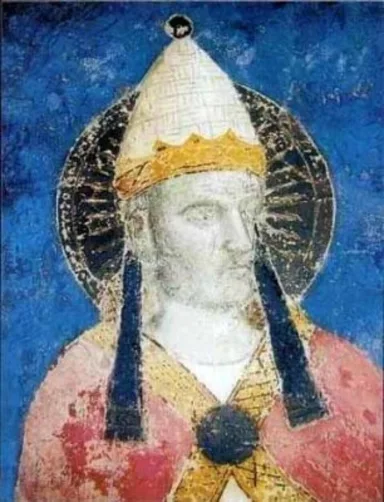
Archbishop Ottone Visconti defeated the Torriani at Desio (1277) and was accepted as lord of Milan. In 1287 he had his great-nephew Matteo appointed captain of the people; Matteo obtained the imperial vicariate in 1294.
Development
Matteo I, exiled between 1302 and 1310, recovered Milan with Emperor Henry VII. His descendants expanded their dominion across Lombardy, and Galeazzo II and Bernabò divided the state between them. Gian Galeazzo imprisoned his uncle Bernabò in 1385, ruled alone and received the title Duke of Milan from Emperor Wenceslaus in 1395.
Legacy
Filippo Maria, brother of Gian Maria (murdered in 1412), restored the state and fought Florence and Venice. His only daughter, Bianca Maria, married Francesco Sforza in 1441; the Milanese recognised him as duke in 1450. Valentina Visconti, married to Louis of Orléans, transmitted claims to Milan to her descendants that Louis XII asserted in 1499.
Co-rulerShared government of the state, with an eastern territorial division distinct from Galeazzo’s; Milan does not automatically confer personal rule over Pavia or Novara.
Effective ruleWestern area inherited from Galeazzo until 1385; reunited government afterwards. The ducal title begins in 1395, retaining the earlier lordship.