Valois
A Capetian branch that ruled France and whose alliances connect French royalty with Brittany, Foix and Navarre.
Four generations of dukes brought together Burgundy and a wide group of Netherlandish principalities before the succession crisis of 1477.
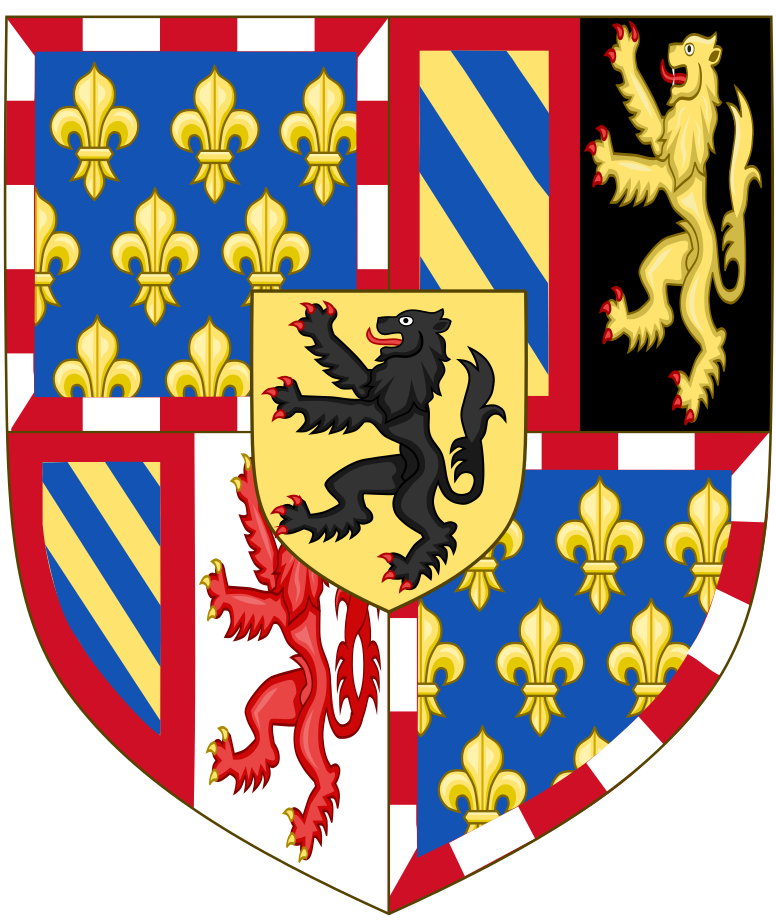
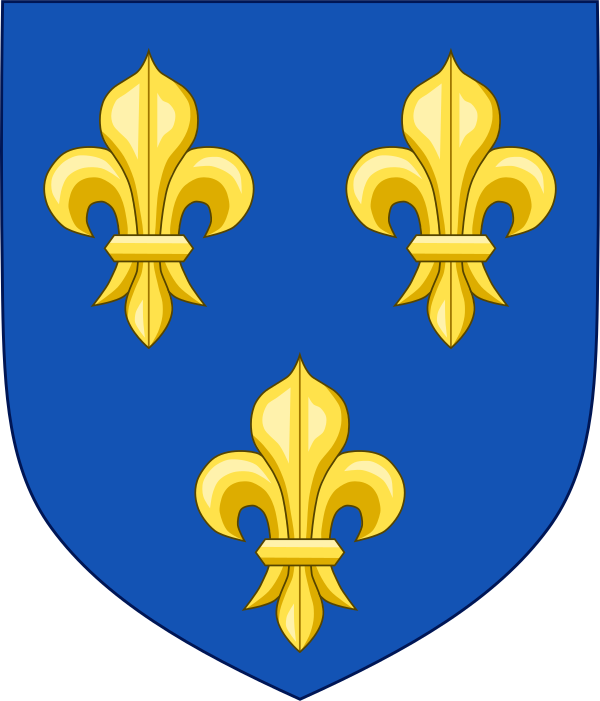
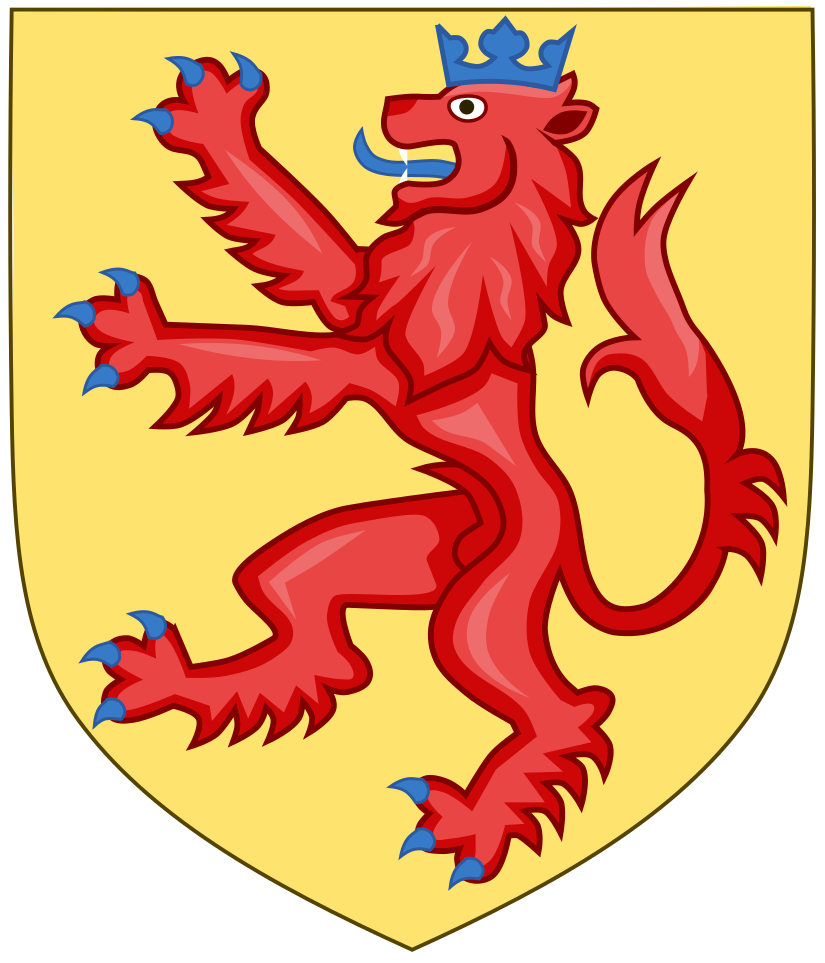
Arms. Quarterly: first and fourth, modern Burgundy (azure, three fleurs-de-lis or, a bordure compony argent and gules); second, per pale ancient Burgundy and Brabant; third, per pale ancient Burgundy and Limburg; overall, Flanders. Full arms from 1430, with Brabant, Limburg and the inescutcheon of Flanders.
Descent, marriage and inheritance connect houses in different ways. Each documented link retains its own explanation.
A Capetian branch that ruled France and whose alliances connect French royalty with Brittany, Foix and Navarre.
From a Swabian comital lineage to the house that brought together the Empire, Austria, Bohemia, Hungary, the Spanish Monarchy and the Low Countries, divided from 1556 into Austrian and Spanish branches.
Read the record · ESMary of Burgundy married Maximilian of Habsburg in 1477. Their son Philip inherited the Burgundian Netherlands, while the dispute with France divided Charles the Bold’s patrimony.
View the connection in the Spanish treePhilip the Bold, son of John II of France, received the Duchy of Burgundy in 1363. His marriage to Margaret of Flanders brought Flanders, Artois and the County of Burgundy in 1384. Each territory retained its rights, institutions and feudal ties.
John the Fearless intervened in the French civil war and was murdered in 1419. Philip the Good expanded the patrimony towards Brabant, Holland, Hainaut and Luxembourg, and founded the Order of the Golden Fleece. His court brought together nobles and servants from different domains.
Charles the Bold sought to strengthen the territorial and military cohesion of his possessions. He died outside Nancy in 1477, leaving Mary as his heiress. Louis XI occupied the duchy, while Mary defended the Netherlandish territories and married Maximilian of Habsburg. Their descendants transmitted much of the Burgundian inheritance to that house.
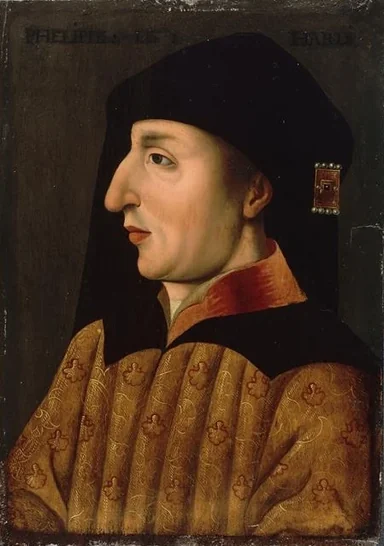
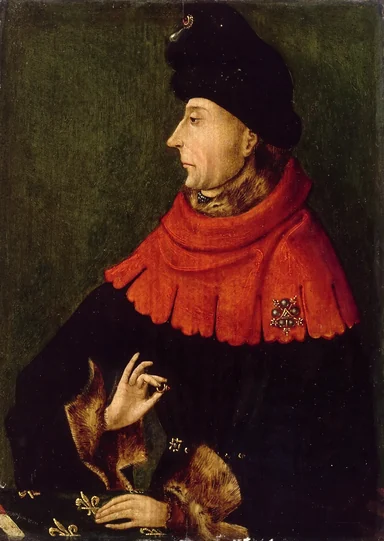
Philip II of Burgundy“the Bold”Duke1342 – 1404
John I of Burgundy“the Fearless”Duke1371 – 1419Margaret of Burgundy · ESConsort1374 – 1441Anthony of Burgundy · ESDuke1384 – 1415Maria of Burgundy · ESConsort1386 – 1422Philip II of Nevers · ESCount1389 – 1415Mary of Burgundy, Duchess of Cleves · ESNoble1393 – 1463
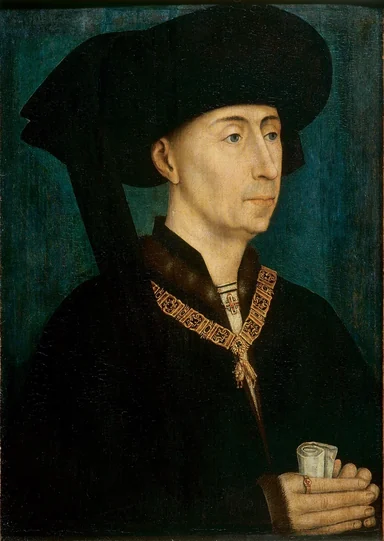
Philip III of Burgundy“the Good”Duke1396 – 1467John IV of Brabant · ESDuke1403 – 1427Anne of Burgundy · ESConsort1404 – 1432Philip of Saint-Pol · ESDuke1404 – 1430Charles I of Nevers · ESCount1414 – 1464John II of Nevers · ESCount1415 – 1491
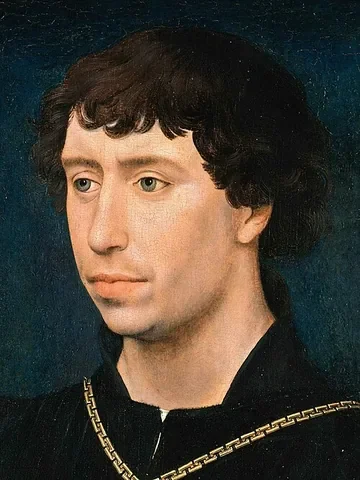
Charles I of Burgundy“the Bold”Duke1433 – 1477
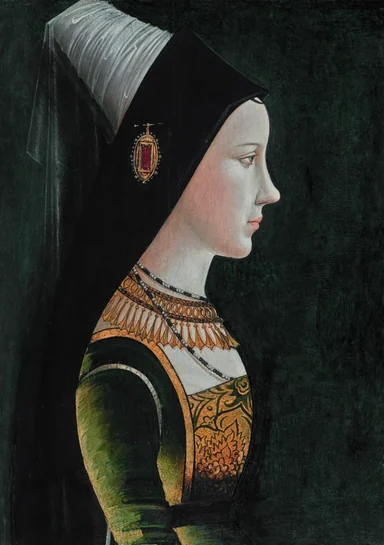
Mary of Burgundy“the Rich”Duchess of Burgundy1457 – 1482Includes nominal titles, regencies and disputes when recorded. Annual intervals do not establish continuous or exclusive control.
| Person | Territory and title | Period | Status |
|---|---|---|---|
| Philip II of Burgundy | Duke · Burgundy · ES | 1363–1404 | Effective rule |
| Philip II of Burgundy | Count · Flanders · ES | 1384–1404 | Jure uxorisMargaret III of Flanders’s rights. |
| Philip II of Burgundy | Count · Artois · ES | 1384–1404 | Jure uxorisGovernment through Margaret III’s hereditary rights, separate from the Duchy of Burgundy. |
| Philip II of Burgundy | Count · County of Burgundy · ES | 1384–1404 | Jure uxorisGovernment through Margaret III’s hereditary rights, separate from the Duchy of Burgundy. |
| Philip II of Burgundy | Count · Nevers · ES | 1384–1404 | Jure uxorisGovernment through Margaret III’s hereditary rights, separate from the Duchy of Burgundy. |
| Philip II of Burgundy | Count · Rethel · ES | 1384–1393 | Jure uxorisGovernment through Margaret III’s hereditary rights, separate from the Duchy of Burgundy. |
| John I of Burgundy | Count · Nevers · ES | 1384–1404 | Effective ruleThe county was assigned to John before he inherited the duchy; it passed to his brother Philip in 1404. |
| Anthony of Burgundy · ES | Count · Rethel · ES | 1393–1406 | Effective ruleHe received the county as an apanage from Margaret III and Philip the Bold in 1393; he ceded it to his brother Philip in 1406. |
| John I of Burgundy | Duke · Burgundy · ES | 1404–1419 | Effective rule |
| Philip II of Nevers · ES | Count · Nevers · ES | 1404–1415 | Effective rule |
| John I of Burgundy | Count · Flanders · ES | 1405–1419 | Effective ruleThe title is recorded from the paternal succession of 1404; effective territorial government follows Margaret III in 1405. |
| John I of Burgundy | Count · Artois · ES | 1405–1419 | Effective ruleThe title is recorded from the paternal succession of 1404; effective territorial government follows Margaret III in 1405. |
| John I of Burgundy | Count · County of Burgundy · ES | 1405–1419 | Effective ruleThe title is recorded from the paternal succession of 1404; effective territorial government follows Margaret III in 1405. |
| Anthony of Burgundy · ES | Duke · Brabant · ES | 1406–1415 | Effective rule |
| Anthony of Burgundy · ES | Duke · Limburg · ES | 1406–1415 | Effective rule |
| Philip II of Nevers · ES | Count · Rethel · ES | 1406–1415 | Effective rule |
| John IV of Brabant · ES | Duke · Brabant · ES | 1415–1427 | Effective rule |
| John IV of Brabant · ES | Duke · Limburg · ES | 1415–1427 | Effective rule |
| Charles I of Nevers · ES | Count · Nevers · ES | 1415–1464 | Effective rule |
| Charles I of Nevers · ES | Count · Rethel · ES | 1415–1464 | Effective rule |
| Philip III of Burgundy | Duke · Burgundy · ES | 1419–1467 | Effective rule |
| Philip III of Burgundy | Count · Flanders · ES | 1419–1467 | Effective rule |
| Philip III of Burgundy | Count · Artois · ES | 1419–1467 | Effective rule |
| Philip III of Burgundy | Count · County of Burgundy · ES | 1419–1467 | Effective rule |
| Philip of Saint-Pol · ES | Duke · Brabant · ES | 1427–1430 | Effective rule |
| Philip of Saint-Pol · ES | Duke · Limburg · ES | 1427–1430 | Effective rule |
| Philip III of Burgundy | Regent · Holland · ES | 1428–1433 | RegencyGovernment and guardianship arising from the agreement of Delft. |
| Philip III of Burgundy | Regent · Hainaut · ES | 1428–1433 | RegencyGovernment and guardianship arising from the agreement of Delft. |
| Philip III of Burgundy | Regent · Zeeland · ES | 1428–1433 | RegencyGovernment and guardianship arising from the agreement of Delft. |
| Philip III of Burgundy | Count · Namur · ES | 1429–1467 | Effective ruleRights purchased in 1421; possession taken on John III’s death in 1429. |
| Philip III of Burgundy | Duke · Brabant · ES | 1430–1467 | Effective rule |
| Philip III of Burgundy | Duke · Limburg · ES | 1430–1467 | Effective rule |
| Philip III of Burgundy | Count · Holland · ES | 1433–1467 | Effective rule |
| Philip III of Burgundy | Count · Hainaut · ES | 1433–1467 | Effective rule |
| Philip III of Burgundy | Count · Zeeland · ES | 1433–1467 | Effective rule |
| Philip III of Burgundy | Count · Auxerre · ES | 1435–1467 | Effective ruleCounty ceded by the Treaty of Arras, separate from the Duchy of Burgundy. |
| Philip III of Burgundy | Count · Ponthieu · ES | 1435–1467 | Effective ruleCounty ceded by the Treaty of Arras; the regional polygon is approximate. |
| Philip III of Burgundy | Duke · Luxembourg · ES | 1443–1467 | Effective ruleRights acquired in 1441; city captured in 1443. Some chronologies date the ducal dignity to 1444. |
| John II of Nevers · ES | Count · Nevers · ES | 1464–1491 | Effective rule |
| John II of Nevers · ES | Count · Rethel · ES | 1464–1491 | Effective rule |
| Charles I of Burgundy | Duke · Burgundy · ES | 1467–1477 | Effective rule |
| Charles I of Burgundy | Count · Flanders · ES | 1467–1477 | Effective rule |
| Charles I of Burgundy | Duke · Brabant · ES | 1467–1477 | Effective rule |
| Charles I of Burgundy | Duke · Limburg · ES | 1467–1477 | Effective rule |
| Charles I of Burgundy | Count · Holland · ES | 1467–1477 | Effective rule |
| Charles I of Burgundy | Count · Hainaut · ES | 1467–1477 | Effective rule |
| Charles I of Burgundy | Count · Zeeland · ES | 1467–1477 | Effective rule |
| Charles I of Burgundy | Count · Namur · ES | 1467–1477 | Effective ruleBurgundian inheritance arising from Philip the Good’s acquisition of the county. |
| Charles I of Burgundy | Duke · Luxembourg · ES | 1467–1477 | Effective ruleDuchy incorporated into the Burgundian patrimony by Philip the Good in 1443. |
| Charles I of Burgundy | Count · Artois · ES | 1467–1477 | Effective rule |
| Charles I of Burgundy | Count · County of Burgundy · ES | 1467–1477 | Effective rule |
| Charles I of Burgundy | Count · Auxerre · ES | 1467–1477 | Effective ruleFrench county distinct from the Burgundian duchy. |
| Charles I of Burgundy | Count · Ponthieu · ES | 1467–1477 | Effective ruleThe cession of 1435 reverted to the French Crown after the duke’s death. |
| Charles I of Burgundy | Duke · Guelders · ES | 1473–1477 | Effective rule |
| Mary of Burgundy | Duchess · Brabant · ES | 1477–1482 | Effective rule |
| Mary of Burgundy | Duchess · Limburg · ES | 1477–1482 | Effective rule |
| Mary of Burgundy | Countess · Flanders · ES | 1477–1482 | Effective rule |
| Mary of Burgundy | Countess · Holland · ES | 1477–1482 | Effective rule |
| Mary of Burgundy | Countess · Hainaut · ES | 1477–1482 | Effective rule |
| Mary of Burgundy | Countess · Zeeland · ES | 1477–1482 | Effective rule |
| Mary of Burgundy | Countess · Namur · ES | 1477–1482 | Effective ruleShe retained this county from her father’s patrimony, separately from the French Duchy of Burgundy. |
| Mary of Burgundy | Duchess · Luxembourg · ES | 1477–1482 | Effective ruleShe retained this duchy in the Burgundian Netherlands. |
| Mary of Burgundy | Countess · Artois · ES | 1477–1482 | DisputedClaim during French occupation; restored to the house of Austria in 1493. |
| Mary of Burgundy | Countess · County of Burgundy · ES | 1477–1482 | DisputedClaim during French occupation; restored in 1493. |
| Mary of Burgundy | Countess · Auxerre · ES | 1477–1482 | TitularThe county fell under French control after 1477. |
| Mary of Burgundy | Countess · Ponthieu · ES | 1477–1482 | TitularThe county was taken by Louis XI after 1477. |
General references do not by themselves verify every relationship or date. Bibliographic titles retain their original language.
Sources and methodology