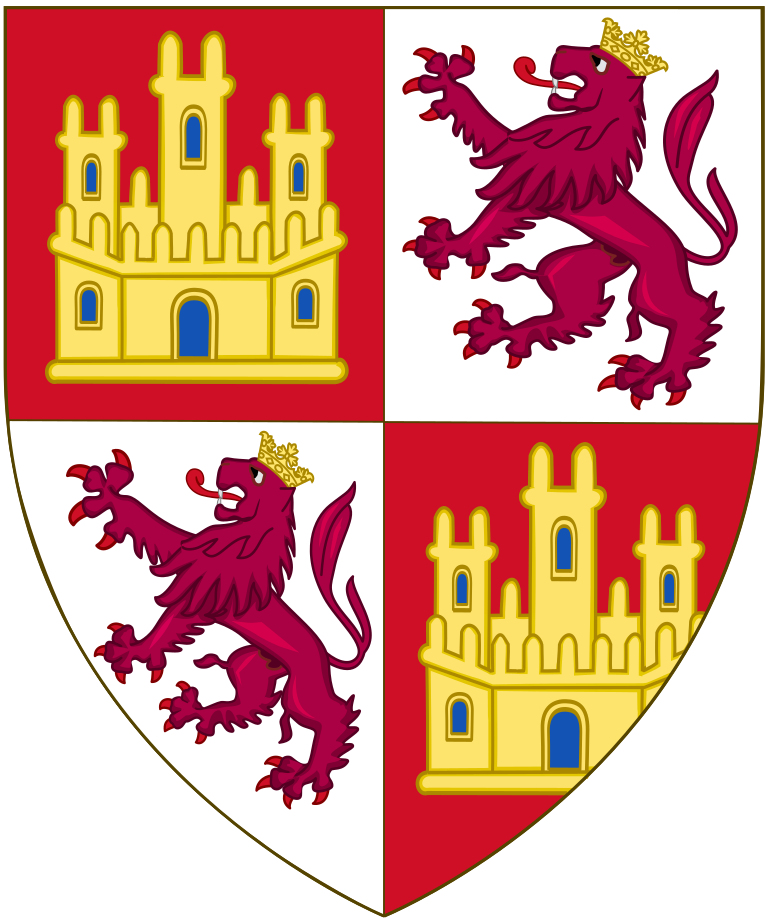
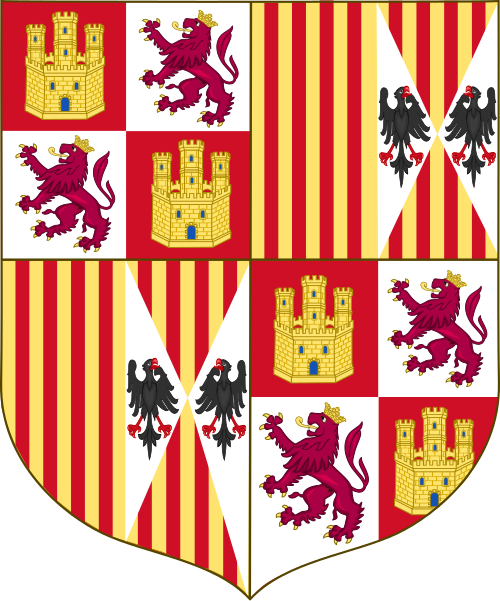
Arms of Trastámara: Quarterly: first and fourth, quarterly Castile and León; second and third, per pale Aragon (or, four pallets gules) and Aragon-Sicily (paly Aragon between argent flanks charged with eagles sable).
Houses and lineages

Trastámara

An illegitimate branch of the House of Burgundy-Ivrea that prevailed in Castile in 1369 and came to reign in Aragon, Navarre, Naples and Sicily, culminating in the Catholic Monarchs.

Arms. Quarterly: first and fourth, quarterly Castile and León; second and third, per pale Aragon (or, four pallets gules) and Aragon-Sicily (paly Aragon between argent flanks charged with eagles sable). Arms of the Catholic Monarchs before the conquest of Granada, 1474–1492, bringing together the house’s two branches. The Castilian Trastámaras from Henry II to Isabella bore quarterly Castile and León; the Aragonese line from Ferdinand I bore Aragon.

42 recorded people0 documented connections
Explore in the Spanish Atlas
Genealogy, inheritance and alliances

Parent houses and branches

Descent, marriage and inheritance connect houses in different ways. Each documented link retains its own explanation.

Parent house

Origin

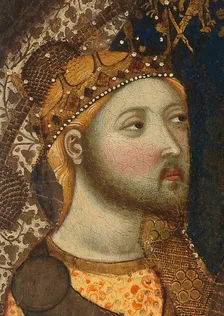
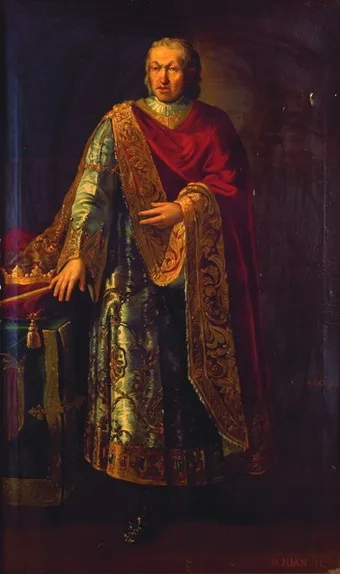
Henry, Count of Trastámara, was a natural son of Alfonso XI of Castile and Eleanor de Guzmán. In his struggle against his half-brother Peter I, the Castilian civil war intersected with the Hundred Years’ War: Henry received French support and Peter English support. Peter’s death at Montiel in 1369 gave Henry II the throne.

Development

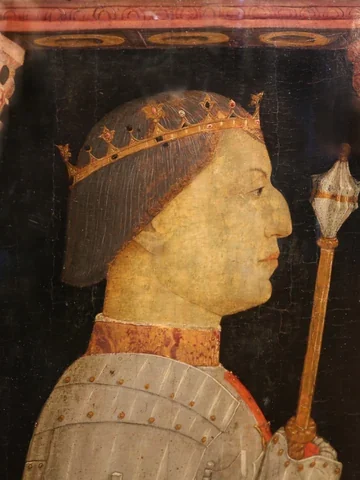
John I and Henry III consolidated the dynasty in Castile. In 1412 the Compromise of Caspe elected Ferdinand of Antequera, John I’s son, King of Aragon. The Aragonese branch expanded to Naples under Alfonso V. John II of Aragon was also King of Navarre through his marriage to Blanche I. Ferrante’s Neapolitan branch continued as a separate dynasty until 1501.

Legacy

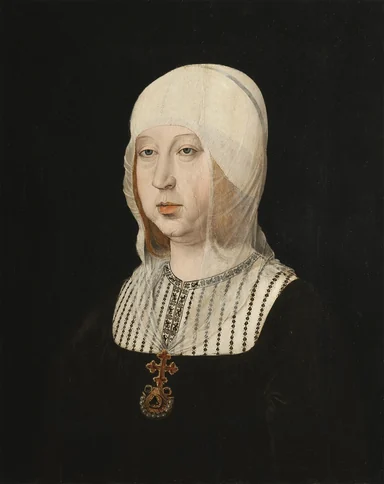
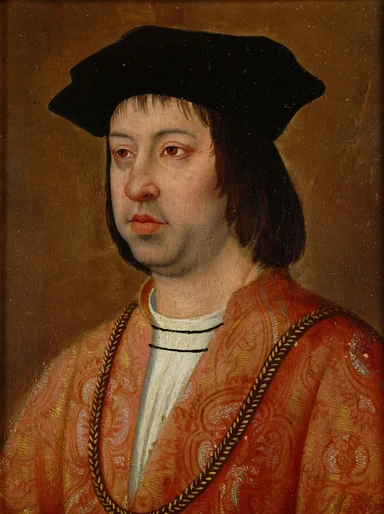
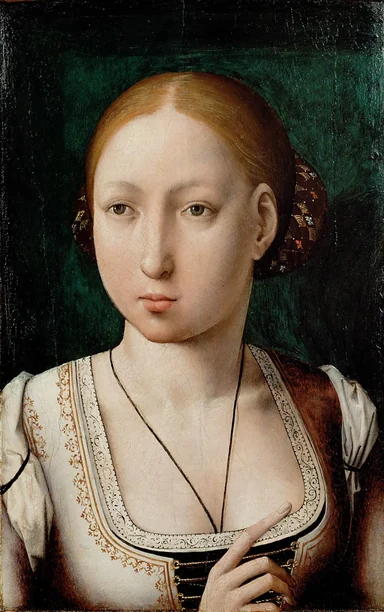
The marriage of Isabella of Castile and Ferdinand of Aragon in 1469 brought together the two principal branches in the same couple while their kingdoms remained distinct. The deaths of their heirs brought the succession to their daughter Joanna and, through her, to the Habsburgs. The house marks the transition from medieval crowns to the composite Spanish Monarchy.

People who connect the history

Protagonists and connections

Territorial context

Linked territories

Recorded members of this house

People in this house

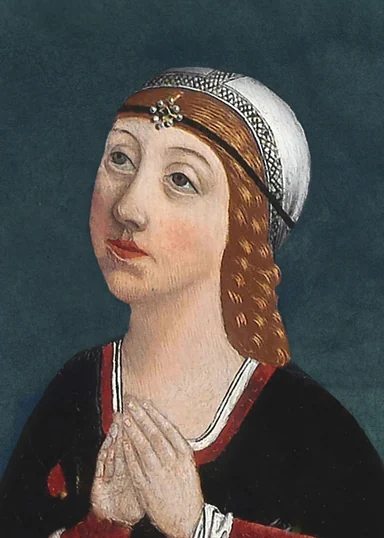
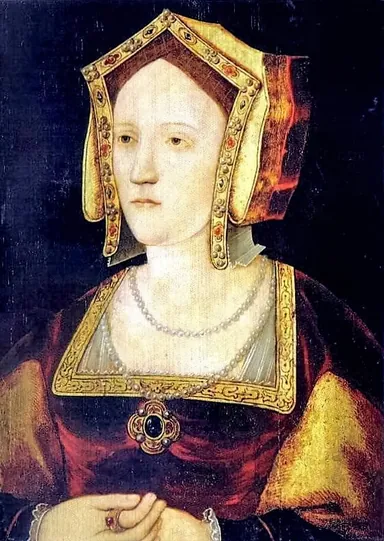
Fadrique Alfonso of Castile · ESMaster of Santiago / Lord1333 – 1358Henry II of Castile“the Fratricide”King of Castile1334 – 1379Alfonso Enríquez of Castile · ESCount1355 – 1395John I of CastileKing of Castile and León1358 – 1390Constance Enríquez of Castile · ESNoble1360 – 1405Fadrique of Castile · ESDuke1360 – 1394Eleanor of Trastámara · ESConsort1363 – 1416Eleanor of Alburquerque · ESConsort1374 – 1435Henry III of Castile“the Sufferer”King of Castile and León1379 – 1406Ferdinand I of Aragon“of Antequera”King of Aragon1380 – 1416Eleanor of Castile · ESNoble1380 – 1430Alfonso V of Aragon“the Magnanimous”King of Aragon and Naples1396 – 1458Maria of Aragon · ESConsort1396 – 1445John II of Aragon“the Great”King of Aragon and Navarre1398 – 1479Maria of Castile · ESConsort1401 – 1458Eleanor of Aragon · ESConsort1402 – 1445John II of CastileKing of Castile and León1405 – 1454Charles, Prince of Viana · ESPrince1421 – 1461Ferdinand I of Naples“Ferrante”King1423 – 1494Blanche II of NavarreClaimant to the Kingdom of Navarre1424 – 1464Henry IV of Castile“the Impotent”King of Castile and León1425 – 1474Eleanor of NavarreQueen regnant of Navarre1426 – 1479Alfonso II of Naples · ESKing1448 – 1495Eleanor of Naples · ESConsort1450 – 1493Frederick I of NaplesKing1451 – 1504Isabella I of Castile“the Catholic”Queen of Castile and León1451 – 1504Ferdinand II of Aragon“the Catholic”King of Aragon, Sicily and Naples · King of Castile with Isabella I1452 – 1516Joanna of Aragon · ESConsort1455 – 1517Beatrice of Naples · ESConsort1457 – 1508Joanna of Castile“la Beltraneja”Claimant to Castile and León; queen consort of Portugal1462 – 1530Ferdinand II of Naples · ESKing1469 – 1496Alonso de Aragón, Archbishop of Zaragoza · ESArchbishop1470 – 1520Isabella of Aragon · ESConsort1470 – 1498Isabella of Naples · ESConsort1470 – 1524Sancha of Aragon · ESNoble1478 – 1506Sancia of Aragon · ESConsort1478 – 1506Joanna of Naples · ESConsort1479 – 1518Joanna I of Castile“the Mad”Queen of Castile, León and Aragon1479 – 1555Alfonso of Aragon, Duke of Bisceglie · ESDuke1481 – 1500Maria of Aragon · ESConsort1482 – 1517Catherine of Aragon · ESConsort1485 – 1536Joanna of Aragon and Gurrea · ESConsort1492 – 1520

Recorded governments of members

Includes nominal titles, regencies and disputes when recorded. Annual intervals do not establish continuous or exclusive control.

PersonTerritory and titlePeriodStatus
Henry II of CastileKing · Castile · ES1366–1367Effective rule
Henry II of CastileKing · León · ES1366–1367Effective rule
Henry II of CastileKing · Castile · ES1369–1379Effective rule
Henry II of CastileKing · León · ES1369–1379Effective rule
John I of CastileKing · Castile · ES1379–1390Effective rule
John I of CastileKing · León · ES1379–1390Effective rule
Henry III of CastileKing · Castile · ES1390–1406Effective rule
Henry III of CastileKing · León · ES1390–1406Effective rule
John II of CastileKing · Castile · ES1406–1454Effective rule
John II of CastileKing · León · ES1406–1454Effective rule
Ferdinand I of AragonKing · Aragon · ES1412–1416Effective rule
Ferdinand I of AragonKing · Trinacria · ES1412–1416Effective rule
Ferdinand I of AragonCount · County of Barcelona · ES1412–1416Effective rule
Ferdinand I of AragonKing · Valencia · ES1412–1416Effective rule
Ferdinand I of AragonKing · Majorca · ES1412–1416Effective rule
Ferdinand I of AragonKing · Sardinia · ES1412–1416Effective rule
Alfonso V of AragonKing · Aragon · ES1416–1458Effective rule
Alfonso V of AragonKing · Trinacria · ES1416–1458Effective rule
Alfonso V of AragonCount · County of Barcelona · ES1416–1458Effective rule
Alfonso V of AragonKing · Valencia · ES1416–1458Effective rule
Alfonso V of AragonKing · Majorca · ES1416–1458Effective rule
Alfonso V of AragonKing · Sardinia · ES1416–1458Effective rule
John II of AragonKing · Navarre · ES1425–1479Jure uxoris
Alfonso V of AragonKing · Naples · ES1442–1458Effective rule
Henry IV of CastileKing · Castile · ES1454–1474Effective rule
Henry IV of CastileKing · León · ES1454–1474Effective rule
John II of AragonKing · Aragon · ES1458–1479Effective rule
John II of AragonKing · Trinacria · ES1458–1479Effective ruleIn 1468 he appointed his son Ferdinand king and co-ruler of Sicily; he retained the crown until his death.
John II of AragonCount · County of Barcelona · ES1458–1479Effective rule
John II of AragonKing · Valencia · ES1458–1479Effective rule
John II of AragonKing · Majorca · ES1458–1479Effective rule
John II of AragonKing · Sardinia · ES1458–1479Effective rule
Ferdinand I of NaplesKing · Naples · ES1458–1494Effective rule
Ferdinand II of AragonKing · Trinacria · ES1468–1478Co-rulerHis father, John II, made him king and co-ruler of Sicily in June 1468.
Isabella I of CastileQueen · Castile · ES1474–1504Effective rule
Isabella I of CastileQueen · León · ES1474–1504Effective rule
Ferdinand II of AragonKing · Castile · ES1474–1504Jure uxoris
Ferdinand II of AragonKing · León · ES1474–1504Jure uxoris
Joanna of CastileQueen · Castile · ES1475–1479TitularProclaimed queen by her supporters in 1475 in opposition to Isabella I; the claim does not mean effective control of all Castile and León. The war ended with the agreements of Alcáçovas in 1479.
Joanna of CastileQueen · León · ES1475–1479TitularProclaimed queen by her supporters in 1475 in opposition to Isabella I; the claim does not mean effective control of all Castile and León. The war ended with the agreements of Alcáçovas in 1479.
Eleanor of NavarreQueen · Navarre · ES1479–1479Effective rule
Ferdinand II of AragonKing · Trinacria · ES1479–1516Effective rule
Ferdinand II of AragonKing · Aragon · ES1479–1516Effective rule
Ferdinand II of AragonCount · County of Barcelona · ES1479–1516Effective rule
Ferdinand II of AragonKing · Valencia · ES1479–1516Effective rule
Ferdinand II of AragonKing · Majorca · ES1479–1516Effective rule
Ferdinand II of AragonKing · Sardinia · ES1479–1516Effective rule
Alfonso II of Naples · ESKing · Naples · ES1494–1495Effective rule
Ferdinand II of Naples · ESKing · Naples · ES1495–1496Effective rule
Frederick I of NaplesKing · Naples · ES1496–1501Effective rule
Ferdinand II of AragonKing · Naples · ES1504–1516Effective rule
Joanna I of CastileQueen · Castile · ES1504–1555TitularQueen in her own right; she retained her rights, but government was exercised by Philip, Ferdinand and Charles.
Joanna I of CastileQueen · León · ES1504–1555TitularQueen in her own right; she retained her rights, but government was exercised by Philip, Ferdinand and Charles.
Ferdinand II of AragonRegent · Castile · ES1507–1516Effective ruleGovernment on behalf of Joanna I.
Ferdinand II of AragonRegent · León · ES1507–1516Effective ruleGovernment on behalf of Joanna I.
Ferdinand II of AragonKing · Navarre · ES1512–1516Branch ruleFrom 1512 the two lines did not effectively govern the whole of the former kingdom.
Joanna I of CastileQueen · Aragon · ES1516–1555TitularQueen in her own right; she retained her rights, but government was exercised by Philip, Ferdinand and Charles.
Joanna I of CastileQueen · Navarre · ES1516–1555TitularFrom 1512 the two lines did not effectively govern the whole of the former kingdom.
Joanna I of CastileQueen · Naples · ES1516–1554TitularTitle shared with her son until Charles V ceded the kingdom to Philip in 1554.
Joanna I of CastileQueen · Trinacria · ES1516–1555TitularQueen in her own right; she retained her rights, but government was exercised by Philip, Ferdinand and Charles.
Joanna I of CastileQueen · Sardinia · ES1516–1555TitularPARES lists her as Queen of Sardinia alongside Charles I. She retained the title without exercising effective government.

Contextual bibliography

General references do not by themselves verify every relationship or date. Bibliographic titles retain their original language.

Sources and methodology
Arms: Heralder · CC BY-SA 4.0 · Wikimedia Commons. 500 px PNG rendered by Wikimedia Commons from the original SVG.